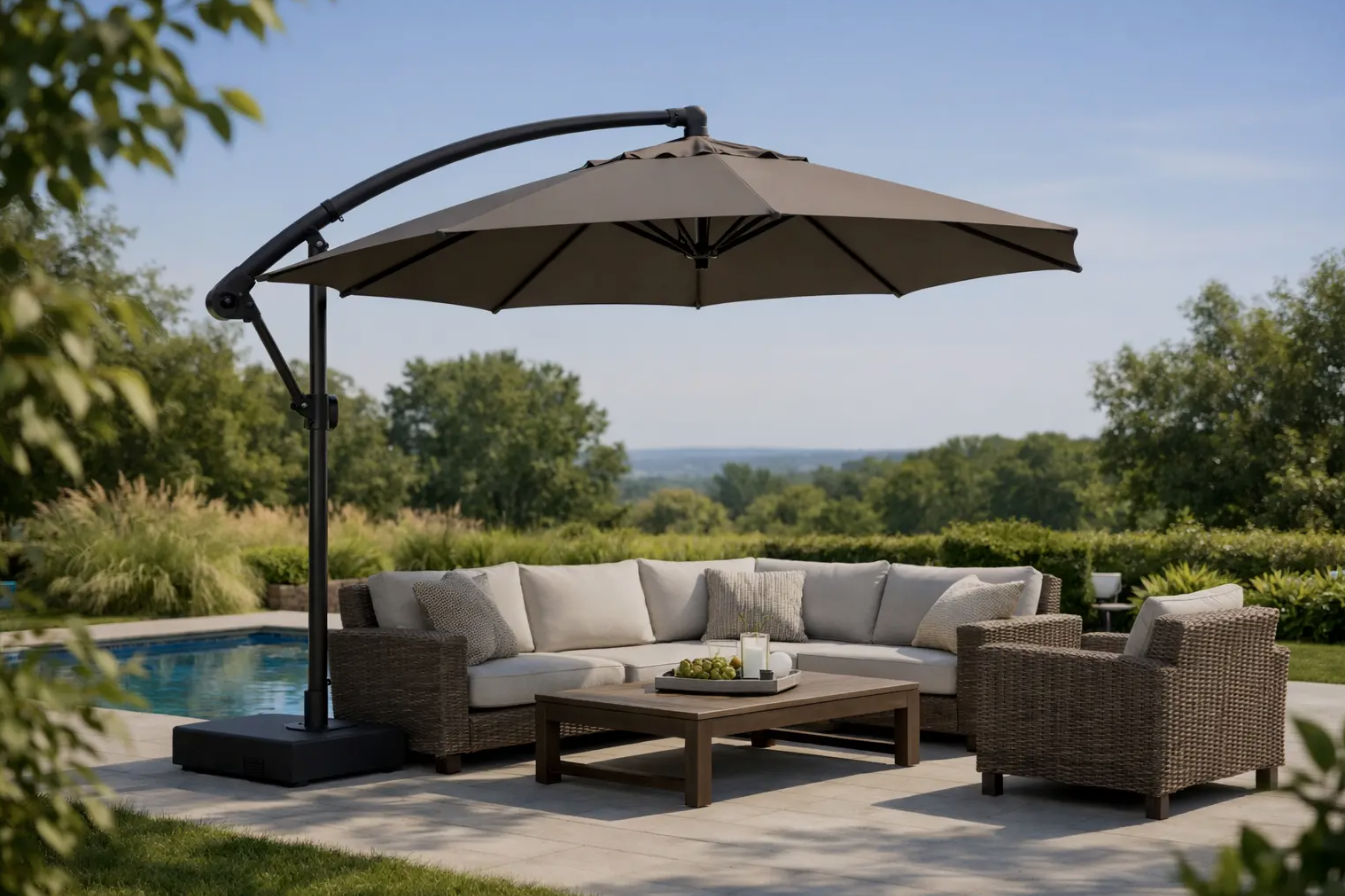
A patio table pushed against a wall, a sectional gathered around a fire pit, or a pair of loungers by the garden can all be difficult to shade with a center-pole umbrella. An offset umbrella for patio shade solves that everyday layout problem by placing the pole to the side and extending the canopy over the area where people actually sit. The result is more open space beneath the shade and a more comfortable setting for slow mornings, family meals, and relaxed weekend entertaining.
For many outdoor spaces, an offset umbrella is one of the simplest ways to make a patio feel like a true extension of the home. Choosing the right one, though, means looking beyond canopy color. Size, base weight, placement, fabric, and wind conditions all shape how well it works in your backyard.
Why an Offset Umbrella Works So Well on Patios
Unlike a traditional market umbrella, an offset design has a cantilevered arm that holds the canopy from the side. There is no pole coming through the middle of your dining table or conversation set. That small change gives you more freedom to arrange seating, place a serving tray, or create a clear path around the patio.
This style is especially helpful over outdoor sectionals, rectangular dining sets, chaise lounges, and deep seating areas. It can also soften a sunny corner that is too exposed for comfortable reading or afternoon coffee. If your patio has a low wall, railing, pool edge, or garden bed nearby, setting the base just outside the main seating zone can make the space feel less crowded.
The trade-off is that offset umbrellas need more support than standard umbrellas. Their side-mounted structure creates leverage, so a properly sized, weighted base is not optional. A beautiful canopy is only useful when it is stable and positioned with care.
Start With the Area You Want to Shade
Before choosing a canopy, picture the moment you want to improve. Are you shading a six-person dining table during lunch? Covering a conversation set for evening guests? Creating a cool landing spot beside the grill or pool? The answer will help you select a shape and size that feels intentional rather than oversized or too small.
A round canopy suits circular tables and compact seating arrangements. Square and rectangular canopies often provide better coverage for sectionals, long dining tables, and narrow patios because their edges align more naturally with furniture lines. A rectangular offset umbrella can be particularly useful when your outdoor living area follows the length of a deck or fence.
Measure the furniture grouping, not just the patio. You want the canopy to reach beyond the seats where people will sit, with enough coverage for the time of day you use the space most. Remember that the sun moves. A canopy that looks perfect at noon may leave the outer seats exposed later in the afternoon.
Leave Room for Movement
A generous umbrella makes a patio inviting, but it should not block the flow of the space. Leave clear walkways between the canopy edge, doors, steps, grill area, and seating. If the umbrella will be near a house, fence, or tree, make sure it can open, rotate, and tilt without bumping into anything.
For smaller patios and balconies, a compact offset model may be a better fit than the largest canopy available. Shade matters, but so does keeping the outdoor area open enough to enjoy.
Choose a Canopy Shape and Features for Your Routine
The best offset umbrella for patio shade is the one you will use easily. A simple crank-open design may be ideal for a daily dining area. If your patio gets strong late-day sun, a model with tilt or multi-position adjustment can be worth the extra investment. It lets you angle the canopy as the sun lowers instead of moving all the furniture.
Rotation is another feature that can make a difference. Some cantilever umbrellas turn around the base, allowing you to shift coverage from a breakfast table to a nearby lounge area. That flexibility is helpful for households that use one patio in several ways throughout the day.
Consider canopy fabric as part of your long-term outdoor plan. Look for material designed to resist fading, moisture, and everyday exposure. A darker shade can create a dramatic, grounded look near neutral furniture, while a soft beige, navy, green, or striped canopy can tie together cushions, rugs, planters, and outdoor decor. Choose a color you will enjoy looking at from indoors as well as outside.
Do Not Overlook the Base
The base is the safety anchor for an offset umbrella. Because canopy sizes, frames, and local weather conditions vary, always follow the manufacturer’s recommended base weight. Many offset styles use a cross base that is paired with separate weighted plates or fillable base sections.
A base that feels excessive can seem inconvenient at first, but it helps protect your furniture, umbrella, and guests when a breeze picks up. Avoid improvising with lightweight patio items or using an umbrella without the required weights. If your yard is frequently windy, an offset umbrella may still work well, but it should be closed whenever winds become stronger or storms are expected.
Placement matters, too. Set the base on a level, solid surface such as a patio, deck rated for the weight, or stable pavers. Keep it away from high-traffic spots where guests may trip over it. If children or pets use the area, make sure the crank, locking mechanism, and base remain secure and out of the way.
Match the Umbrella to Your Patio Style
An umbrella is a practical shade solution, but it also becomes one of the most visible pieces in your outdoor room. Treat it like a major design element. The canopy takes up visual space overhead, while the frame helps define the look at ground level.
For a clean, modern patio, choose a streamlined frame with a solid neutral canopy and pair it with low-profile seating, textured outdoor rugs, and simple planters. A traditional backyard may feel more welcoming with a warm-toned canopy, classic dining furniture, and lantern-style lighting. If your goal is a relaxed resort feel, place the umbrella near chaise lounges, add side tables for drinks, and layer in outdoor pillows that coordinate with the canopy.
You do not need every item to match exactly. Repeating two or three colors across cushions, a rug, planters, and the umbrella creates a cohesive space without making it feel overly coordinated.
Plan for Weather and Seasonal Care
No patio umbrella should stay open in high winds, heavy rain, or storms. Close the canopy when you are not using it, especially if you will be away from home. This habit extends the life of the frame and fabric while reducing the chance of damage to nearby furniture or windows.
A fitted cover is a smart addition for overnight protection and seasonal storage. Brush off leaves and debris regularly, and clean the canopy according to its care instructions. Let it dry fully before covering it to help prevent mildew. During colder months or extended periods of nonuse, storing the umbrella in a dry, protected place can keep it looking fresher for the next outdoor season.
If you live in a region with frequent gusts, consider whether a pergola, gazebo, or permanent shade structure might be a better primary solution. An offset umbrella can still add flexible coverage, but permanent structures are often better suited to consistently exposed locations.
Create a Patio People Want to Stay In
Once shade is in place, the patio becomes easier to use for more than a quick trip outdoors. Add comfortable seating, a small table within reach, and lighting that keeps the area welcoming after sunset. A storage box nearby can hold cushions, throws, and outdoor games, while a fire pit or patio heater can stretch the season when evenings turn cool.
Patio Treasures makes it easier to coordinate those finishing touches with the larger pieces that shape your space. Start with the shade solution that fits your layout, then build around it with furniture and accents that make relaxing and entertaining outdoors feel effortless.
The right offset umbrella does more than block the sun. It gives your patio a comfortable center of gravity, inviting you to linger over dinner, gather with friends, or claim a quiet hour outside whenever the day allows.