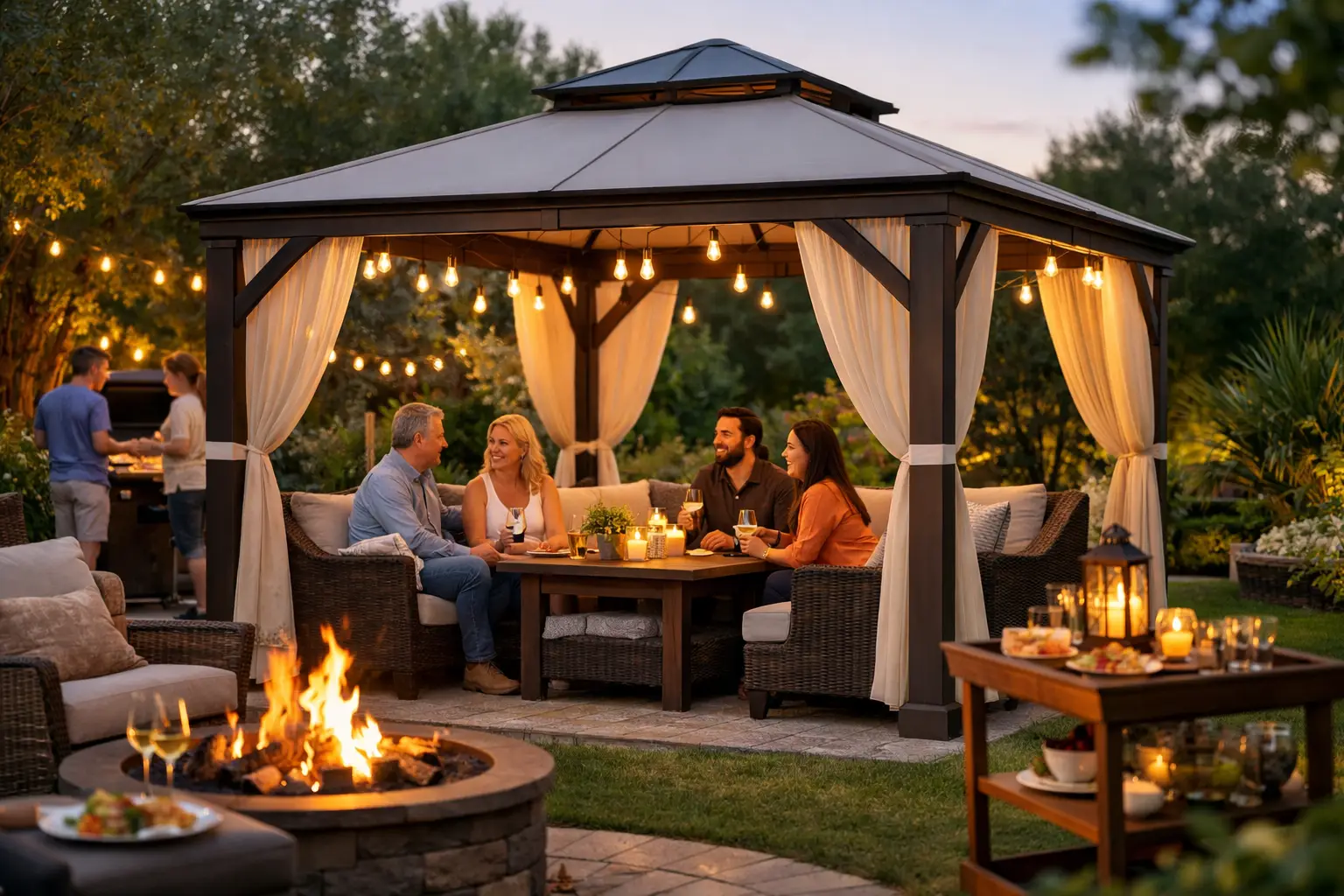
A backyard gazebo for entertaining earns its place when it does more than look beautiful from the kitchen window. It should give guests a clear reason to step outside, settle in, and stay awhile - whether the plan is a Saturday cookout, a birthday dinner, or coffee with neighbors on a bright spring morning. With the right structure and a few comfortable layers, an underused patch of lawn can become the most inviting room at home.
Start With the Gathering You Want to Host
Before choosing a gazebo style, picture a real occasion. A small, intimate setup for two to six people has very different needs from a space that regularly hosts extended family or game-day friends. The best choice begins with how people will move, eat, talk, and relax beneath it.
For dining, leave enough open space to pull chairs back without creating a traffic jam. A lounge-focused gazebo can use deeper seating, a low table, and outdoor rugs to create a relaxed conversation area. If grilling is part of the routine, place the gazebo close enough to the cooking area for easy serving, but not so close that smoke drifts into every conversation.
Think about the route from the house, too. Guests carrying drinks, platters, or a stack of clean towels should have a simple, well-lit path. A gazebo that sits at the far edge of a large yard can feel wonderfully private, but it may need a stepping-stone walkway, solar lighting, or a serving station nearby to make hosting feel effortless.
Choose a Gazebo Size That Feels Generous
A gazebo can technically fit a table and still feel too tight for entertaining. Comfort comes from giving the furniture, and the people using it, a little breathing room.
An 8-by-8-foot gazebo is often best for a compact bistro table, a pair of lounge chairs, or a cozy corner on a patio. A 10-by-10-foot model is a popular middle ground for a small dining set or a conversation arrangement. For larger meals, a 12-by-12-foot footprint or larger gives you more flexibility for a full dining table, serving cart, and circulation around the edges.
The shape matters as much as the dimensions. Square gazebos work naturally with square or round tables, while rectangular structures often suit long dining tables or separate zones for lounging and serving. Measure the furniture you already own, including chair clearance, before settling on a size. If you are deciding between two options, the larger gazebo usually creates a more relaxed experience, provided it still fits your yard without overwhelming it.
Leave Room Around the Structure
Avoid placing the gazebo so close to a fence, garden bed, or property line that it feels boxed in. A little surrounding space makes the structure look intentional and gives you room for planters, pathway lighting, or an outdoor storage box. It also makes seasonal cleaning and maintenance easier.
Check local rules, homeowner association guidelines, and utility locations before installation. Requirements vary by community, particularly for permanent structures, electrical work, and setbacks. A few minutes spent confirming the details can prevent an exciting backyard project from becoming a frustrating one.
Build the Layout Around Conversation
The most welcoming outdoor spaces make it easy for guests to connect. Instead of lining every chair along the perimeter, bring seating inward around a central coffee table, fire feature, or dining table. People naturally linger when they can set down a drink and comfortably see one another.
For a dining gazebo, choose chairs that are supportive enough for a long meal. Cushions add comfort and color, but weather-resistant materials and removable covers make everyday upkeep more manageable. If your gatherings often shift from dinner to dessert and conversation, consider adding two lounge chairs just outside the dining area. This creates a natural second place for guests to relax without splitting the party too far apart.
A larger gazebo can also support two clear zones: one side for dining and another for casual seating. Keep the look connected by repeating a few finishes, such as black metal accents, warm wood tones, or cushions in the same color family. You do not need a perfectly matched set. Coordinated pieces often feel more personal and lived-in.
Create Shade That Still Feels Open
The roof is a gazebo’s main advantage, especially in sunny parts of the country where a patio can become uncomfortable by midday. But shade is only one part of the decision. Consider how much airflow, privacy, and weather coverage your backyard needs.
An open-sided gazebo keeps views clear and lets breezes move through, making it a smart choice for mild weather and scenic gardens. Curtains or side panels add a softer, more sheltered feel and can help block low sun or provide privacy from nearby homes. Mesh netting is especially useful around food and drinks during mosquito season.
It depends on your climate. A hardtop gazebo can offer a more substantial, architectural look and dependable coverage, while a fabric canopy may be easier to adapt to a seasonal setup. In areas with heavy snow, strong wind, or frequent storms, choose materials and anchoring methods designed for local conditions. A gazebo should be secured according to the manufacturer’s guidance, not treated as a temporary accessory when weather turns rough.
Make Evening Entertaining Feel Easy
A gazebo becomes far more useful when sunset does not signal the end of the party. Layered lighting creates warmth, improves safety, and helps guests feel at home after dark.
Start with practical light near entry points and pathways. Then add softer illumination within the gazebo using outdoor-rated string lights, lanterns, or a hanging fixture suited to the structure. Solar stake lights can define a walk from the house, while tabletop lanterns add a welcoming glow without making the space feel overly bright.
Keep cords, outlets, and electrical fixtures appropriate for outdoor use. If permanent power is part of your plan, consult a qualified professional. For a simpler approach, battery-operated candles and solar lighting can create a cozy atmosphere with less installation.
Add Warmth for Shoulder Seasons
Cool evenings do not have to limit your guest list. A nearby fire pit can create a natural gathering point, while an outdoor heater can extend the comfort of a covered sitting area. Give any heat source the proper clearance from the gazebo roof, furniture, curtains, and landscaping, and always follow its safety instructions.
The goal is not to heat the entire yard. It is to make a small area comfortable enough that guests can enjoy another hour outdoors.
Finish the Space With Purposeful Details
Once the gazebo, seating, and lighting are in place, the finishing touches make the area feel ready for company rather than merely furnished. An outdoor rug can visually anchor a seating group and make a deck or patio feel more like an extension of the home. Choose a durable, easy-clean option that can handle damp shoes, dropped snacks, and regular use.
Add personality with a few weather-friendly accents: planters with leafy greens or flowering seasonal color, a garden stool that doubles as a drink table, and decorative pillows in fabrics made for outdoor living. Keep tabletops practical. A tray for napkins, bug spray, and serving tools is more useful than a crowded display of decor.
Storage deserves a place in the plan as well. A deck box or outdoor cabinet can hold cushions, extra throws, games, and dining accessories close to the gazebo. That convenience matters on a busy afternoon. When setting up only takes a few minutes, you are much more likely to invite people over.
Shop for a Gazebo as Part of a Complete Backyard
A gazebo works best when it belongs to a larger outdoor plan. Consider the furniture that will sit beneath it, the dining or grilling area nearby, the lighting that guides guests through the yard, and the storage that keeps everything tidy between gatherings. Patio Treasures makes it easier to coordinate those elements, from shade structures and seating to outdoor rugs, lanterns, fire features, and entertaining essentials.
Choose durable materials that fit your climate and a style that feels at home with your house. A modern metal frame, a warm wood-inspired look, or a classic garden silhouette can all create a welcoming retreat when the scale and furnishings are right.
The real value of a gazebo is not just the structure overhead. It is the extra dinners that stretch into the evening, the family celebrations that feel a little more special, and the ordinary weekends when stepping outside suddenly feels like a treat.