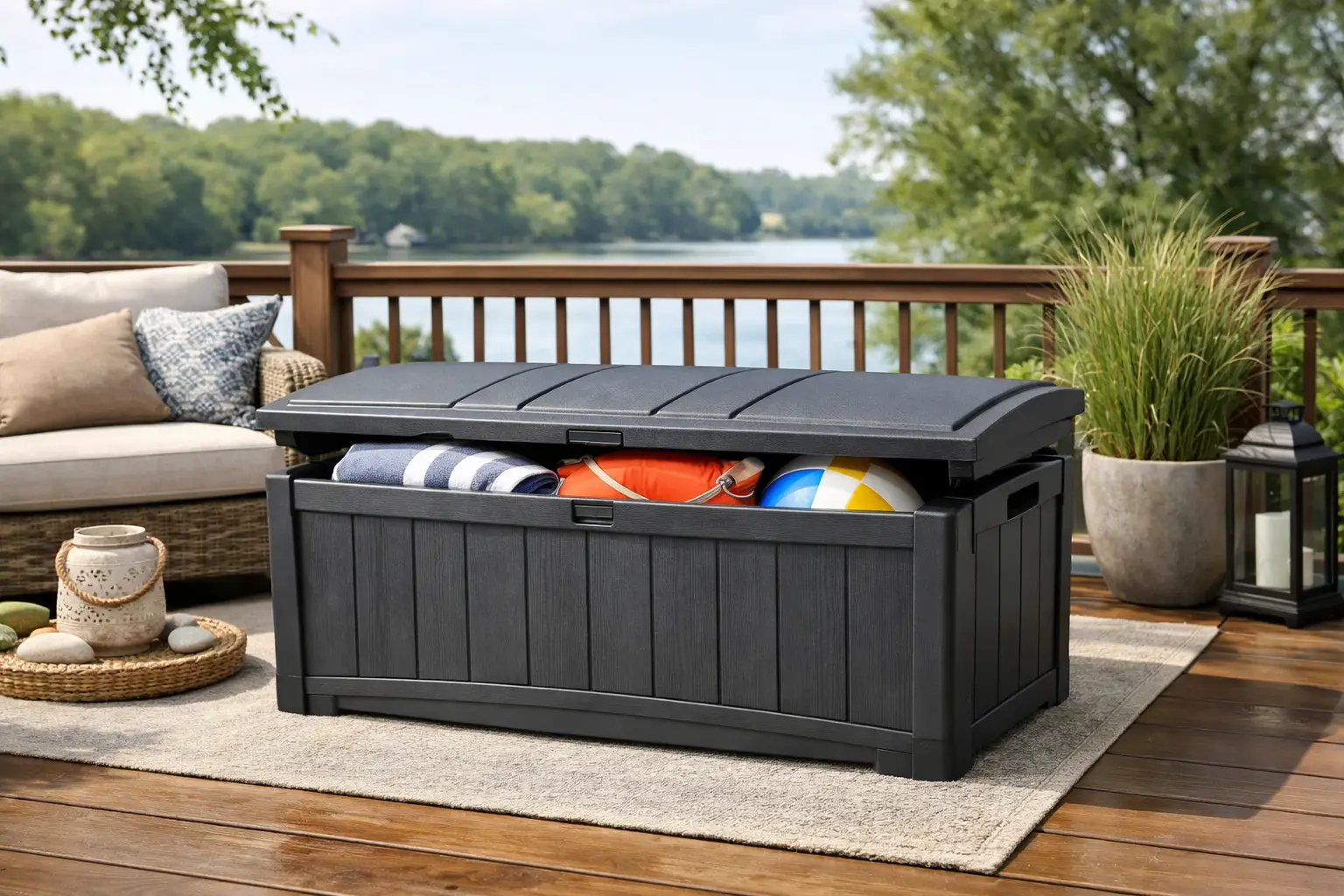
A pile of chair cushions by the back door can make even a beautifully furnished deck feel unfinished. A waterproof deck storage box gives those everyday outdoor essentials a protected home, so your patio is ready for a quiet morning coffee, an impromptu cookout, or a relaxed evening with friends.
The right box does more than hide clutter. It helps preserve the pieces that make your outdoor space comfortable, from pillows and throws to pool towels, gardening supplies, and grilling accessories. Choosing well comes down to understanding how you use your deck, what weather your area sees, and how the storage box will fit into the overall look of your retreat.
Start With What You Need to Store
Before choosing a finish or measuring a spot on the deck, take inventory. Seat cushions are often the main reason homeowners buy outdoor storage, but the items you plan to keep inside determine the capacity and opening style you need.
For a small balcony or compact patio, a lower-profile box can hold a couple of folded cushions, lightweight blankets, or outdoor games without crowding the walking area. On a larger deck, a roomy storage chest can make seasonal entertaining easier by holding cushions for a full dining set, extra pillows, serving pieces, and kids' toys in one convenient place.
Pay attention to the shape of what you are storing, not just the stated gallon capacity. Long chaise cushions, umbrella covers, and grilling tools need interior length. Thick, deep-seat cushions require enough vertical clearance for the lid to close without compressing them. If your storage needs change through the seasons, it is usually worth choosing a little more room than you need today.
What Makes a Deck Storage Box Truly Weather-Ready?
“Waterproof” and “water-resistant” are often used interchangeably, but they can describe different levels of protection. A water-resistant box may handle an occasional light shower, while a waterproof deck storage box is designed with more secure construction to help keep its contents dry during regular rain exposure.
Look closely at the lid design. An overlapping lid, fitted rim, or integrated seal helps direct rain away from the interior. A slightly sloped top also prevents standing water from collecting after a storm. Well-designed lids should close evenly all the way around, without visible gaps at the corners.
Material matters just as much. Resin and high-quality plastic storage boxes are popular because they resist moisture, do not rust, and are easy to wipe clean. Many are made to resemble woven wicker or wood-look paneling, giving you the visual warmth of natural materials without the demanding upkeep. For a more furniture-like appearance, outdoor-rated wicker or wood-accented designs can be beautiful choices, although they may need more care depending on the construction and climate.
No outdoor container is a substitute for reasonable maintenance. In areas with wind-driven rain, heavy snow, or frequent storms, it is wise to check the interior periodically and avoid storing items that must remain perfectly dry for months at a time. A box placed beneath a covered porch will face different conditions than one sitting in the open on an exposed deck.
Ventilation Helps Protect Cushions
Keeping rain out is essential, but so is allowing moisture to escape. Cushions that are put away slightly damp after a humid afternoon can develop a musty smell inside a tightly closed container. Some storage boxes include subtle ventilation features that encourage airflow while still helping prevent rain from entering.
Whenever possible, let wet towels, pool toys, or cushions dry before storing them. If a summer storm catches you by surprise, a waterproof box is still useful for quick protection. Just open it later, when conditions are dry, to give the contents time to air out.
Measure Your Deck Before You Shop
A storage box should make your deck feel more open, not create a new obstacle course. Measure the footprint of the area where you expect to place it, then leave enough space for the lid to open and for people to move comfortably around it.
Think about how the deck functions during gatherings. A large chest may fit neatly against a railing but become inconvenient if guests need to pass behind dining chairs. A bench-style box may work better along the edge of a seating area, where it can offer a place to sit while keeping lounge cushions close at hand.
Height is worth considering, too. Low boxes can double as a casual coffee table when topped with a tray, while taller boxes can work as a sideboard-like surface near an outdoor dining area. If you plan to use the top as seating, choose a model specifically built to support that use rather than assuming every lid can safely hold weight.
Choose a Style That Belongs in Your Outdoor Space
Storage does not have to look purely utilitarian. A well-chosen deck box can pull together furniture, rugs, planters, and lighting, giving the space a more intentional finish.
For a relaxed, coastal-inspired deck, a resin wicker look in warm brown, driftwood, or soft gray can complement woven seating and neutral cushions. A clean black or charcoal box pairs well with contemporary metal furniture and creates a crisp contrast against lighter decking. Wood-look finishes bring an inviting, classic feel to traditional patios and garden settings.
Consider the visual weight of the piece. A very large dark box can feel heavy on a petite balcony, while a small, pale storage chest may disappear beside a deep sectional. Matching the box to the scale of your furniture creates a more comfortable, balanced arrangement.
At Patio Treasures, outdoor storage can be part of a coordinated space rather than an afterthought. Pairing a deck box with complementary seating, an outdoor rug, lanterns, or planters helps turn practical square footage into a welcoming retreat.
Details That Make Everyday Use Easier
The best storage box is one you will actually use after every gathering. Small design details make a noticeable difference when your hands are full of cushions or you are tidying up before rain arrives.
A hinged lid is generally more convenient than a fully removable top because it stays attached and opens quickly. Assisted hinges or gas struts can keep a larger lid from dropping suddenly. Handles make it easier to reposition the box, though a large, fully loaded unit may still require two people to move safely.
If you store grilling tools, outdoor electronics, or items you would rather keep out of sight, look for a lockable lid. A lockable feature can deter casual access, but it should not be treated as high-security protection for valuables. For decks near a pool, a secure lid can also be helpful for keeping chemicals or small accessories away from children.
Ease of cleaning deserves a place on the checklist. Textured resin surfaces tend to hide minor scuffs and can usually be rinsed or wiped down with mild soap and water. Lighter colors may show dirt more readily, while very dark finishes can become hot in direct summer sun. There is no universal best choice - it depends on your deck exposure and the amount of maintenance you are comfortable doing.
Give Your Storage Box a Long Outdoor Life
Place the box on a level, well-drained surface so water does not pool beneath it. On a wood deck, avoid dragging it when full, since that can scratch boards or strain the box itself. If your area experiences freezing winters, clear snow from the lid and avoid forcing it open when ice has formed around the edges.
A quick seasonal reset keeps the interior useful. Empty the box, sweep out leaves or debris, wipe down the inside, and inspect the lid alignment and hinges. This is also a good opportunity to wash cushions and rotate in the items you will use most often for the coming season.
The most satisfying outdoor spaces make room for both living and putting things away. Choose a storage box that suits your weather, your deck dimensions, and the way you gather, then enjoy the simple pleasure of a patio that is ready when you are.