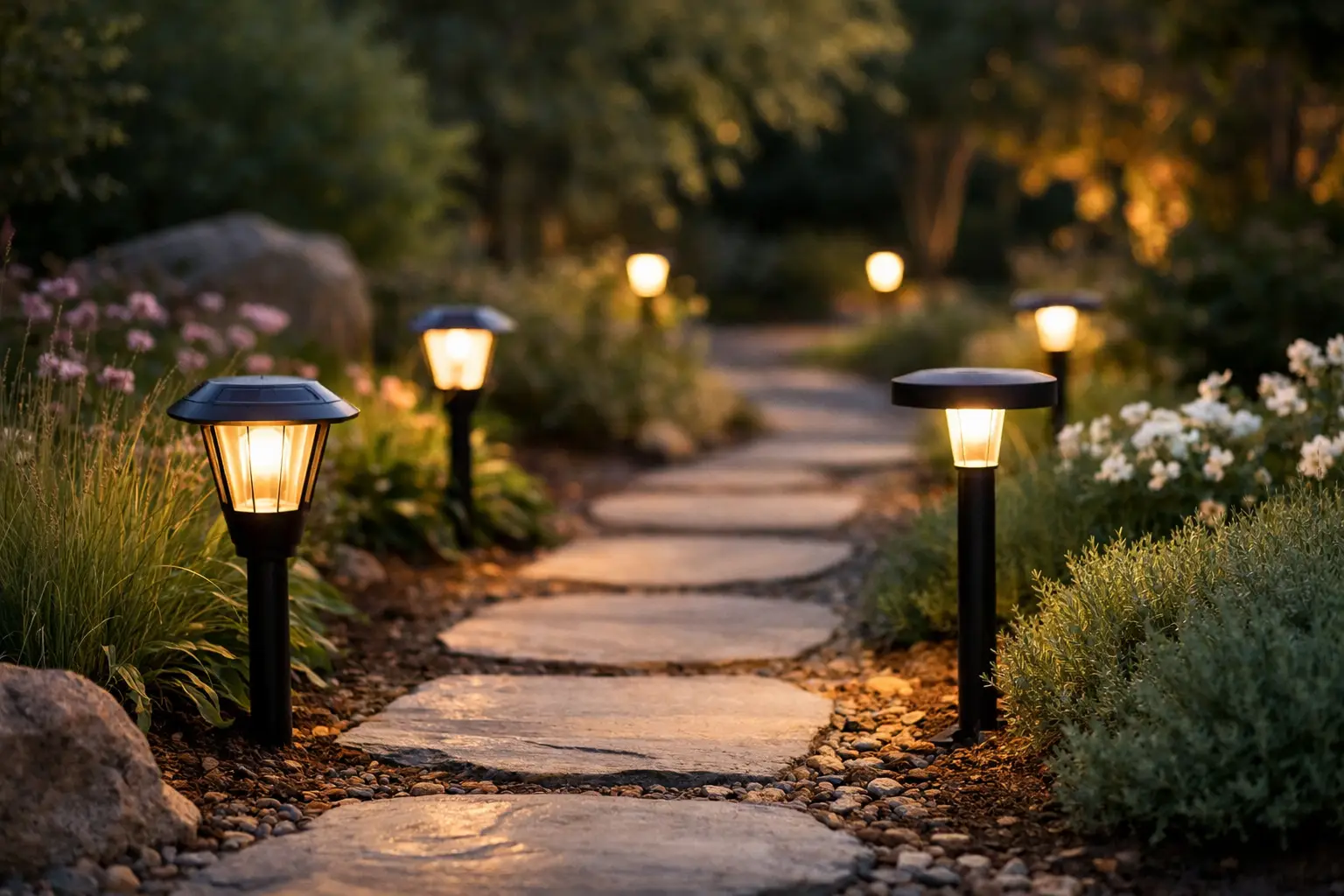
A garden path can be easy to enjoy in daylight and nearly disappear once the sun goes down. The right solar lights for garden path areas bring that route back into view, adding a gentle glow for late dinners, taking out the trash, greeting guests, or simply stepping outside to enjoy the evening air. They also offer an approachable way to make a backyard feel more finished without adding wiring or taking on a large landscape project.
The best choice is not always the brightest one. A welcoming path needs enough light to guide each step, while leaving room for the soft shadows, planting textures, and relaxed atmosphere that make an outdoor space feel like a retreat.
Start With How You Use the Path
Before choosing a style, walk the path after dark and think about where people actually go. A short route from the patio to a fire pit may only need a few low lights. A longer walkway from the driveway to the front or side entrance benefits from more consistent illumination, especially if it includes steps, uneven pavers, curves, or changes in grade.
Consider the view from your favorite outdoor seat, too. Lights along a garden path can do more than mark the edge of a walkway. They can frame a flower bed, lead the eye toward a gazebo, or make the walk to the grill feel more inviting when friends are over. If the path is close to a dining area, softer, warmer light usually feels more comfortable than a bright white glare.
It helps to identify the path's main job. Is it primarily about safety, ambiance, curb appeal, or finding your way around during gatherings? Most paths need a little of each, but choosing the priority makes decisions about brightness and spacing much easier.
Choose the Right Kind of Solar Path Light
Solar path lighting comes in several looks, from classic lantern tops to clean, contemporary stakes. The best design complements the materials already in your outdoor space. Bronze or black finishes pair naturally with traditional garden beds, wood decks, and stone pavers. Brushed metal, simple geometric shapes, and low-profile caps can suit a more modern patio setting.
Stake lights are the familiar choice for planting beds and soft ground. They are easy to position, relocate, and refresh with the seasons. For paths bordered by gravel, pavers, or tightly packed soil, look for options designed for firmer installation or consider lighting placed just beyond the walking surface in nearby beds or containers.
Decorative lantern-style solar lights add personality, particularly around cottage gardens, trellises, or seating nooks. They can be a lovely accent, though a heavily decorative fixture may cast less even light than a purpose-built path light. If clear footing is the priority, use decorative pieces as a complement rather than the only source of illumination.
How Bright Should Solar Lights Be?
For a garden path, more brightness is not automatically better. Low to moderate output creates a comfortable guide along the route without making the yard feel like a parking lot. The goal is to see the path edge and any obstacles, not to flood every inch of ground with light.
Warm white light tends to flatter natural materials, greenery, and outdoor furniture. It gives patios and gardens a relaxed, lived-in feel that works beautifully for winding down or entertaining. Cool white can appear sharper and may make sense for a utility-focused side path or a contemporary entry, but it can feel stark beside warm wood, brick, and lush planting.
Pay attention to the fixture's lens and shade as well as its stated brightness. A frosted lens often produces a gentler, more diffuse glow. A clear lens may look brighter but can create noticeable hot spots. Shielded or downward-facing designs keep light directed toward the path, where it is useful, rather than shining into windows or a neighbor's yard.
Plan Spacing Before You Install
Path lights usually look best when they establish a rhythm instead of sitting shoulder to shoulder. On a straight, level path, spacing fixtures roughly 6 to 8 feet apart is a good starting point. You may want them closer together near steps, turns, gates, or areas where the surface changes from deck boards to stone or gravel.
Do not feel obligated to line both sides of every walkway. Alternating lights from one side to the other often creates a more natural, polished effect and uses fewer fixtures. A narrow path may only need one side lit, while a wide route can handle a balanced arrangement on both sides.
Set the lights back slightly from the path rather than placing them directly at the edge. This protects them from feet, lawn equipment, and wagons while allowing the light to fall across the walking surface. Before pushing stakes into the soil, place each fixture where you think it belongs and view the layout from the patio, the house, and the street. A small adjustment can make the entire scene look more intentional.
Sun Exposure Makes the Difference
Solar lighting is wonderfully simple, but it still needs dependable sunlight. A fixture under a dense tree canopy, tucked behind a tall shrub, or shaded by a roofline may not charge enough to last through the evening. Before buying a large set, notice which parts of your path receive several hours of direct sun during the day.
This does not mean a partly shaded garden is off-limits. It means placement matters. You may be able to position solar lights on the sunnier side of the path, near the outer edge of a planting bed, or in planters that receive better exposure. Seasonal changes count, too. A location that is sunny in summer may become shaded when the sun sits lower in fall and winter.
Quality solar lights generally provide better charging panels, batteries, and weather-resistant construction than bargain options. That can be worthwhile for a frequently used path, especially in areas with cloudy winters or long stretches of rainy weather. Even a well-made solar light will have shorter run times after several overcast days, so set expectations around your local climate.
Match Lighting With the Rest of the Backyard
Garden path lights feel most at home when they connect the different parts of the yard. Repeat a finish found in patio furniture, a fire pit, planters, or door hardware to create an easy visual thread. If your patio has black metal seating and a pergola with dark hardware, black solar path lights can make the route to the garden feel considered rather than added as an afterthought.
Layering is more effective than relying on a single type of light. Path lights handle navigation. String lights can bring a festive glow above a dining area. Solar lanterns and tabletop accents can add warmth near seating. The combination creates depth, giving guests a sense of where to walk and where to gather without overpowering the night sky.
For a compact patio or balcony garden, scale is especially important. Small, low-profile lights keep the area from feeling crowded. In a larger backyard, taller fixtures or a few statement lanterns can prevent the path from getting visually lost among expansive lawn and planting beds.
Keep Your Solar Lights Looking Their Best
Solar lights require little maintenance, but a few minutes of care helps them perform well. Wipe dust, pollen, leaves, and bird droppings from solar panels regularly with a soft, damp cloth. A cloudy panel cannot collect sunlight efficiently, and garden debris can build up quickly during peak growing season.
Check that stakes remain straight after heavy rain, landscaping work, or an energetic game of backyard catch. Trim plants that begin to shade the panels or cover the light. If a fixture grows dim after a season or two, inspect the battery and replace it if the model allows. This simple refresh can extend the usefulness of a favorite set.
In regions with severe winter weather, review the manufacturer's care guidance. Some lights can stay outside year-round, while others last longer when stored during freezing conditions. Choosing weather-ready materials and giving fixtures occasional attention protects both their appearance and their evening performance.
A Small Upgrade With a Big Evening Payoff
Thoughtfully placed solar lights make the garden feel available after sunset, not closed for the day. They help a guest find the patio, make a quiet solo walk more pleasant, and add a finishing touch to the outdoor space you have worked hard to create.
When you are ready to bring charm, comfort, and personality outdoors, choose fixtures that suit your path, your sunlight, and the way your household gathers. A few well-placed lights can turn the walk through your garden into part of the experience, not just the route to it.