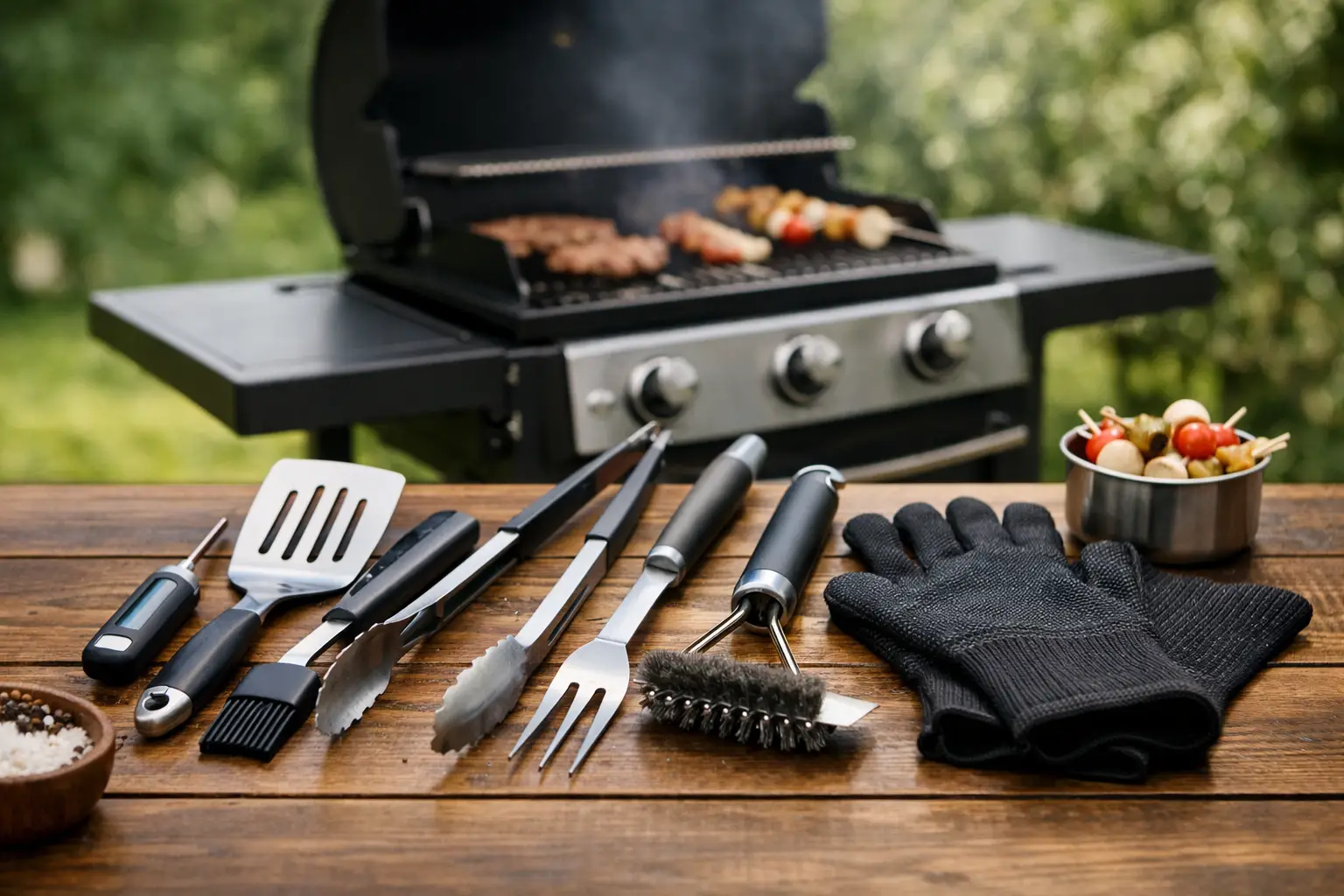
A great first cookout rarely depends on a crowded cart of specialty gadgets. The right grilling tools for beginners help you feel comfortable at the grill, protect your hands, and get dinner to the table without chasing a rolling hot dog or guessing whether chicken is done. Start with a few dependable essentials, then add only what fits the way you like to cook outdoors.
Whether your grill sits beside a full patio dining set or on a compact apartment balcony, useful tools make the space feel more inviting. They also make it easier to say yes to a casual weeknight burger night or a relaxed weekend gathering with family and friends.
The 8 Grilling Tools for Beginners That Matter Most
1. Long-handled locking tongs
If you buy one tool first, make it a sturdy pair of locking tongs. They turn sausages, move vegetables, shift coals, and place food over a hotter or cooler area of the grill without requiring you to get too close to the heat. Look for stainless steel tongs with a comfortable grip and a length of about 12 to 16 inches.
Skip flimsy tongs that flex when you pick up a thick chop. A firm grip gives you more control and helps prevent dropped food, while a locking mechanism keeps the tool drawer or grill-side storage area tidy.
2. An instant-read meat thermometer
A thermometer is the beginner tool that quickly pays for itself. Color, grill marks, and cooking times can be misleading, especially when the grill is hot, the weather is breezy, or you are cooking thicker cuts. An instant-read thermometer takes out the guesswork.
Use it for chicken, burgers, pork chops, steaks, and larger pieces of seafood. Insert the probe into the thickest part of the food without touching bone or the grill grate. For food safety, cook poultry to 165°F and ground meats to 160°F. Steaks, chops, and fish can be prepared to your preferred doneness, but a thermometer gives you a much more reliable starting point than cutting into the food and losing its juices.
3. A wide grill spatula
A wide, sturdy spatula is essential if burgers, fish fillets, or delicate vegetables are part of your menu. Choose one with a thin beveled edge that can slide beneath food cleanly, plus a long handle that keeps your hand away from flare-ups.
A spatula with slots is especially helpful for burgers because excess grease can drip back onto the grill. Avoid pressing burgers down with it, though. That sends flavorful juices into the flames and can cause more smoke and flare-ups. Turn food once or twice, then let the heat do its work.
4. Heat-resistant grill gloves
Oven mitts are useful indoors, but grilling calls for gloves made for higher heat and better movement. Heat-resistant grill gloves make it easier to handle hot grates, adjust a pan, move a cast-iron skillet, or work around a charcoal grill.
They are not an invitation to hold hot metal for long periods. Even well-made gloves have limits. Think of them as protection for quick, controlled tasks, not as a substitute for caution. Keep them dry, clean, and close to the grill so you are not searching for them when a hot handle needs attention.
5. A grate scraper or bristle-free grill brush
A clean cooking surface helps food release more easily and improves flavor from one meal to the next. Clean the grates while they are warm, after preheating or just after cooking, when residue is easier to remove.
Many new grill owners prefer a bristle-free brush or grill scraper. Traditional wire brushes can work, but loose bristles are a concern if they remain on the grate. Whatever style you choose, inspect it regularly and wipe the grates with a damp paper towel held in tongs before adding food. That extra minute is a simple habit that makes each cookout feel more polished.
6. A grill basket for vegetables and small foods
A grill basket keeps sliced zucchini, peppers, shrimp, asparagus, and other smaller foods from slipping through the grates. It is particularly useful when you are learning heat zones because you can move a full batch of vegetables from direct heat to a cooler side of the grill in one motion.
Choose a basket with a secure handle and enough surface area for your usual household meals. A perforated grill pan is another good option. Both create those appealing grilled edges while giving you more control than skewers, which can require extra prep and frequent turning.
7. A chimney starter, if you use charcoal
Charcoal grilling has a relaxed, classic appeal, but lighter fluid can add an unpleasant taste and make lighting the grill more stressful than it needs to be. A chimney starter helps coals ignite evenly with paper or natural fire starters underneath.
This tool is only necessary for charcoal grills. Gas grill owners can skip it and put the budget toward a spare propane tank or a quality cover instead. If you do use charcoal, wait until the coals are mostly covered with gray ash before spreading them out. That is your sign that the heat is settling in for more even cooking.
8. A simple grill-side tray or caddy
The most overlooked grilling tool may be the one that keeps everything else within reach. A weather-friendly tray, prep caddy, or small outdoor side table gives you a place for clean tools, seasonings, a thermometer, and a plate for cooked food.
The goal is not to crowd your patio. It is to create a small, organized work zone so you are not walking in and out of the house with raw food, clean utensils, and serving dishes. A coordinated outdoor storage piece can also keep tools protected between meals while maintaining a neat, welcoming backyard setup.
What You Can Skip at First
Beginner grillers do not need every gadget labeled as an accessory. Burger presses, rib racks, specialty claws, grill lights, pizza stones, rotisserie kits, and dozens of novelty skewers can wait until you know what you enjoy making.
There are a few exceptions. If pizza is your household favorite, a pizza stone may become a better early purchase than a grill basket. If you regularly cook for a crowd, two pairs of tongs and a larger prep tray may matter more than a premium spatula. Build around your real meals, not an imagined professional grilling station.
Also keep raw-food tools separate from tools used for cooked food. The easiest method is to place a clean plate and a second pair of tongs beside the grill before cooking begins. It is a small step that makes serving safer and more relaxed when guests are waiting.
Set Up a Beginner-Friendly Grill Station
Good tools work best when the area around the grill supports them. Give yourself a stable surface for prep, a clear path between the grill and seating, and a covered place to store accessories when they are cool and clean. A nearby outdoor rug can define the entertaining zone, while practical storage keeps the patio from looking cluttered after the meal is over.
Keep a spray bottle of water nearby for minor flare-ups, but do not use water on a grease fire. If flames become larger than a quick flare-up, turn off the gas if it is safe to do so, close the lid, and let the fire lose oxygen. For charcoal grills, close the vents and lid when appropriate. Review your grill manual and keep it positioned on a stable, noncombustible surface with plenty of clearance from walls, railings, and overhead structures.
At Patio Treasures, the best outdoor spaces balance useful details with the comfort that brings people together. Your grilling area does not need to look like a commercial kitchen. A dependable tool set, a convenient place to prep, and comfortable seating nearby are enough to turn an ordinary evening into one more reason to enjoy your backyard.
Start with the essentials, keep them clean and easy to reach, and let your favorite meals guide what you add next. The confidence to grill more often usually begins with one simple, well-prepared cookout.