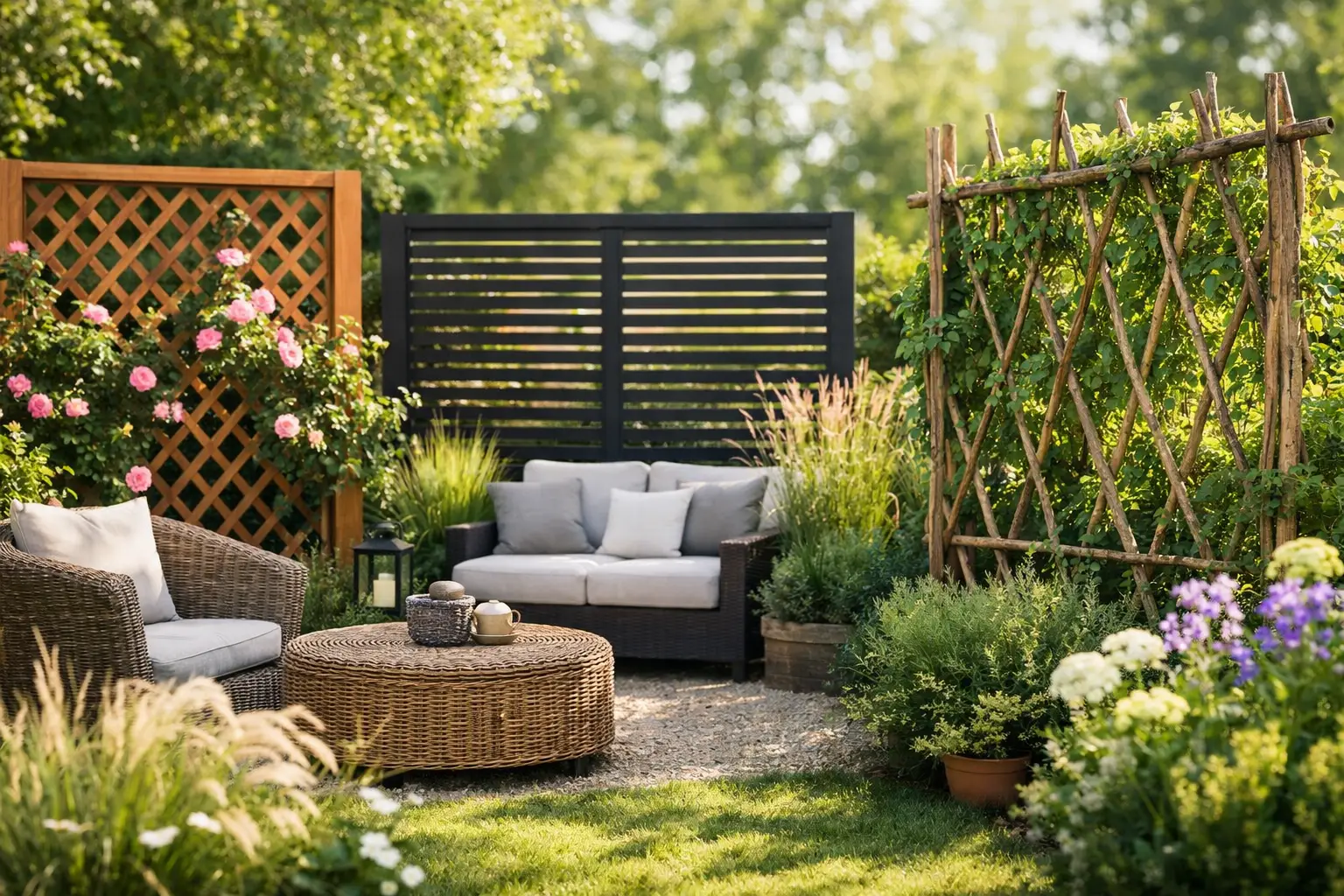
A neighboring second-story window can make even a beautifully furnished patio feel like a place you pass through rather than a place where you linger. A garden privacy trellis solves that problem with more charm than a solid fence. It creates a sense of enclosure while leaving room for sunlight, breezes, climbing plants, and the details that make an outdoor area feel personal.
Whether you want a quiet corner for your morning coffee, a more inviting dining space, or a little separation around a hot tub or fire pit, a trellis gives your yard definition without making it feel closed in. The best choice is not always the tallest or most decorative one. It is the one that fits your layout, your level of privacy, and the way you want to relax and entertain outdoors.
Start With the View You Want to Soften
Before choosing a material or style, stand where you actually sit. Look toward the neighboring patio, the street, an unsightly utility area, or the open side of your deck. Privacy is often needed in one specific sightline, not around the entire yard.
This simple step helps prevent a common mistake: installing an oversized screen where a narrower panel would have been more attractive and effective. A trellis placed behind a lounge chair, outdoor dining set, or bench can create the feeling of a private room while preserving the open views you enjoy.
Height matters, too. A lower trellis can define a seating zone and hide ground-level clutter. A taller design is better for blocking direct views from nearby homes. If visibility is the main concern, choose a denser lattice pattern or pair an open trellis with fast-growing climbing plants. Just remember that plants take time to fill in, so the trellis itself should offer enough coverage for the first season.
Choose a Garden Privacy Trellis Material That Fits Your Space
Trellis materials affect the look of your patio or garden, but they also influence upkeep, durability, and how easily the structure blends with existing outdoor furniture.
Wood brings natural warmth and works especially well beside cedar furniture, planters, garden beds, and traditional landscaping. It can be stained to match a deck or painted for a fresh, cottage-inspired look. Wood does need periodic care, particularly in areas with heavy rain, intense sun, or winter freeze-and-thaw cycles. A weather-resistant finish will help it stay attractive longer.
Metal trellises offer a slimmer profile and a more tailored appearance. Black, bronze, or aged finishes can frame climbing vines beautifully without competing with colorful cushions or garden decor. Metal is a smart option for smaller patios because its open design keeps the area from feeling crowded. Select a finish made for outdoor use to reduce the chance of rust.
Vinyl and composite options are easygoing choices for homeowners who want a crisp look with minimal maintenance. They resist moisture and do not need painting or staining. White vinyl can brighten a shaded corner, while darker composite styles can create a modern backdrop for outdoor seating and greenery.
Natural materials such as willow, reed, or bamboo screening have a relaxed, vacation-like feel. They provide more immediate coverage than open lattice, making them useful for a balcony or a patio with close neighbors. Their trade-off is lifespan. In exposed climates, natural screening may need replacement sooner than wood, metal, or vinyl.
Make It Feel Like Part of the Design
A privacy trellis should do more than hide a view. When placed thoughtfully, it becomes an anchor for the whole outdoor setting.
On a deck, position a trellis behind a conversation set to give chairs and a loveseat a cozy backdrop. Add an outdoor rug beneath the seating area, then repeat one or two colors from the cushions in nearby planters or lanterns. The result feels planned without looking overly matched.
Along a patio edge, a pair of trellis panels can frame a dining area much like walls frame an indoor room. Leave a central opening so guests can move easily between the grill, table, and garden. If your patio is compact, choose panels with a lighter pattern and use vertical planters rather than wide containers that consume floor space.
In a larger backyard, use a freestanding trellis to separate functions. It can create a visual break between a lively grilling area and a quieter reading nook, or soften the view of a storage box, trash bins, or pool equipment. This approach is especially helpful when you want a more organized yard without adding permanent construction.
Renters can use freestanding trellises, planter trellises, and lightweight screens to gain privacy without altering a fence or exterior wall. Check your lease or community rules before adding tall structures, and avoid designs that could become unstable in strong wind.
Let Plants Add Softness, Not Extra Work
Climbing plants turn a trellis into living decor, but the best plant depends on your climate, sun exposure, and tolerance for maintenance. A beautiful vine that needs constant pruning can quickly feel like another weekend chore.
For sunny locations, flowering climbers can bring color and fragrance near a dining space or patio entrance. Clematis, climbing roses, and honeysuckle are popular choices, although each has different pruning and support needs. In warmer regions, jasmine can add a fragrant, lush look. For shade or partial shade, climbing hydrangea can be a lovely option, though it is slower to establish.
Evergreen vines and dense foliage provide more year-round coverage in suitable climates. They are useful when privacy matters beyond the summer months, but they can add weight to a structure and require regular trimming. Make sure your trellis is securely anchored before planting anything vigorous.
If you prefer flexibility, hang lightweight planters from a sturdy trellis or place tall containers at its base. Trailing greenery, ornamental grasses, and seasonal flowers can soften the structure without committing you to a permanent vine. This is an easy way to refresh the look from spring through fall.
Avoid forcing a plant to do all the privacy work. A dense lattice panel, a row of tall planters, and a few climbers often create a better result than waiting years for a single vine to cover an open frame.
Add Light for Evenings Outside
A trellis becomes especially useful after sunset. It provides a simple place to layer in outdoor lighting that makes meals, conversations, and quiet nights on the patio feel more welcoming.
Warm string lights can be woven loosely through the upper portion of the structure. Solar lanterns placed nearby add a gentle glow without extension cords, while small path lights help define the route from the house to the seating area. Keep cords and fixtures rated for outdoor use, and avoid attaching heavy lighting to a lightweight panel.
The goal is not to flood the yard with brightness. Softer light makes a privacy screen feel more intimate and helps the trellis fade into the atmosphere rather than becoming a hard visual barrier.
Plan for Stability and Seasonal Care
A garden privacy trellis needs to stand up to more than climbing plants. Wind, rain, snow, and the occasional enthusiastic dog or child can all test its stability. Freestanding models should have a broad base, weighted planters, or ground anchors. Wall-mounted styles need hardware suited to the surface, whether that is wood, masonry, or vinyl siding.
Give plants enough room for airflow and avoid crowding the trellis against a fence if moisture tends to collect there. At the start and end of each season, check for loose fasteners, peeling finishes, rust, or plant growth pulling away from the frame. A few minutes of care can protect your investment and keep the space looking polished.
For a coordinated outdoor update, pair your trellis with planters, solar lighting, comfortable seating, or a small side table that encourages you to stay awhile. Patio Treasures makes it easy to bring those pieces together so your privacy solution also feels like part of a welcoming retreat.
A well-placed trellis does not have to transform the entire yard to make a meaningful difference. Start with the view that keeps you from fully enjoying your outdoor space, then build a little comfort around it. That one sheltered corner may become the spot where morning coffee lasts longer, dinner conversations stretch into evening, and your backyard finally feels like your own.