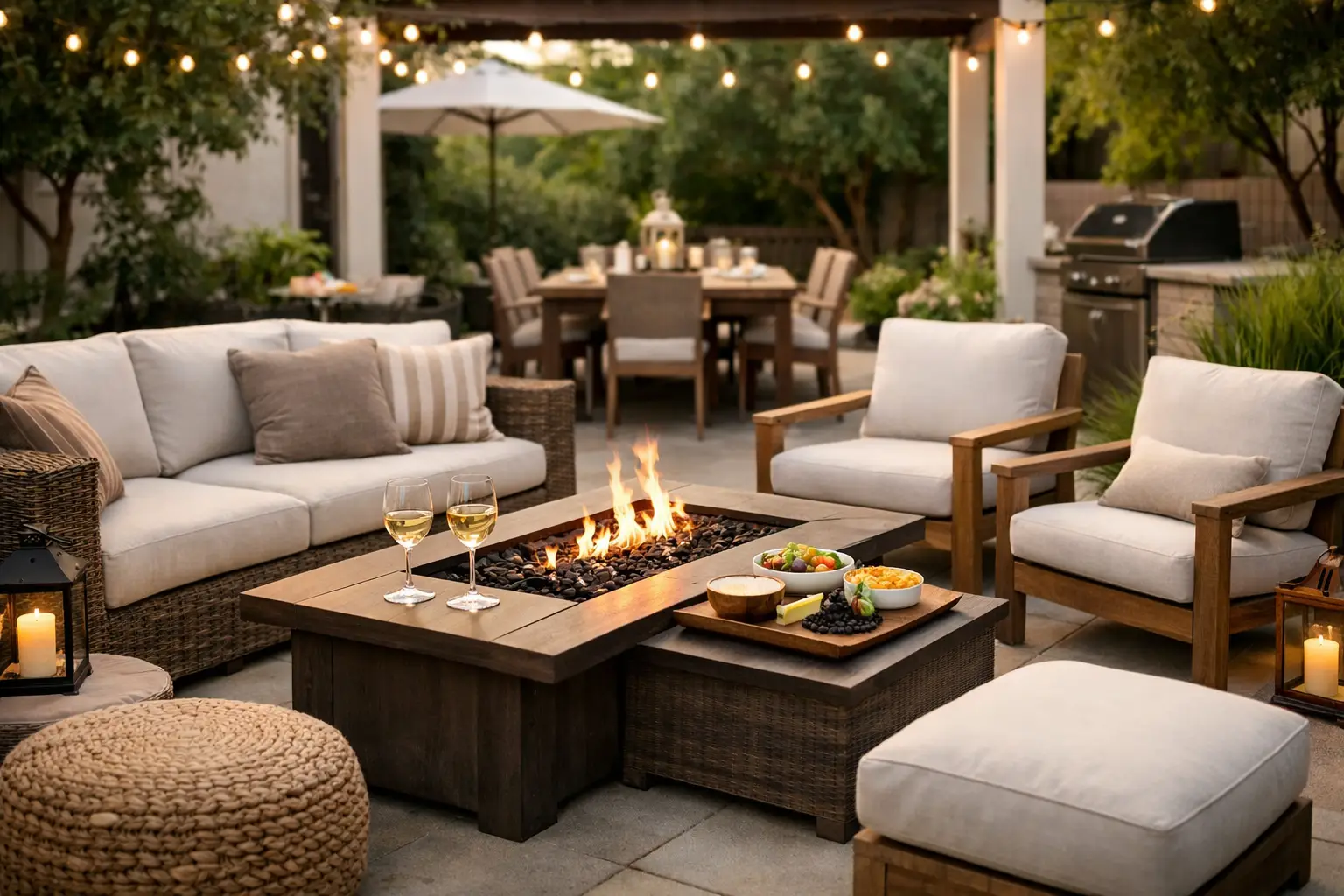
A patio can have beautiful furniture and still feel awkward if every chair faces a different direction or guests have to squeeze around a table. Learning how to arrange patio seating starts with one simple question: what do you want people to do here? A quiet morning coffee setup needs a different layout than a backyard built for grilling, family dinners, and long summer evenings around the fire.
The most inviting outdoor spaces feel easy to use. There is a comfortable place to sit, a convenient surface for a drink, a clear path to walk through, and enough shade or warmth to encourage people to stay awhile. You do not need a professionally designed backyard to create that feeling. A thoughtful furniture arrangement can make even a compact balcony or plain concrete patio feel like a welcoming retreat.
Start With the Patio's Main Purpose
Before choosing a furniture layout, decide which activity deserves the best spot. If your household eats outdoors often, place dining seating closest to the kitchen or grill. If the patio is mostly for conversation and relaxing, give the central area to lounge chairs, a sofa, or a sectional arranged around a coffee table or fire pit.
Many patios need to do more than one job. In that case, divide the space into simple zones rather than trying to make one furniture grouping handle everything. A dining set at one end and a compact lounge area at the other can make a medium-size patio feel more useful without making it feel crowded.
Think about the view, too. A lovely garden bed, pool, mature tree, or sunset-facing edge is worth orienting seating toward. On the other hand, if the only view is a fence or neighboring wall, use planters, a trellis, outdoor art, or a garden statue to create a more appealing focal point.
How to Arrange Patio Seating Around Conversation
For a relaxed social area, arrange seats so people can talk without raising their voices or twisting in their chairs. Face two chairs toward a loveseat, outdoor sofa, or pair of matching chairs. A U-shape works especially well around a coffee table, fire pit, or outdoor rug because it gives the group a natural center.
Avoid lining every seat against the perimeter of the patio. This may seem like it creates more open floor space, but it often leaves guests feeling far apart. Pulling furniture inward by even a few feet creates a warmer, more intentional gathering area.
A coffee table is helpful in a lounge setup, but it should not become an obstacle. Leave roughly 16 to 18 inches between the table and seating so guests can set down a drink while still having room to move comfortably. If the patio is small, use a pair of small side tables instead. They are easier to reposition when you need extra flexibility.
An outdoor rug can quietly define the conversation zone and add color, texture, and comfort underfoot. Choose one large enough that at least the front legs of your seating rest on it. A rug that is too small can make the arrangement look disconnected.
Create a Focal Point People Can Gather Around
The strongest seating layouts have a reason for people to face inward. This could be a fire pit, a low coffee table, a water feature, or a fireplace wall. If you use a fire pit, check its clearance requirements and keep pathways open around it. Fire features create wonderful atmosphere, but they should never force guests to navigate a tight or unsafe layout.
For patios without a built-in focal point, an umbrella-covered table can become the center of daytime gatherings. In the evening, lanterns, solar lighting, and string lights add a gentle glow that makes the seating area feel finished rather than forgotten after sunset.
Give Dining Areas Room to Work
Dining furniture needs more clearance than lounge furniture. People need space to pull back chairs, slide into their seats, and carry food from the kitchen or grill. Aim for about 36 inches of open space behind dining chairs where possible. If your patio is tight, a bench on one side of the table can save space and seat more people when family or friends visit.
Round tables are often a smart choice for compact patios because they soften traffic flow and make conversation easier. Rectangular tables work well for larger groups and long, narrow decks. For flexible entertaining, consider an extendable table or stackable chairs that can be brought out only when needed.
Place the dining setup close enough to your cooking area to make serving easy, but not so close that smoke, heat, or heavy foot traffic disrupts the meal. A small serving cart, storage console, or outdoor sideboard can bridge the gap by giving you a place for plates, drinks, grilling tools, and extra napkins.
Protect Walkways and Entry Points
A beautiful patio layout fails quickly if people have to sidestep furniture every time they walk outside. Keep the route from the house to the yard, grill, gate, or pool as direct as possible. A main walkway should ideally be about 36 inches wide, though smaller patios may require a more compact plan.
Start arranging the largest pieces first, then walk through the space as if you were carrying a tray of food or opening the patio door with your hands full. This practical test often reveals a chair that needs to shift, a table that is too deep, or a storage box better placed against another wall.
Be especially mindful of doors. Leave enough space for a sliding door, French door, or screen door to open fully without hitting furniture. On a balcony, avoid filling every inch with seating. A little breathing room makes the space feel more comfortable and provides a safer path in and out.
Match the Furniture Scale to Your Space
Oversized sectionals can feel luxurious on a large deck, but they can overwhelm a narrow patio. Likewise, a tiny bistro set can look lost on a broad backyard terrace. Measure your usable space before shopping, including planters, steps, grills, and door swing areas that reduce the true footprint.
For small patios and balconies, choose pieces that earn their place. Folding chairs, nesting tables, slim benches, and storage ottomans offer comfort without taking over. Two deep lounge chairs with a shared side table may be more inviting than trying to force in a full sofa set.
For larger spaces, resist the temptation to scatter furniture everywhere. A few purposeful zones feel more polished than several isolated chairs. Consider a dining area, a separate conversation set, and one quiet corner with an Adirondack chair or chaise lounge for reading and personal downtime.
Add Shade, Warmth, and Useful Finishing Touches
Seating is only comfortable when the conditions are right. If your patio gets strong afternoon sun, position the main seating area where an umbrella, gazebo, pergola, or shade structure can provide coverage. An offset umbrella is useful when you want shade over a lounge grouping without a pole in the middle of the space.
For cool evenings, arrange chairs within a comfortable distance of an outdoor heater or fire feature, following all product safety guidance. Keep cushions, umbrellas, and other flammable items clear of heat sources. A basket of throw blankets can make the patio feel especially welcoming during spring and fall gatherings.
Finishing touches should support the layout, not clutter it. Add small surfaces beside seats, use planters to soften corners, and choose lighting that helps guests see paths and steps. Outdoor pillows and cushions are an easy way to bring in personality, but leave enough open seat space for people to actually relax.
Make the Layout Flexible for Real Life
The best patio arrangement is not frozen in place. Your needs may change from a quiet Tuesday evening to a holiday cookout with a full guest list. Lightweight chairs, movable side tables, and stackable stools make it easier to adapt without dragging heavy furniture across the patio.
Keep a storage box nearby for cushions, games, extra blankets, and entertaining supplies. It protects seasonal items and helps the patio stay orderly when you are not using it. A tidy space is more likely to become part of your everyday routine.
When arranging your patio seating, prioritize comfort over trying to fill every empty corner. Give each area a clear purpose, create an easy flow, and choose pieces that invite people to linger. With the right balance of seating, shade, lighting, and personal touches, your outdoor space can become the place everyone naturally gathers.