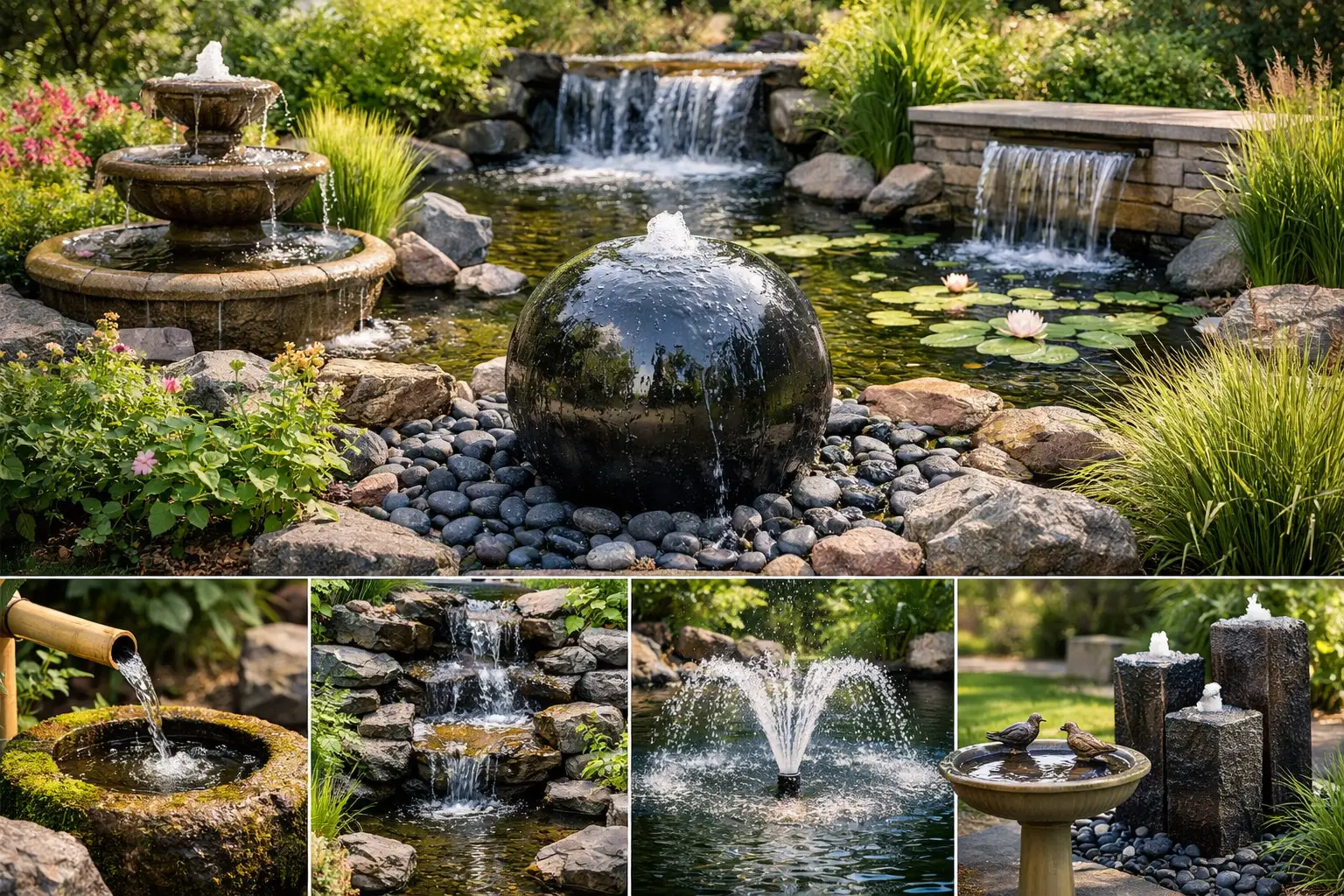
A quiet trickle can do more for an underused backyard than another decorative accent ever could. The best garden water features add movement, soften neighborhood noise, and give the eye a natural place to rest. Whether your outdoor space is a compact patio, a sunny deck, or a roomy garden, water can make it feel more settled, more personal, and ready for slow mornings or relaxed evenings with friends.
The right choice is not always the largest fountain or the most elaborate pond. It is the feature that fits the way you actually use your space, matches the level of care you want to give it, and works with your seating, lighting, and garden décor.
1. Freestanding Tiered Fountains
A tiered fountain is a classic choice for homeowners who want an instant focal point. Water spills from one basin to the next, creating a traditional look that suits formal gardens, brick patios, and spaces with symmetrical furniture arrangements. Place one at the end of a garden path, near an entry, or in a planting bed where it can be viewed from your favorite seating area.
These fountains make a stronger visual statement than smaller bubbling styles, so they work best where they have enough breathing room. A large tiered design can overwhelm a narrow side yard or small balcony. Choose a scale that feels connected to the rest of the setting rather than competing with it.
2. Modern Bubbling Urns
For a simpler, more contemporary look, consider a bubbling urn or vessel fountain. Water rises gently through the center and flows over the surface, producing a soothing sound without the splash of a multi-tier design. These are especially appealing beside clean-lined patio seating, outdoor rugs, and minimalist planters.
A self-contained urn is also one of the most approachable water features for first-time buyers. It does not require digging a pond, and many styles are designed to recirculate water from a hidden reservoir. That means less installation disruption and more time enjoying your refreshed outdoor retreat.
3. Wall Fountains for Small Patios
When floor space is limited, a wall fountain brings water into the design without taking over the patio. Mounted against a fence, privacy screen, or exterior wall, it adds vertical interest to an area that may otherwise feel plain. It can also make a small courtyard feel more enclosed and intentional.
Wall fountains are a smart option for renters with a private patio, too, provided installation rules allow it. Look for a design that can be securely supported and has easy access to an outdoor-rated power source. If permanent mounting is not practical, a slim freestanding fountain positioned against a wall can create a similar effect.
4. Pondless Waterfalls
A pondless waterfall gives you the drama of moving water without an open pond. Water appears to flow over stone or a sculptural feature, then disappears into a concealed underground basin before circulating again. The result feels natural and substantial, especially along a garden border or beside a pergola, gazebo, or seating nook.
This option is worth considering for busy households. There is no exposed pond edge to landscape around, and it can be easier to integrate into a family-friendly backyard. Installation is more involved than placing a plug-in fountain, though, so plan the location before adding furniture, lighting, and surrounding plants.
5. Container Water Gardens
A container water garden is one of the best ways to bring a pond-like feeling to a deck or patio. Start with a large watertight bowl, glazed planter, or compact basin, then add aquatic plants and, if desired, a small recirculating pump. The still surface reflects sky, greenery, and string lights beautifully after sunset.
This is a flexible choice for seasonal decorating. You can place a container water garden near lounge chairs in summer, move it to a more protected area when needed, or refresh its planting to complement new outdoor pillows and garden accents. Keep in mind that standing water needs attention. A small pump or water treatment helps discourage mosquitoes and keeps the water looking clear.
6. Birdbath Fountains
A birdbath fountain combines gentle motion with a welcome resource for visiting birds. Unlike a traditional still birdbath, circulating water is more noticeable to wildlife and less likely to become stagnant. It brings a little extra life to the garden, which can be especially rewarding if you enjoy morning coffee outdoors.
Set a birdbath fountain where you can watch it from a window, porch, or patio chair, but avoid placing it directly beside dense shrubs where predators could hide. Nearby trees can offer helpful shade, although too much leaf drop will mean more frequent cleaning. This feature is charming in cottage-style gardens and among flowering borders.
7. Sculptural Solar Fountains
Solar fountains are a convenient option for sunny gardens where running an electrical cord would be awkward. They come in styles ranging from playful wildlife figures to subtle bowls and modern sculptures. Because they do not need to be plugged into an outlet, they can help you create a focal point farther from the house.
The trade-off is consistency. Solar performance depends on direct sunlight, and the fountain may run more gently on cloudy days or stop after sunset unless it includes a battery backup. For a sunny planting bed or daytime entertaining area, that may be perfectly fine. If the sound of water is a must for evening relaxation, an electric recirculating fountain is usually the better fit.
8. Small Reflecting Pools
A reflecting pool is less about splash and more about atmosphere. Its calm surface creates a refined, spa-like look, mirroring foliage, lanterns, and the edge of a nearby umbrella or gazebo. It is a beautiful choice for homeowners creating a quiet garden corner rather than a busy activity zone.
Because the water is still or gently circulated, a reflecting pool requires thoughtful placement and regular upkeep. It should be level, safely edged, and designed with water cleanliness in mind. This is generally a better choice for a more permanent landscape update than a quick weekend patio refresh, but the visual payoff can be remarkable.
How to Choose Among the Best Garden Water Features
Start with the view. Sit where you usually relax or host guests and notice where the yard feels empty. A water feature should be seen and heard from a place where you will enjoy it, not tucked into a forgotten corner simply because there is available ground.
Next, think about sound. A soft bubbler works well near a reading chair or intimate dining set. A waterfall produces more sound and can help mask traffic or nearby conversations, but may be too active beside a peaceful meditation garden. The material matters here as well: stone-textured surfaces often create a deeper, natural sound, while smooth ceramic vessels tend to produce a lighter trickle.
Maintenance deserves an honest look. Self-contained fountains are often the easiest starting point, but they still need periodic cleaning, water refills, and pump care. Ponds and larger waterfalls create a bigger landscape moment, yet they ask more of you in seasonal maintenance. In areas with freezing winters, protect the pump and follow the feature's care guidance before cold weather arrives.
Finally, consider how water will work with the rest of your outdoor plan. A fountain becomes more inviting when framed by low-maintenance plants, solar path lights, or a garden statue. It can anchor a conversation area with weather-resistant seating or soften the edge between a patio and lawn. At Patio Treasures, coordinating those surrounding details is what turns a water feature from a standalone purchase into part of a welcoming retreat.
Placement Details That Make a Difference
Keep electrical safety at the center of your plan. Use an outdoor-rated outlet, follow the manufacturer's instructions, and keep cords as protected and discreet as possible. A water feature should feel effortless, not create a tripping hazard across the patio.
Avoid placing most fountains directly beneath heavy leaf-shedding trees. The shade may seem appealing, but leaves, seeds, and debris can clog a pump and increase cleaning time. A location with partial sun is often ideal, especially for features where you want to limit algae growth while still showcasing the water's movement.
Give the feature room to be noticed. Surrounding it with too many planters, statues, or furniture pieces can make the area feel crowded. One or two complementary elements, such as a pair of planters or a bench nearby, are often enough to make the feature feel thoughtfully placed.
A garden water feature does not need to transform every inch of your yard to transform how the space feels. Choose the sound, scale, and style that invite you outside, then build the surrounding patio or garden around that small moment of calm.