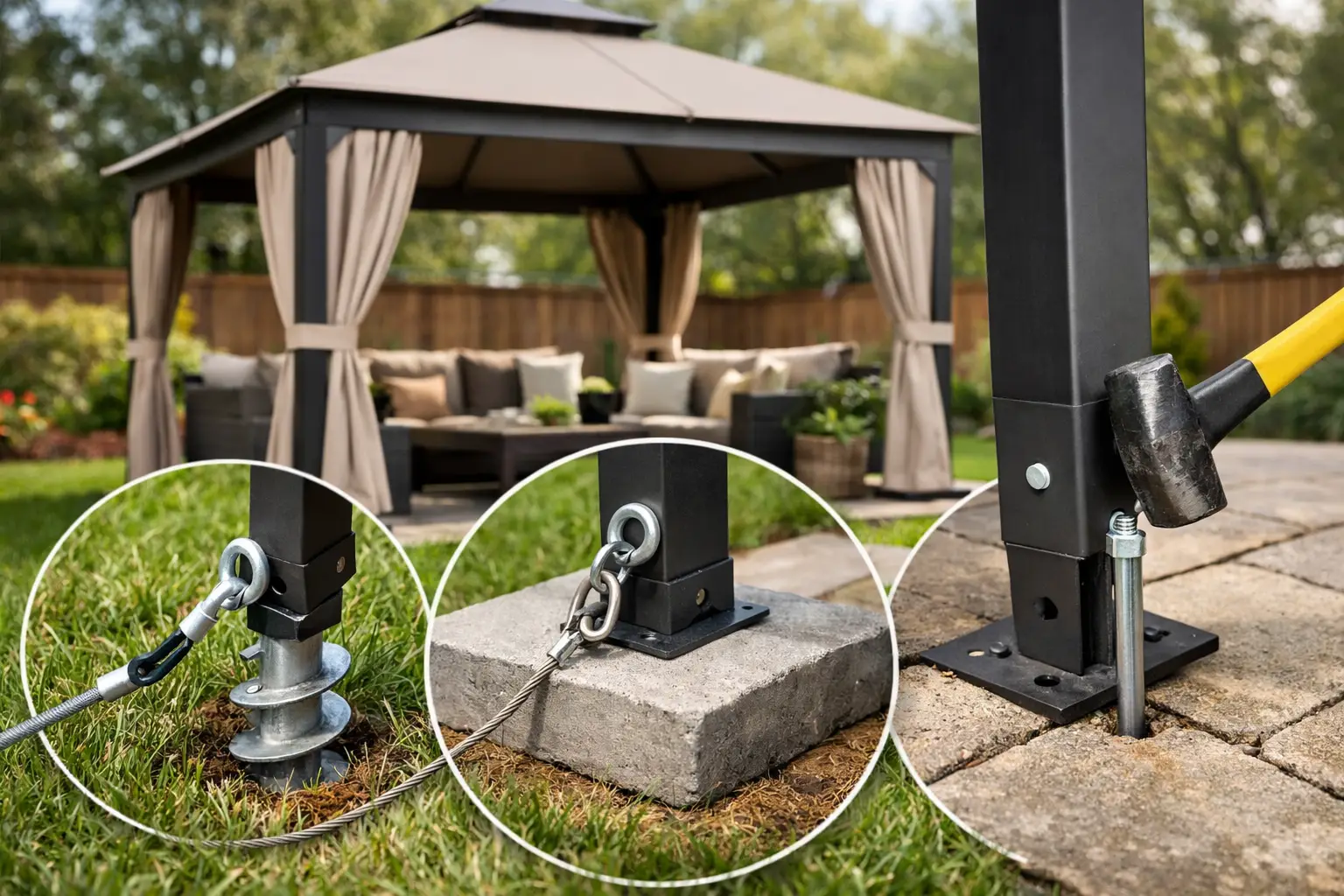
A gazebo can turn an open patio or patch of lawn into the spot where everyone gathers, from slow Sunday breakfasts to summer cookouts. But before you arrange the seating, hang string lights, or set out the outdoor rug, make sure the structure is secured for the surface beneath it. The right gazebo anchoring methods protect your investment, help prevent wind damage, and let you relax and entertain outdoors with greater confidence.
There is no one anchor that works everywhere. A permanent hardtop gazebo on a concrete pad needs a different solution than a lightweight pop-up canopy on grass. Start with the gazebo manufacturer’s instructions, then match the anchor style to the surface, the structure’s weight, and the wind conditions where you live.
Start With the Gazebo and the Site
Anchoring is not an optional finishing step. Even a gazebo that feels substantial can catch wind across its roof and place significant pressure on its legs, fasteners, and foundation. A sudden storm may create more force than expected, particularly in exposed yards, coastal areas, or elevated decks.
First, identify whether your gazebo is a temporary, soft-top model or a permanent structure. Pop-up and fabric-roof gazebos are often designed to be taken down when high winds are forecast. Metal, wood, and hardtop gazebos may be intended for longer-term installation, but they still require the correct hardware and a sound mounting surface.
Take a close look at the location, too. Is the area level? Does rainwater pool there? Are there underground utility lines, irrigation tubing, or a drainage system below the lawn? A level, well-drained site makes installation easier and helps the gazebo stay square over time. If you are installing a large permanent structure, check local permit requirements and homeowners association rules before beginning.
Gazebo Anchoring Methods for Grass and Soil
Grass gives a backyard gazebo a relaxed, garden-ready look, but soil conditions matter more than appearance. Dry, sandy, rocky, or recently filled soil may not hold anchors as reliably as dense, compacted ground.
Spiral Ground Anchors
Spiral ground anchors, sometimes called auger anchors, twist into the soil and provide more holding power than simple stakes. They are a practical choice for many soft-top gazebos, seasonal shade structures, and lighter metal frames. Attach the anchor to each leg or designated tie-down point using straps or cables rated for outdoor use.
These anchors work best in firm soil and should be installed fully, with the top close to the ground. Do not assume that a single anchor on each side is enough if your gazebo has multiple leg brackets or manufacturer-specified tie-down points. Use the configuration recommended for the structure.
Stakes and Rebar Pins
Heavy-duty stakes and rebar pins are easy to install and can be effective for lightweight gazebos during calm weather. They are usually less secure than spiral anchors, especially in loose soil or when the ground is wet. Think of them as a simple solution for temporary setups rather than a year-round answer for a large gazebo.
Avoid using ordinary tent stakes for a full-size gazebo unless the manufacturer specifically approves them. They can bend, pull out, or fail to reach deep enough into the ground when wind picks up.
Concrete Footings for Permanent Placement
For a permanent gazebo on soil, concrete footings provide a more stable foundation. Each post or leg is secured to a footing with an approved bracket and bolts, keeping wood or metal components elevated above wet ground. This approach takes more planning, but it is often the right choice for a heavier gazebo meant to become a lasting part of your outdoor living space.
Footing depth depends on local frost depth, soil conditions, and the gazebo design. In areas with freezing winters, footings may need to extend below the frost line to reduce shifting. If you are unsure about layout, depth, or local code, a qualified installer can save time and prevent a costly reset later.
Securing a Gazebo on Concrete
A concrete patio or slab is one of the most dependable surfaces for a permanent gazebo, provided the concrete is in good condition and thick enough for the intended anchors. This is a popular option for creating an outdoor dining area, lounge, or sheltered grilling zone close to the house.
Expansion or Wedge Anchors
Expansion anchors and wedge anchors are installed in drilled holes in cured concrete. As the bolt is tightened, the anchor grips inside the slab. They are commonly used with metal base plates and can provide a strong, clean-looking installation.
Measure carefully before drilling. Confirm that the gazebo is square, doors and panels have clearance, and every leg is positioned where you want it. Once holes are drilled, shifting the structure is not a quick adjustment. Use a masonry bit sized for the anchor, remove concrete dust from the hole, and follow the anchor manufacturer’s tightening guidance.
Concrete Screws
Concrete screws can be a convenient alternative for certain lighter structures or base brackets. They are removable, which can be useful if you plan to replace the gazebo later. Their holding strength varies based on the slab and screw size, so they are not automatically the best option for a large, wind-exposed hardtop gazebo.
Never anchor into cracked, crumbling, or very thin concrete without first addressing the condition of the slab. Anchors are only as reliable as the material holding them.
Anchoring on a Wood Deck
A deck gazebo can make a favorite seating area feel like an outdoor room, but deck boards alone are not an anchor point. Fastening a gazebo leg through the surface boards may look secure at first, yet the boards can split or pull loose under wind load.
The dependable approach is to anchor through the decking into the deck’s framing, such as joists or blocking installed beneath each gazebo leg. Lag bolts, through-bolts, and purpose-made brackets may be appropriate depending on the gazebo and deck construction. A structural professional or experienced contractor can confirm whether the deck has the capacity to support the gazebo’s weight plus snow, wind, lighting, and any accessories.
Be especially careful with elevated decks. Wind has more room to move around the structure, and a failure can damage both the gazebo and the deck. If the gazebo is a fabric-top style, remove the canopy before severe weather rather than relying on anchors alone.
What About Pavers, Gravel, and Other Surfaces?
Pavers can create a polished foundation for a gazebo, but individual pavers are rarely suitable for direct anchoring. They may shift, crack, or lift when force is applied. For a permanent setup, the better option is to install concrete footings or a reinforced pad below the paver surface and anchor the gazebo to that structure.
Gravel is similar. It offers excellent drainage and a casual backyard look, but it does not provide a solid point for bolts or stakes. A compacted gravel base can support a gazebo floor or patio area, while concrete piers or ground anchors provide the actual restraint.
For renters or anyone setting up a small temporary gazebo on a hard surface, weighted leg bags or purpose-made gazebo weights can add stability. They are useful for mild conditions, but they are not a substitute for permanent anchoring and should never be treated as storm protection.
Avoid These Common Anchoring Mistakes
A good installation is as much about what you avoid as what you buy. Do not use bricks, patio furniture, planters, or loose sandbags as your only method of securing a gazebo. These items can shift, become hazards in strong wind, and create a false sense of security.
Do not skip seasonal checks, either. Tighten hardware after the first few weeks of use, then inspect it at the start of each season and after major storms. Look for loose bolts, rust, torn straps, cracked brackets, settling soil, and movement around concrete anchors. Keep the roof clear of heavy snow or standing water when the gazebo’s design requires it.
Most importantly, respect weather warnings. Even well-installed gazebo anchoring methods have limits. Close curtains and screens when the manufacturer directs, remove fabric canopies in high wind, and secure or store nearby umbrellas, décor, and lightweight furniture that could blow into the structure.
A securely anchored gazebo gives you more than shade. It creates a dependable place to bring comfort, personality, and easy entertaining outdoors. Choose the foundation carefully, follow the installation instructions, and you will be ready to enjoy that welcoming retreat whenever the forecast is in your favor.