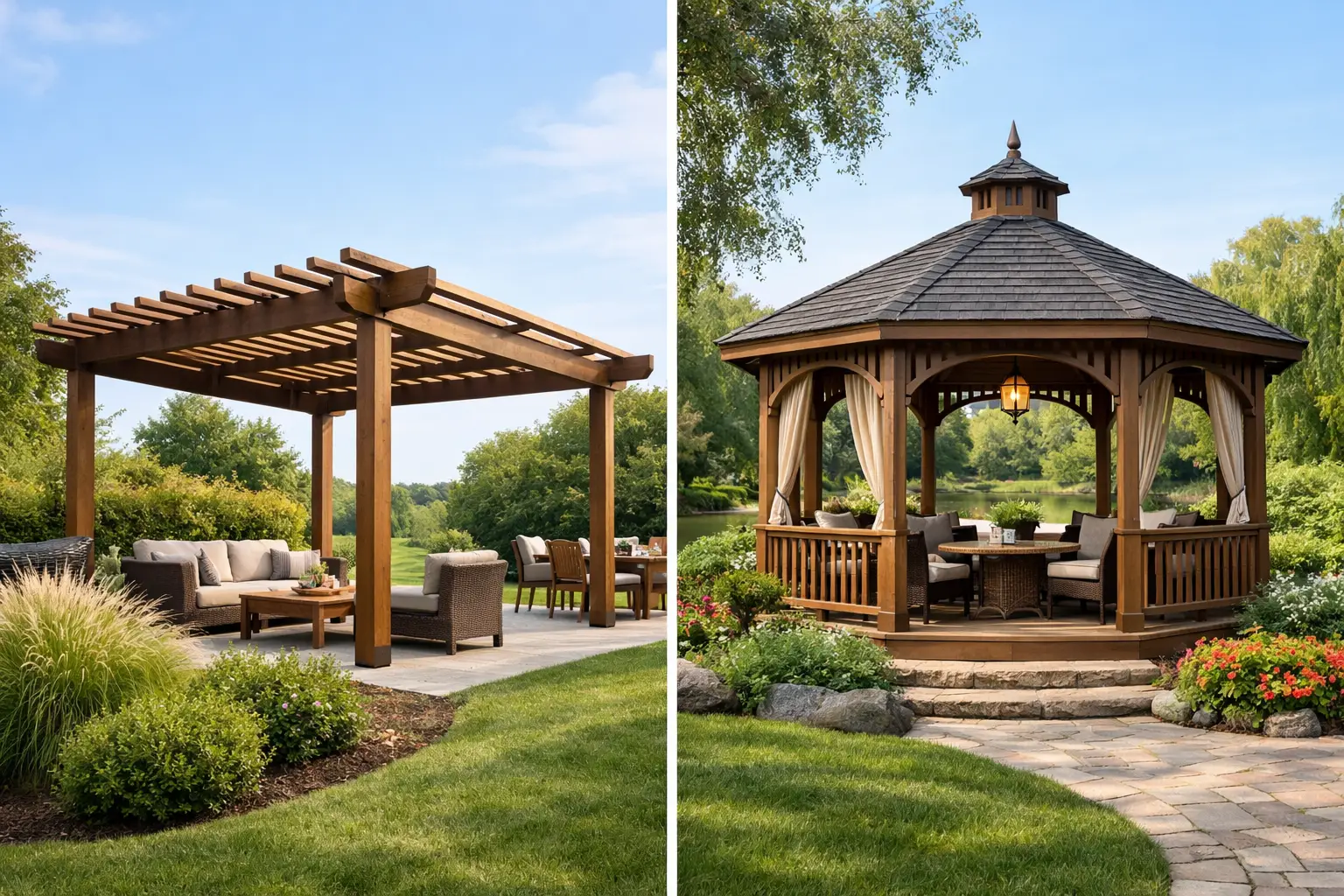
A bare patio can feel like a room without a ceiling: usable, but not quite inviting when the afternoon sun is strong or a light rain moves through. Comparing pergola versus gazebo structures helps you choose more than a backyard focal point. It helps you decide how you want to relax, dine, grill, and gather outdoors.
Both structures add presence, shade, and definition to an open area. The better choice depends on how much weather coverage you need, where the structure will sit, how permanent you want it to feel, and the kind of atmosphere you hope to create. A pergola offers an airy architectural frame. A gazebo creates a more sheltered destination.
Pergola Versus Gazebo Structures at a Glance
A pergola is an open-sided outdoor structure with vertical posts and an open or slatted roof. Traditional versions let sunlight filter through overhead beams, while newer designs may include a canopy, retractable shade, or adjustable louvers. Pergolas are commonly rectangular and look especially at home over a patio, deck, outdoor dining table, or grilling area.
A gazebo is typically a freestanding structure with a solid roof and open, screened, or partially enclosed sides. Its footprint is often square, rectangular, octagonal, or round. Because the roof provides dependable overhead cover, a gazebo is a natural fit for a seating area, outdoor dining space, hot tub, or garden retreat.
The central difference is simple: a pergola defines an outdoor space while keeping it connected to the sky, and a gazebo offers more complete protection from sun and light rain. That distinction affects nearly every other decision, from furniture choices to where you use the structure most often.
Choose a Pergola for an Open, Connected Patio
A pergola is often the right answer when your patio already feels useful but lacks comfort, visual structure, or a sense of destination. It can turn an exposed table into an outdoor dining room or make a pair of lounge chairs feel like a deliberate relaxation zone rather than furniture placed on a slab.
Its open roof is a feature, not a shortcoming, for homeowners who enjoy natural light and a breezy feel. Overhead slats cast changing shadows throughout the day, adding texture without closing in the yard. A pergola also works well close to the home, where it can extend the look of your interior living space onto a deck or patio.
Shade can be tailored to your climate and routine. A fabric canopy or shade cover softens direct sun. Climbing plants can add a lush garden character over time, although they require patience and seasonal care. Adjustable louvers offer the most flexibility, letting you invite in sunshine on a cool morning and create deeper shade during a hot afternoon.
The trade-off is weather protection. Even a covered pergola may not keep wind-driven rain away from cushions, rugs, or a dinner table. If you want to leave a full outdoor seating set in place through variable weather, choose materials designed for outdoor use and consider storage for cushions and smaller accessories.
Where a Pergola Works Best
Pergolas shine when they are used to organize a larger outdoor layout. Place one over a dining set to make family meals feel special, frame a conversation set for weekend entertaining, or install one beside a fire pit to give the surrounding seating area more definition. A pergola can also create privacy with curtains, side panels, planters, or trellises without cutting off the garden completely.
For smaller yards, a pergola may feel lighter than a gazebo because it preserves sightlines. It can add height and architectural interest while leaving the space visually open. That makes it a smart option when you want your backyard to feel more finished but not more crowded.
Choose a Gazebo for Reliable Shelter
A gazebo earns its place when the goal is to spend more time outdoors regardless of the forecast. Its solid roof gives you a dependable covered area for meals, game nights, reading, or conversations that continue after the sun gets too intense. If your outdoor space gets frequent summer showers, a gazebo can make your plans feel far less weather-dependent.
The roof also makes a gazebo especially practical for furnishing. You can create a true open-air living room with a sectional, coffee table, outdoor rug, and soft lighting, knowing that the seating area has meaningful overhead protection. Screened gazebo styles add another advantage in areas where mosquitoes can quickly shorten an otherwise lovely evening.
Because a gazebo has more visual weight, it is usually best placed where it can become a clear destination. A corner of the backyard, a spot overlooking a garden, or a level area just beyond the patio can all work beautifully. Give it enough breathing room so paths, plantings, and nearby furniture do not make the yard feel cramped.
Where a Gazebo Works Best
Choose a gazebo when you picture a defined retreat: a sheltered coffee spot in the morning, a covered table for birthday dinners, or a comfortable place to enjoy a summer storm from a dry seat. It is also a strong choice for a hot tub area or for homeowners who want a separate outdoor room away from the back door.
A gazebo may require a more considered foundation than a lightweight pergola. Level ground is essential, and many permanent models need secure anchoring to a patio, deck, or prepared base. Before purchasing, check local building rules, homeowners association requirements, setback restrictions, and utility locations. A little planning protects your investment and prevents an exciting backyard project from becoming a frustrating one.
Compare Shade, Privacy, and Seasonal Use
Your local climate should influence the decision. In dry regions where intense sun is the main concern, a pergola with a quality shade solution can be comfortable and visually beautiful. In humid areas with sudden rain or strong insect activity, a gazebo with a solid roof and optional screens may provide more hours of enjoyment.
Privacy matters, too. Pergolas can feel open and social, particularly when placed near a patio or pool. Add curtains or lattice panels if nearby homes overlook your yard. Gazebos create a stronger sense of enclosure from the start, and screened or curtained sides can make them feel more private without losing the outdoor experience.
Think beyond summer. A pergola can be wonderful in spring and fall because its open design welcomes sunlight when temperatures are mild. A gazebo extends comfort during drizzly days and gives outdoor heaters, lanterns, and protected seating a more natural home. Neither structure is automatically better year-round. The best one supports the seasons you are most eager to enjoy outside.
Budget for the Structure and the Space Around It
The purchase price is only one part of the project. A pergola can be a simpler, more budget-friendly way to make a patio feel upgraded, especially if it uses an existing deck or paved surface. Costs rise with larger dimensions, premium materials, motorized louvers, integrated lighting, and custom installation.
Gazebos often cost more because they include a complete roof system and may need a sturdier base or more involved assembly. Still, the added shelter can make the investment worthwhile if it replaces a dining room that sits unused every time the weather changes.
Set aside room in the budget for the details that turn either structure into a place people actually use. Comfortable seating, an outdoor rug, planters, solar or string lighting, and a storage box for cushions can make a bigger difference than adding every possible upgrade to the structure itself. For entertaining, consider traffic flow: guests should be able to move from the grill to the table without squeezing around posts or chairs.
Match Materials to Maintenance Expectations
Wood brings warmth and a classic garden feel, but it needs periodic sealing, staining, or painting to stay attractive. Metal and aluminum options can offer a clean, contemporary look with less upkeep, while vinyl can suit homeowners who prefer an easy-care finish. The right material should complement your home while fitting the amount of maintenance you are willing to handle.
A gazebo roof also deserves attention. Choose a design built for your region's wind, rain, and snow conditions, and follow the manufacturer's anchoring guidance carefully. For either structure, measure twice before ordering. Account for roof overhangs, furniture clearance, door swing, and access for delivery and assembly.
A pergola is ideal when you want to soften the sun and shape an open patio into a welcoming outdoor room. A gazebo is the better fit when reliable cover and a more protected gathering spot are at the top of your wish list. Once the structure is in place, let it set the tone for the rest of the space: a few comfortable pieces, warm lighting, and personal touches can turn that patch of backyard into the retreat everyone looks forward to using.