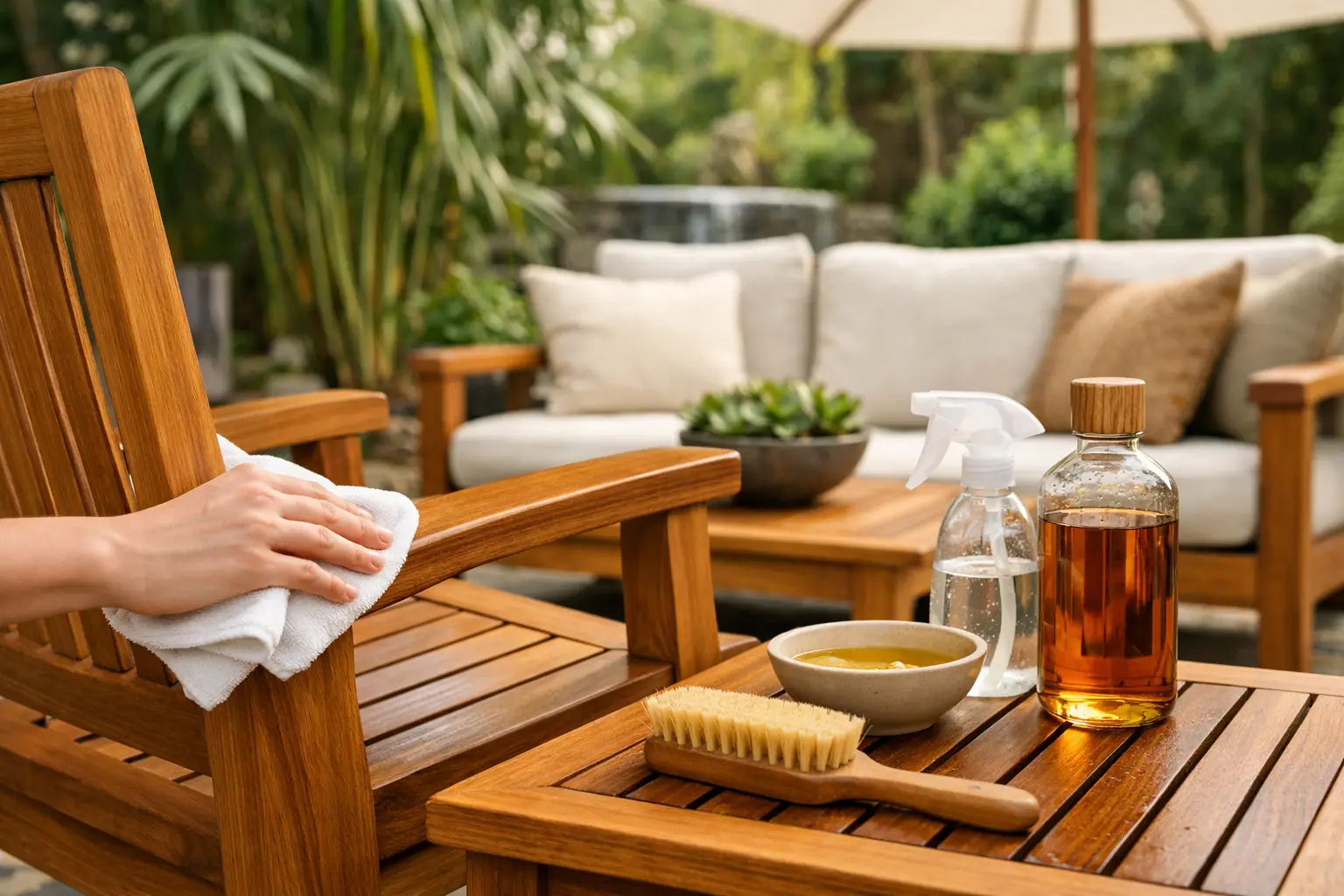
A teak dining set can handle sunny brunches, weeknight grilling, and long afternoons by the fire pit without asking for much in return. That is the appeal of this hardworking hardwood. Still, thoughtful teak furniture care helps your favorite patio pieces look their best while keeping them comfortable and ready for every gathering.
Teak is naturally dense and rich in protective oils, which make it especially well suited to changing outdoor conditions. It is not maintenance-free, but it is refreshingly low-maintenance when compared with many painted, stained, or softer wood furniture options. The first decision is simple: do you love the warm honey-brown look of new teak, or do you prefer the soft silver-gray patina that develops outdoors? Both are beautiful, and each calls for a slightly different approach.
Start With the Look You Want
Fresh teak has a golden tone that brings warmth to a patio, deck, or garden seating area. With sun and rain exposure, unfinished teak gradually turns gray or silvery. This is a natural surface change, not a sign that the wood is failing. In fact, many homeowners choose teak precisely because that weathered finish feels relaxed, timeless, and right at home beside stone, greenery, and outdoor rugs.
If you enjoy the gray patina, your routine can stay very simple: clean the furniture periodically and let the wood age naturally. If you want to preserve or restore a warmer color, plan to use a teak-specific protector after cleaning. A protector slows the graying process and can help maintain a more even appearance, but it will need to be reapplied according to the product directions and your local weather.
Trying to keep teak permanently golden takes more effort, especially in sunny climates. There is no wrong choice. Consider the style of the whole space. A modern patio may benefit from the clean look of silver teak and charcoal cushions, while a classic dining area can feel especially inviting with warmer wood tones, lanterns, and textured neutral accessories.
Teak Furniture Care Starts With Gentle Cleaning
For most outdoor sets, a light cleaning once or twice a year is enough. Give high-use pieces, such as dining tables and armrests, an extra wipe-down whenever pollen, food spills, sunscreen, or bird droppings collect on the surface.
Use mild dish soap mixed with water, a soft-bristle brush, and a clean cloth or sponge. Brush in the direction of the grain, using gentle pressure to lift dirt from the surface. Then rinse with clean water and allow the furniture to dry completely in open air. Choose a dry, mild day when possible, since teak needs time to dry before you add cushions, covers, or any protective product.
Avoid harsh household cleaners, chlorine bleach, and stiff wire brushes. They can roughen or discolor the wood and make a naturally smooth finish feel uneven. Pressure washers are also best left out of your routine. Even when used carefully, the force can erode the wood fibers and create a fuzzy texture that traps grime later.
A quick clean after a messy cookout makes a real difference. Wipe up barbecue sauce, cooking oil, wine, and greasy food promptly, especially on tabletops. Teak is forgiving, but less time for a spill to sit usually means less scrubbing later.
What to Do About Mildew and Dark Spots
Humid weather, shade, and wet leaves can create dark surface spots or mildew, particularly on furniture that sits beneath trees or near dense landscaping. Start with your usual mild soap-and-water cleaning. If that does not solve the problem, use a cleaner made specifically for teak or outdoor wood, following its directions closely.
Do not assume every dark mark needs aggressive treatment. Teak often develops natural variations as it weathers, and those subtle shifts can add character. Treat clear mildew growth and stubborn stains, but do not scrub simply because the color is not perfectly uniform.
When to Use Teak Cleaner, Brightener, or Protector
Specialty teak products can be useful, but they serve different purposes. A teak cleaner removes deeper dirt and weathered buildup. A brightener is often used after cleaning to bring back a more even, freshly sanded-looking color. A teak protector helps slow color change after the wood is clean and dry.
These products are most helpful when you are restoring a neglected set or when you want to maintain a golden finish. For naturally graying teak that is otherwise clean and sturdy, they may not be necessary. More products do not automatically mean better care.
Teak oil is another product that deserves a little caution. On unfinished outdoor teak, oil is usually not required because the wood already contains natural oils. Some oils can create a sticky surface, attract dirt, or encourage mildew in damp conditions. If your furniture arrived with a manufacturer-applied finish or specific care instructions, follow those directions instead of adding oil on your own.
Before applying any cleaner or protector, test it on a small, inconspicuous area. This is especially helpful for mixed-material furniture with metal hardware, woven details, or cushions nearby. Let the test area dry fully so you can see its true color.
Protect the Furniture Without Sealing It Away
Teak is built for the outdoors, but smart placement and seasonal habits can reduce unnecessary wear. Make sure chairs and tables sit on a level surface so water does not pool around the legs. On a deck, patio furniture pads can help prevent scraping while making seasonal rearranging easier.
Furniture covers can be useful during long periods of rain, while away on vacation, or through the off-season. Choose a breathable cover designed for outdoor furniture, and never cover teak while it is wet. Trapped moisture can encourage mildew and leave uneven marks. It also helps to leave room for airflow rather than wrapping the furniture tightly.
In areas with freezing winters, bringing smaller teak pieces into a garage, shed, or covered porch can simplify spring cleanup. Large tables and deep seating frames can often stay outdoors with breathable protection. Remove cushions, clean the furniture before covering it, and make sure snow or leaves are not sitting on the surfaces for weeks at a time.
Check Hardware and Moving Parts
Teak itself holds up beautifully, but furniture is more than wood. Once or twice a season, check screws, bolts, hinges, and adjustable feet. Tighten anything that has loosened after frequent use, and clear debris from folding mechanisms or extension-table tracks.
If metal hardware shows corrosion, address it early according to the manufacturer's recommendations. This small step keeps a teak bench, reclining chair, or extendable dining table safe and easy to use when friends and family arrive.
Refresh a Weathered Teak Set
A gray teak set can be lovely, but sometimes the finish becomes blotchy after years under trees, near sprinklers, or in a heavily used entertaining area. If cleaning alone does not create the look you want, a careful restoration can make the piece feel refreshed without replacing it.
Begin with a teak cleaner, rinse thoroughly, and let the furniture dry. A teak brightener may help even out the color. Light sanding with fine-grit sandpaper can smooth raised grain or persistent surface marks, but sand gently and evenly. Heavy sanding can alter the furniture's shape, soften crisp edges, and create a noticeably lighter patch.
Afterward, decide whether to let the wood weather naturally again or apply a teak protector. Give the furniture adequate drying time before setting out placemats, outdoor decor, or cushions. A freshly cared-for table deserves a simple finishing touch: a planter, a tray for cold drinks, or a cluster of solar lanterns can make the whole area feel ready for the season.
Build a Patio You Will Actually Use
The best teak furniture care routine is one you can keep up with. A quick wipe after meals, a gentle seasonal wash, and a little attention before winter will go further than an occasional day of intense scrubbing. Teak is meant to be lived with, not fussed over.
Whether your set stays golden or settles into a silvery gray, let it become part of a welcoming outdoor retreat. Add comfortable cushions, practical shade, and lighting that keeps conversations going after sunset. At Patio Treasures, the goal is simple: help make the space outside your door feel like a favorite room of the home.