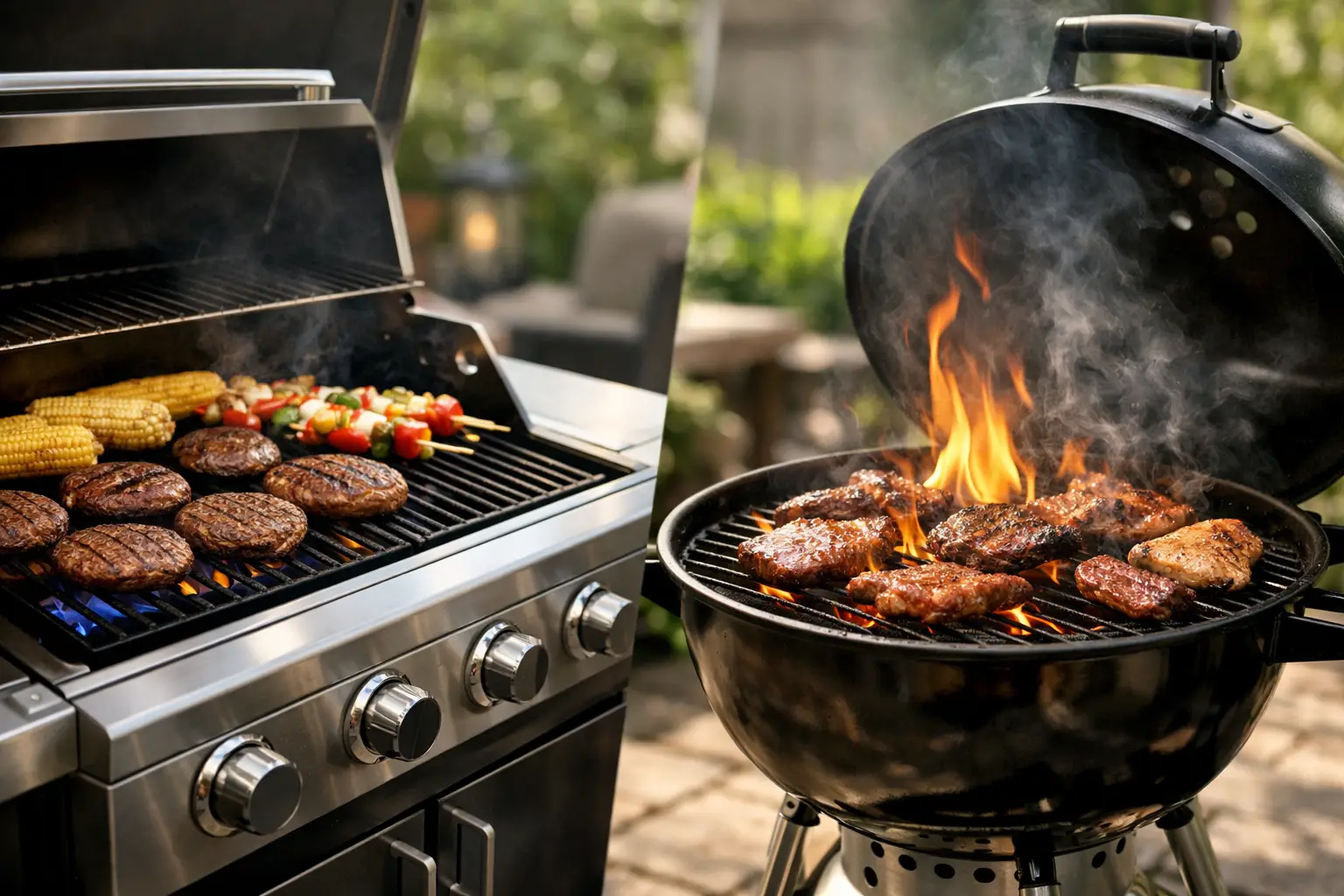
A Saturday cookout rarely begins when the food hits the grate. It begins when you decide whether dinner should be ready in 10 minutes or whether you are happy to let the coals warm up while friends settle into the patio chairs. Gas versus charcoal grilling is less about finding one universal winner and more about choosing the rhythm, flavor, and level of hands-on cooking that make your outdoor space feel like yours.
For a busy family patio, a gas grill can turn a weeknight into an easy outdoor meal. For the host who enjoys tending a fire and serving deeply smoky ribs, charcoal brings a satisfying ritual. Both can help create a welcoming retreat for relaxed dinners, game-day gatherings, and long summer evenings. The best choice depends on how you cook, how often you entertain, and how your patio is set up.
Gas Versus Charcoal Grilling: The Everyday Difference
The most noticeable difference is how quickly each grill gets you from idea to dinner. A gas grill starts with the turn of a knob and usually reaches cooking temperature in about 10 to 15 minutes. Temperature changes are immediate and familiar: turn the burner higher for a quick sear, lower it for chicken or vegetables, and keep one side cooler for gentler cooking.
Charcoal takes more time. You will need to light the briquettes or lump charcoal, wait for the fire to establish, and allow the coals to ash over. Depending on the weather and charcoal type, that process often takes 20 to 30 minutes. The payoff is an experience that feels slower and more intentional, along with the smoky, fire-kissed flavor many grill lovers want.
Neither approach is automatically better. If grilling is part of your Tuesday dinner plan, convenience has real value. If grilling is a favorite weekend activity and you enjoy the process as much as the plate, charcoal may be part of the fun rather than a delay.
Choose Gas for Quick Meals and Easy Hosting
Gas grills are a natural fit for households that want outdoor cooking to be flexible. You can grill burgers after work, add corn and zucchini while the main course cooks, then turn everything off when dinner is done. There is no waiting for coals to cool before you clear the patio and move on with your evening.
Control is another advantage. Multiple burners create temperature zones that make it easier to cook different foods at once. Sear steaks over high heat, roast a tenderloin with indirect heat, and hold buns warm away from the flame. For newer grillers, that predictable control can reduce the guesswork and make hosting feel more relaxed.
Gas is also generally easier to clean after a meal. Brush the grates while they are warm, empty the drip tray as needed, and cover the grill once it is cool. You will still need seasonal care, including checking burners and keeping the grease system clean, but there is no ash to dispose of after every cookout.
A gas grill does need a propane tank or natural gas connection. Propane offers portability, but it is wise to keep a spare tank available before a party. Running out of fuel halfway through a cookout is one backyard surprise nobody needs. Natural gas provides a steady supply, though installation may require planning with a qualified professional.
Gas grills can produce a great sear and plenty of grilled flavor. Still, they do not naturally deliver the same pronounced smoke character as charcoal. Wood chips or smoker boxes can add a touch of smokiness, but people who want that unmistakable live-fire taste may find charcoal more satisfying.
Choose Charcoal for Fire-Cooked Flavor
Charcoal grilling is about more than smoky flavor, although that is a major draw. Cooking over coals creates a direct connection to the heat source. You manage the fire by arranging coals, adjusting vents, and moving food to hotter or cooler areas of the grate. Once you understand those basics, charcoal can be remarkably versatile.
Briquettes are consistent, long-burning, and easy to find. Lump charcoal often burns hotter and produces less ash, but the pieces vary in size and can burn faster. Either can work well. The choice comes down to whether you prefer steady predictability or the hotter, more natural feel of hardwood charcoal.
A charcoal grill shines for foods that benefit from bold heat and smoke: steaks with a crisp exterior, chicken with lightly charred skin, burgers, ribs, and vegetables that take on a subtle wood-fired edge. With a two-zone coal setup, it can also handle indirect cooking for larger cuts. Add a lid and a little patience, and a simple charcoal grill can become a capable backyard smoker.
The trade-off is attention. You need to learn how airflow affects heat, watch for flare-ups from dripping fat, and plan enough time for lighting and cooling. Ash cleanup is simple but not optional. Wait until the grill is fully cold, then remove the ash carefully and store it in a noncombustible container.
For some homeowners, these steps feel like chores. For others, they are the reason to grill. A charcoal cookout invites people to linger outside while the fire gets going, making it especially appealing for slow weekends and gatherings where the patio is the destination.
Consider Your Patio Layout and Lifestyle
Before choosing a grill, look beyond the cooking surface. Think about where the grill will live and what happens around it. A grill needs a stable, level location with adequate clearance from railings, furniture, umbrella fabric, overhangs, and dry landscaping. Always follow the grill maker's clearance and safety guidance, along with local rules and HOA requirements.
For a compact patio or balcony, local restrictions may make the decision for you. Some apartments, condos, and communities limit or prohibit charcoal grills, and certain properties have rules for propane grills as well. Check first, especially if your outdoor area is close to neighboring homes or shared structures.
Then consider your entertaining style. If you often cook for a crowd, a larger gas grill with several burners can keep the food moving without leaving you tied to the fire. Pair it with a roomy outdoor dining table and comfortable seating, and guests can gather while you cook without the meal feeling like a production.
If your favorite gatherings are smaller and more casual, charcoal may create the atmosphere you want. A compact charcoal grill, a pair of weather-ready lounge chairs, and soft outdoor lighting can turn an ordinary corner of the yard into a place where people want to stay after the plates are cleared.
Storage matters, too. Propane tanks, charcoal bags, chimney starters, grill brushes, and covers all need a dry, organized home. A weather-resistant deck box or outdoor storage cabinet keeps essentials close at hand while helping the patio look neat between cookouts.
Cost, Care, and Long-Term Value
Entry-level charcoal grills usually cost less than comparable gas grills. They have fewer mechanical parts, and a basic kettle-style model can offer years of enjoyable cooking with routine care. Your ongoing expenses include charcoal, fire starters, and occasional replacement grates or ash components.
Gas grills often have a higher upfront cost, particularly models with more burners, side shelves, or premium construction. Fuel costs depend on how frequently you grill and whether you use propane or natural gas. Over time, burners, igniters, heat plates, and hoses may need replacement. A quality cover and regular cleaning can help protect that investment from rain, sun, grease, and seasonal debris.
Durability is not just about the grill itself. A thoughtfully arranged grilling area encourages you to use it. Give yourself a nearby surface for platters and tools, comfortable seating for guests, shade for warm afternoons, and lighting for meals that stretch past sunset. At Patio Treasures, the goal is to help bring those practical details together so the backyard feels ready for everyday use, not only special occasions.
A Simple Way to Decide
Choose gas if speed, straightforward temperature control, and frequent weeknight cooking are at the top of your list. It is also an excellent choice for hosts who want to spend more time talking with guests and less time managing a fire.
Choose charcoal if you love classic smoky flavor, enjoy hands-on cooking, and see grilling as part of the event. It rewards patience and can make even a simple meal feel like an occasion.
If you are still torn, picture your next meal outside. Set out the plates, imagine the guests, and think about the hour before dinner. The grill that makes you most excited to step onto the patio is the one most likely to turn your outdoor space into a place for more good meals and unhurried evenings.