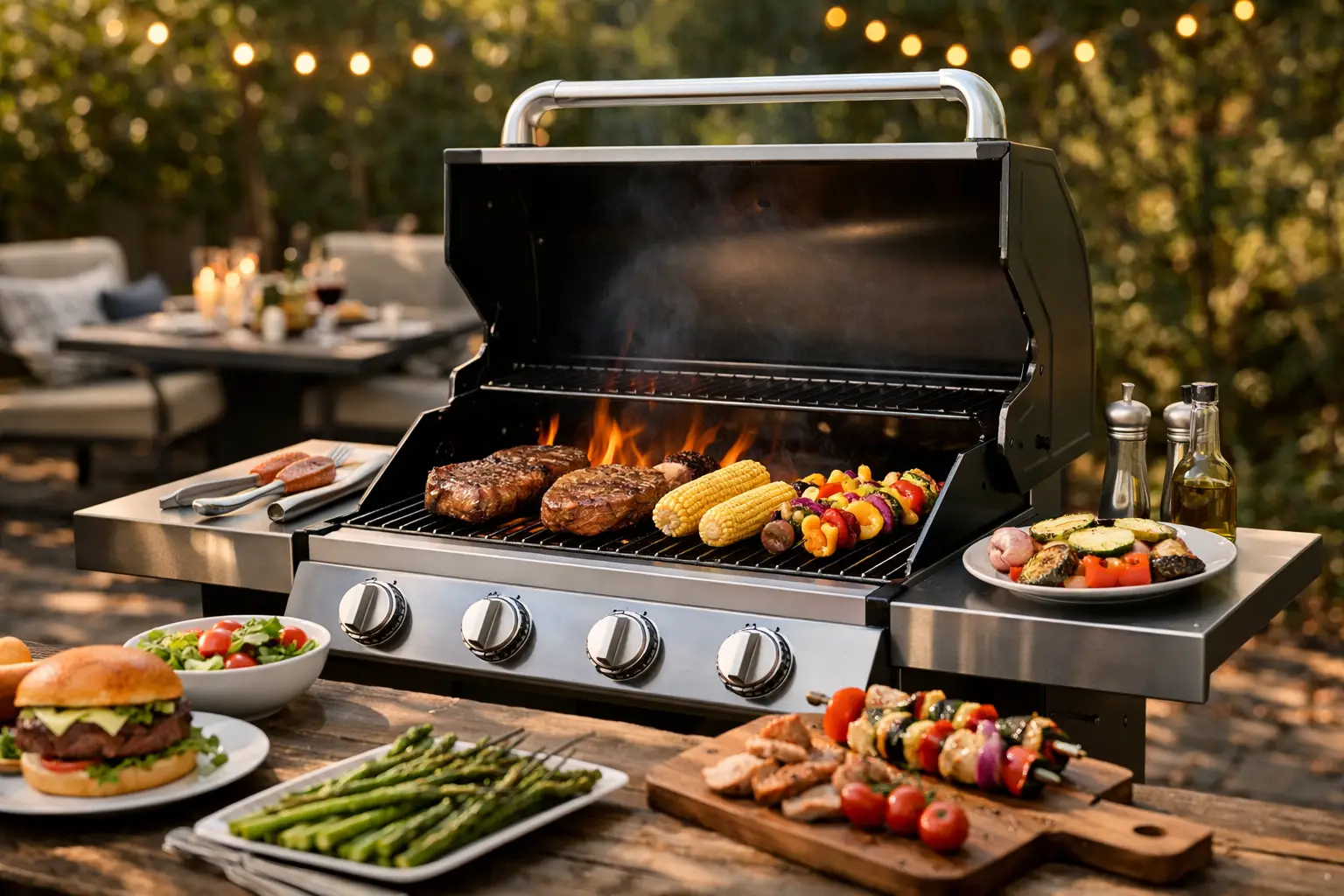
A great backyard meal rarely starts with a complicated recipe. It starts with a grill that heats when you need it, gives you room for everyone’s favorites, and makes stepping outside feel like part of the occasion. Gas grills are a natural fit for households that want quick weeknight dinners, easy weekend hosting, and more reasons to enjoy a patio, deck, or backyard.
The right choice is not always the largest model or the one with the longest feature list. It is the grill that suits the way you cook, the space you have, and the kind of gathering you want to create. A compact setup can make a small patio feel more useful, while a larger grill station can become the center of a welcoming outdoor kitchen.
Start With How You Actually Cook
Before comparing burners or finishes, picture an ordinary Saturday at home. Are you grilling burgers for four, cooking chicken and vegetables for a family dinner, or making enough food for a neighborhood get-together? Your answer should guide the size of your cooking surface.
For couples and small households, a two- or three-burner grill often provides plenty of flexibility without taking over the patio. It is easier to fit beside a bistro set, outdoor rug, or storage bench, and it leaves room for comfortable movement. Households that entertain regularly may appreciate four or more burners, especially when cooking proteins on one side and vegetables or sides on the other.
More burners do not automatically mean better results. They give you more control over heat zones, which is useful when you are preparing several foods at once. But a bigger grill also requires more clearance, more fuel, and a more intentional place in your outdoor layout. Choose capacity for your real routine, not just the occasional crowd.
What to Look for in Gas Grills
A gas grill should feel simple at mealtime. The features that matter most are the ones that help you cook with confidence and keep cleanup manageable.
Burner quality and heat control deserve the closest attention. Multiple independently controlled burners make it easier to create a hot zone for searing and a gentler zone for slower cooking. Even heat matters more than an impressive BTU number alone. BTUs describe potential output, but grill design, lid fit, burner placement, and grate material all affect how that heat performs.
Cooking grates influence both flavor and maintenance. Cast iron holds heat beautifully and can create pronounced sear marks, though it needs regular care to prevent rust. Stainless steel is durable and straightforward to clean, making it a practical choice for many busy households. Porcelain-coated grates offer an approachable middle ground, with easier cleanup and less upkeep than bare cast iron.
A side burner can be helpful if you like to keep sauces, corn, or a skillet dish outdoors instead of running back and forth to the kitchen. It is less essential for cooks who prefer a clean, compact footprint. Likewise, a warming rack is useful for holding finished food while another batch cooks, but it should not take priority over a main cooking area that fits your needs.
Look for a dependable ignition system, a sturdy lid, and a grease-management tray that is easy to access. These details may not sound glamorous, yet they make the difference between a grill you enjoy using and one that feels like a chore.
Match the Grill to Your Outdoor Layout
A grill works best when it belongs in the space instead of feeling parked there. Start by choosing a location with a stable, level surface and plenty of open air. Keep the grill well away from railings, walls, low-hanging branches, umbrellas, and anything that could catch fire. Follow the manufacturer’s clearance instructions, especially on decks and covered patios.
Then think about the path of a meal. Ideally, you can move easily from the kitchen door to the grill, then from the grill to a dining table or serving area. A small outdoor storage cabinet or weather-resistant cart nearby can hold grilling tools, platters, seasonings, and a propane tank cover. This keeps the cooking area tidy and prevents the familiar search for tongs when guests are already hungry.
For smaller patios or balconies where grilling is allowed, a compact gas grill can preserve valuable square footage. Pair it with foldable seating, a slim storage solution, and lighting that makes evening cooking more comfortable. Larger backyards have room to build a more defined zone, perhaps with a grill, prep cart, dining set, and an umbrella or gazebo that gives guests a comfortable place to gather.
The grill itself does not need to carry the whole design. Add a durable outdoor rug to ground the dining area, lanterns or solar lighting for a soft evening glow, and seating that invites people to linger while food is cooking. A well-planned setting turns grilling from a task into a relaxed part of the day.
Propane or Natural Gas: Choose for Convenience
Most homeowners will choose between propane and natural gas. Both can deliver reliable performance, but each suits a different routine.
Propane grills use a portable tank, so they offer flexibility in placement and are often straightforward to set up. They are a strong option for renters, households that may rearrange their patio, and anyone without a natural gas line nearby. The trade-off is keeping an eye on fuel. Having a full backup tank can save a dinner party from ending early.
Natural gas grills connect to a home’s gas line, eliminating tank exchanges and fuel checks. They are especially convenient for frequent grillers who have a permanent outdoor cooking area. Installation usually requires a qualified professional, and once connected, the grill is less portable. If you know your grill has a long-term home, that trade-off can be worthwhile.
Make Cleanup Part of the Routine
The easiest way to keep a grill ready is to clean it a little after every use. While the grates are still warm, brush away food residue with a grill brush suited to the grate material. Once the grill has cooled, empty the grease tray as needed and wipe down exterior surfaces with a gentle cleaner.
Every few weeks during grilling season, check burner ports for blockages, inspect the ignition, and make sure the lid and handles remain secure. If your grill uses propane, inspect the hose and connections before lighting. A quick soap-and-water test can help reveal a leak through visible bubbles. If you suspect a gas leak, turn off the fuel supply and do not use the grill until the issue is addressed.
A fitted grill cover helps protect against rain, dust, pollen, and sun exposure when the grill is not in use. It is a small addition that can keep the finish looking better and reduce seasonal cleanup. In colder parts of the country, a cover and regular checks are especially helpful between gatherings.
Set the Scene for Easy Entertaining
The best cookouts make guests feel comfortable before the first plate is served. Arrange seating so people can chat without crowding the cooking area. Keep a drink station or cooler within reach, add shade for sunny afternoons, and use warm lighting for dinner after sunset. A fire pit or outdoor heater can extend the season when the evening turns cool.
It also helps to choose a simple menu that lets you enjoy your guests. Grill a main dish, add vegetables or fruit that cook quickly over medium heat, and prepare one or two sides indoors ahead of time. The goal is not to perform a restaurant service in your backyard. It is to create a relaxed meal where the host gets to sit down, too.
At Patio Treasures, gas grills can be part of a larger outdoor setup that feels polished without feeling precious. Combine practical cooking space with comfortable seating, storage, shade, and lighting, then let the details reflect how your household likes to spend time outside.
A grill earns its place when it makes outdoor meals easier to say yes to. Choose one that fits your space, keep the essentials close at hand, and leave enough room for the people who make the backyard worth gathering in.