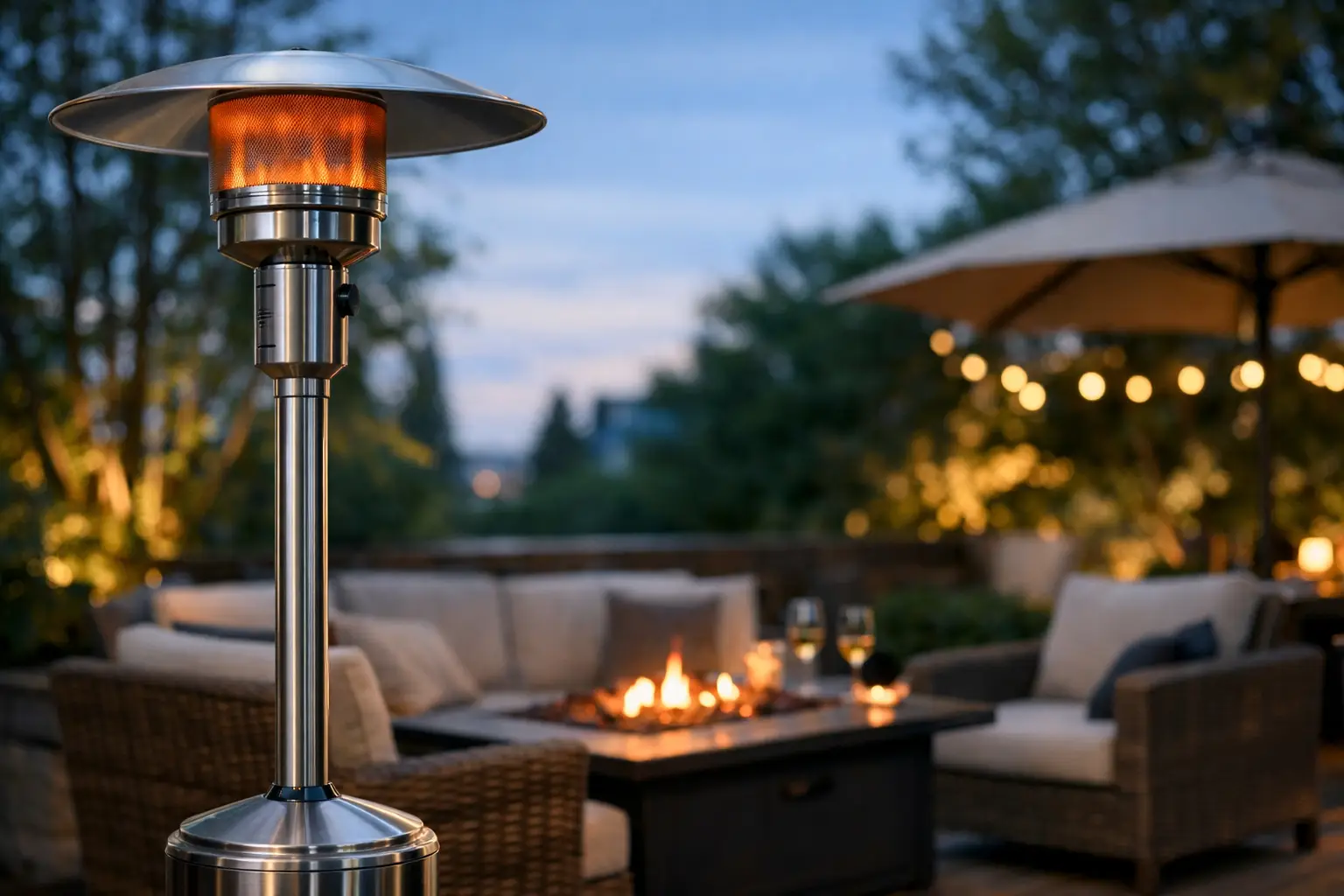
A crisp evening does not have to send everyone indoors just as dinner is served. But do patio heaters work well enough to make a real difference? Yes, when the heater is matched to the space, the weather, and the way you gather outside. They are not meant to turn an open backyard into a heated living room. They are designed to create a comfortable pocket of warmth that helps you relax, linger over a meal, and enjoy your patio longer into the season.
For homeowners and renters with a private balcony, deck, or patio, that difference can be substantial. The right outdoor heater makes a favorite seating area feel more welcoming on cool spring nights, early fall mornings, and evenings when a fire pit alone does not reach every chair.
Do patio heaters work in open outdoor spaces?
Patio heaters work by warming people and nearby surfaces rather than trying to heat every cubic foot of outdoor air. That distinction matters. Outdoors, warm air quickly rises and moves away, especially in a breeze. Radiant heat, on the other hand, travels outward from the heater and feels warm when you are sitting or standing within its range.
Think of it like standing in sunlight on a chilly day. The air may still feel cool, but the direct warmth on your skin is noticeable. A patio heater creates a similar effect, although its reach and intensity depend on the model.
In a sheltered patio arrangement, a quality heater can make a cool 50-degree evening feel far more manageable. In a wide-open, windy yard, the same heater may only keep the closest seats comfortable. This is why the best results come from planning around a defined gathering zone instead of expecting one unit to warm an entire lawn.
What affects how warm a patio heater feels?
The heater itself is only one part of the equation. Your patio layout, local weather, and seating plan all influence performance.
Wind is the biggest challenge
Wind carries warmth away quickly. A covered porch with side walls, privacy screens, planters, or a fence will hold warmth better than an exposed deck. You do not need to close in the whole space to see an improvement. Even positioning a seating area near a solid wall can reduce the chill and make the heater feel more effective.
If your patio is regularly breezy, consider arranging chairs closer together and placing the heater so its warmth reaches the group without being blocked by furniture. Outdoor curtains and weather-appropriate screens can also help define a cozier zone, provided they are used safely and kept well clear of any heat source.
Heater placement changes everything
A heater should be placed near the people using it, not simply wherever there is an empty corner. A tall freestanding propane heater is often a natural fit beside a dining table or lounge grouping. A wall-mounted or ceiling-mounted electric heater can direct warmth toward a specific seating area without taking up floor space.
Keep the manufacturer’s required clearances from furniture, umbrellas, ceilings, fabrics, railings, and plants. Never tuck a heater beneath an umbrella or use it in a location the manufacturer does not approve. Proper placement protects your guests and gives the heater room to perform as intended.
Temperature and humidity play a role
Most people find patio heaters most useful during mild-to-cool weather, not deep winter conditions. A heater can take the edge off a 45- to 60-degree evening, particularly when guests are dressed for the season. As temperatures fall further, you may need more than one heat source, tighter seating, warmer layers, and a protected location.
Damp air can also make cool weather feel colder. Adding outdoor rugs, deep cushions, throw blankets, and warm lighting will not raise the temperature, but it can make the entire space feel more comfortable and inviting.
Propane, natural gas, or electric: which works best?
Each type of patio heater can be effective. The best choice comes down to where you plan to use it and how much flexibility you want.
Propane heaters offer easy placement
Freestanding propane patio heaters are popular because they do not require an outlet or permanent gas connection. Many use a standard propane tank hidden in the base, making them easy to position around a dining area, poolside lounge, or detached patio.
They typically provide strong radiant warmth and work well for entertaining because they can cover a broader circle around the unit. The trade-off is that tanks need refilling or replacing, and the heater must be used outdoors in a well-ventilated area. A weighted base and stable, level surface are essential.
Natural gas is convenient for a permanent patio
Natural gas patio heaters are a smart option for homeowners who regularly host outdoors and have an existing gas line or plan to install one professionally. There is no propane tank to monitor, and the heater is ready whenever the patio is.
The limitation is mobility. Once installed, the heater stays in one location. It is a strong choice when you have already established a dedicated dining or lounge area and want dependable warmth there season after season.
Electric heaters suit smaller or covered spaces
Electric patio heaters are clean, quiet, and simple to operate. They are especially useful for balconies, compact patios, and covered areas where a freestanding gas heater may be impractical or restricted. Some models mount to a wall or ceiling, while others are portable enough to move beside a pair of chairs.
Electric heat is usually more directional and localized than a large propane heater, so it works best when aimed at the people using the space. Before choosing one, confirm that you have an appropriate outdoor-rated electrical connection and follow the heater’s instructions for covered locations.
How many patio heaters do you need?
One heater can be enough for an intimate setup: two lounge chairs, a bistro table, or a small dining group gathered close together. Larger patios often benefit from two or more heating zones rather than one oversized source in the middle.
For example, place one heater near the dining table and another near the conversation seating. This layout feels more intentional, gives guests a choice of where to sit, and avoids the familiar problem of everyone crowding around one warm spot. It also lets you use only the zone you need for a quiet weeknight outdoors.
Before buying, measure the area you actually want to warm. Focus on usable square footage, not the full dimensions of your backyard. A patio may be large, but the active space might only be a dining table and a six-chair conversation set.
Make the warmth feel like part of the design
A patio heater does not have to interrupt the look of your outdoor retreat. Treat it as one element in a layered, comfortable setting. Start by creating a clear destination for people to gather: a dining set for weekend meals, a sectional for relaxed conversation, or a pair of lounge chairs for morning coffee.
Then add pieces that make cool evenings more enjoyable. Outdoor rugs help visually anchor a seating area. Cushions and weather-ready throws add softness. Lanterns, solar lights, and string lighting create a warm glow after sunset. A fire pit can provide ambiance and a natural focal point, while a patio heater offers more consistent warmth for seats farther away.
This combination is often more effective than relying on heat alone. Guests are more likely to stay outside when the patio feels cared for, comfortable, and easy to use.
A few practical safety habits
Patio heaters are straightforward to enjoy when they are used correctly. Always read the specific model’s manual, use the fuel and connections it requires, and place the unit on a stable, level surface. Keep children and pets from touching hot surfaces, and turn the heater off when it is not attended.
Gas heaters should only be used in open, well-ventilated outdoor settings. Do not use them inside a home, garage, enclosed porch, or tent. For electric models, use outdoor-rated equipment and protect cords from water, foot traffic, and damage. If you notice a damaged hose, a gas smell, or an electrical issue, stop using the heater until it has been properly inspected.
A patio heater is not a cure for every cold night, but it is one of the simplest ways to extend the use of an outdoor space you already love. Choose heat that fits your layout, gather close to its radiant range, and pair it with comfortable furnishings and soft light. At Patio Treasures, the goal is not just a warmer patio - it is a welcoming retreat where dinner, conversation, and quiet evenings can last a little longer.