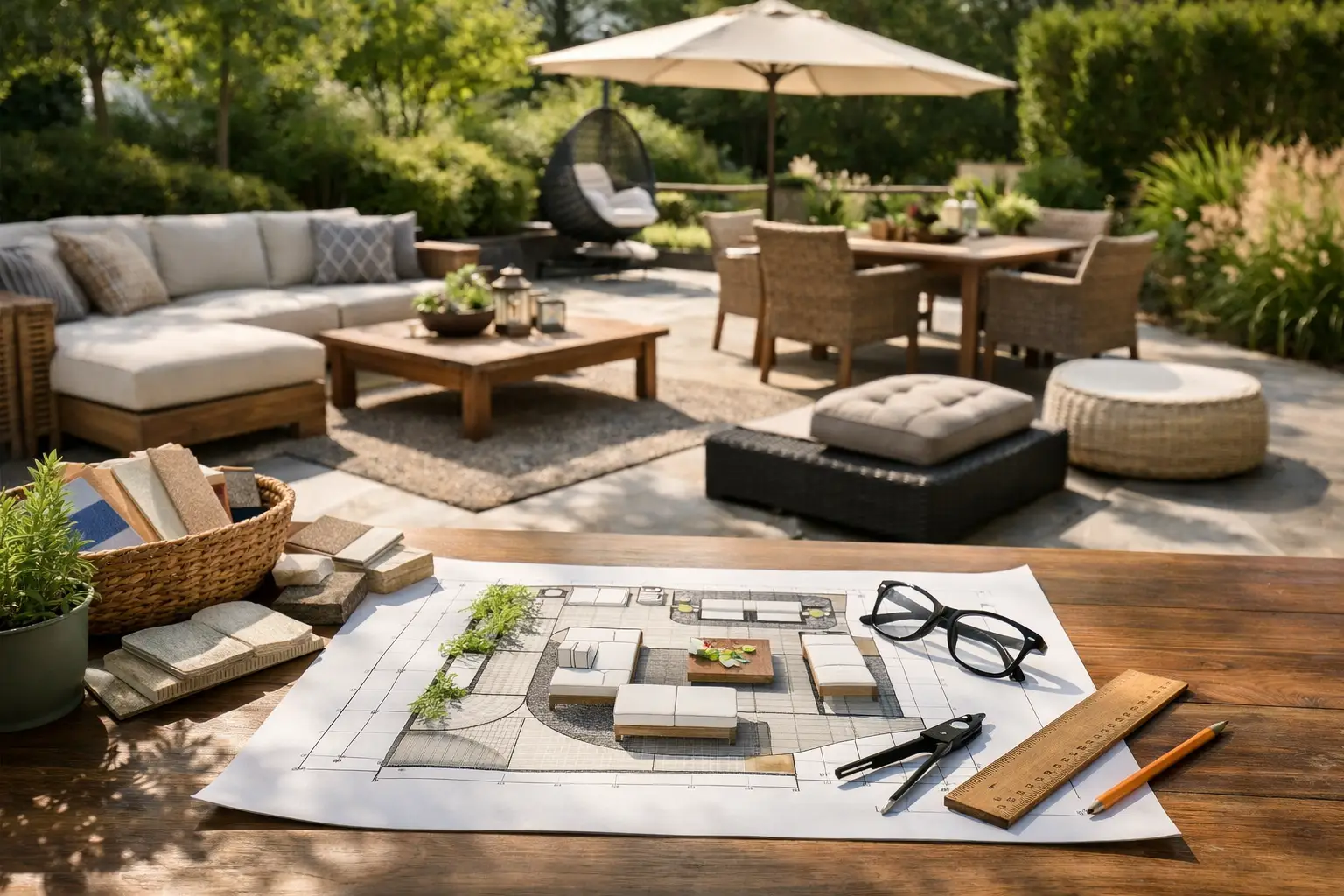
A patio can have beautiful furniture and still feel awkward if every chair faces the wrong direction, the dining table blocks the door, or there is nowhere to set down a drink. This outdoor furniture layout planning guide starts with how you want to live outside, then helps you arrange each piece so the space feels comfortable, open, and ready for real life.
The goal is not to fill every empty corner. A welcoming patio, deck, balcony, or backyard has a clear purpose, easy paths to walk through, and enough comfort that people naturally want to stay awhile. Whether you picture quiet coffee in the morning, family dinners, or weekends around a fire pit, the right layout makes that vision feel possible.
Start With the Moment You Want to Create
Before measuring furniture, think about the activity your space should support most often. A small apartment balcony may need two lounge chairs and a compact side table. A covered porch might be the perfect place for a conversation set. A larger backyard patio may need separate zones for dining, grilling, and relaxing after dinner.
Choose one primary use and one secondary use. For example, your primary use might be outdoor meals, while your secondary use is reading in the shade. If you try to make a modest patio serve as a full dining room, outdoor lounge, bar, and play area all at once, it can quickly feel crowded. Prioritizing makes shopping and arranging much easier.
Also consider the view. If your yard has a garden bed, pool, mature trees, or a favorite sunset angle, position seating to enjoy it. If the best view is your neighbors' fence, turn furniture inward around an outdoor rug, coffee table, fire pit, or planter arrangement to create a more inviting focal point.
Measure the Space Before You Shop
A tape measure is one of the most useful outdoor design tools you own. Measure the length and width of the usable area, then note obstacles such as doors, steps, railings, grill locations, posts, garden borders, and downspouts. On a deck or balcony, include the swing path of doors and the area needed to safely open a gate.
Sketch a simple overhead plan on paper. It does not need to look polished. Mark permanent features first, then use the dimensions of the furniture you are considering to test a few arrangements. Painter's tape, flattened cardboard boxes, or even cushions placed on the ground can help you visualize the footprint before a delivery arrives.
Leave room for movement. In most settings, aim for about 30 to 36 inches along main walkways, especially from the house to the yard, grill, or dining area. Around a dining table, allow enough space to pull chairs back without trapping guests. If space is tight, a bench that slides neatly under the table, a bistro set, or armless dining chairs can make a meaningful difference.
Create Zones That Feel Connected
Larger outdoor spaces work best when they are divided into simple, useful zones. Think of your backyard as an open-air extension of your home: one area can be for gathering, another for meals, and another for cooking or quiet downtime. The zones should have their own purpose without looking like separate rooms dropped next to each other.
An outdoor rug is an easy way to define a lounge area. Place the front legs of sofas or chairs on the rug whenever possible, then add a coffee table or ottoman within easy reach. The arrangement should encourage conversation, so avoid lining every seat against a wall. Two chairs facing a loveseat, or a compact sectional paired with accent chairs, usually feels more relaxed and social.
For a dining zone, center the table under a pergola, gazebo, umbrella, or shade sail if the location allows. Shade makes midday meals much more comfortable and helps the dining area become a place you actually use. On a narrow deck, try a rectangular table parallel to the longest edge. On a square patio, a round table often improves traffic flow by removing sharp corners.
Use repeated materials or colors to tie zones together. You do not need matching sets everywhere. Coordinating neutral cushions, black metal frames, warm wood accents, or a shared accent color can make a dining set, lounge chairs, and outdoor storage feel thoughtfully chosen.
Plan Your Outdoor Furniture Layout Around Conversation
Comfortable seating is about more than the number of chairs. People need a place for a drink, a book, or a plate, and they should be able to talk without raising their voices across the patio. Keep seats roughly 4 to 8 feet apart when possible. Closer can work for a small balcony; farther apart may suit a large fire pit area.
A coffee table should sit close enough to reach from the sofa, usually around 16 to 18 inches away. Side tables are especially helpful beside deep lounge chairs, Adirondack chairs, and chaise lounges. They take up little space but make the seating feel finished and more usable.
If you are working with a long, narrow patio, resist placing all furniture in a single straight line. Instead, create a destination at one end with two chairs and a small table, or float a loveseat across the short side to create a cozier boundary. Furniture does not always have to hug the perimeter. In fact, pulling a grouping a few inches away from walls or railings can make it feel more intentional.
Give Shade, Heat, and Cooking Their Own Consideration
Sun exposure changes throughout the day, so check your space at the times you are most likely to use it. An umbrella is flexible and practical for a dining table or a pair of loungers, while a gazebo, pergola, or larger shade structure can anchor a full seating area. On a small balcony, a tilting umbrella or a compact cantilever option may offer coverage without placing a center pole in the middle of the table.
Place fire pits where they can become a natural gathering point, but give them generous clearance from furniture, structures, low branches, and anything flammable. Follow the manufacturer’s guidance and local rules. A fire pit can replace a coffee table in a larger lounge arrangement, but in a compact area, a small fire table may be more practical because it provides surface space as well as warmth.
Keep grilling separate from the main conversation zone. You want the cook close enough to stay part of the gathering, yet far enough from seated guests to manage heat, smoke, and food prep comfortably. A weather-resistant storage cabinet or deck box nearby can hold tools, serving pieces, and cushions, keeping the area orderly without constant trips inside.
Add Personality Without Adding Clutter
Once the large pieces are in place, use accessories to give the space warmth and character. Outdoor pillows soften dining and lounge seating. Lanterns, solar path lights, and string lights extend the hours you can enjoy the patio. Planters can frame an entry, add privacy, or gently separate a dining area from a lounging zone.
The trade-off is maintenance. A patio filled with decorative items can look charming, but it may also require more cleaning, storage, and rearranging before a storm. Choose a few pieces that earn their place: a durable outdoor rug, lighting that improves visibility, planters that add color, and weather-ready storage that keeps necessities close by.
For smaller spaces, scale is everything. One statement planter, a slim storage bench, and a pair of coordinating lanterns often have more impact than many small accessories. Let open floor space be part of the design. It makes a balcony or patio feel calmer and easier to use.
Test the Layout Before You Call It Finished
After arranging the furniture, walk through the space as if you are carrying a tray of drinks, opening the patio door, pulling out a dining chair, or hosting a few friends. Sit in every seat. Is there enough shade at the time you use the space? Can someone reach a table without stretching? Is the grill accessible? Does the layout still work when cushions, toys, or serving dishes are out?
Make adjustments early and give the arrangement a weekend of real use before deciding it is final. Often, moving a chair by a foot, adding a side table, or changing the direction of an umbrella solves the small frustrations that keep an outdoor area from feeling effortless.
A well-planned layout gives every piece a reason to be there. Start with your everyday routines, leave space to move, and choose furnishings that invite people to linger. With comfortable seating, practical shade, and a few personal finishing touches, your outdoor space can become the welcoming retreat you look forward to using in every season.