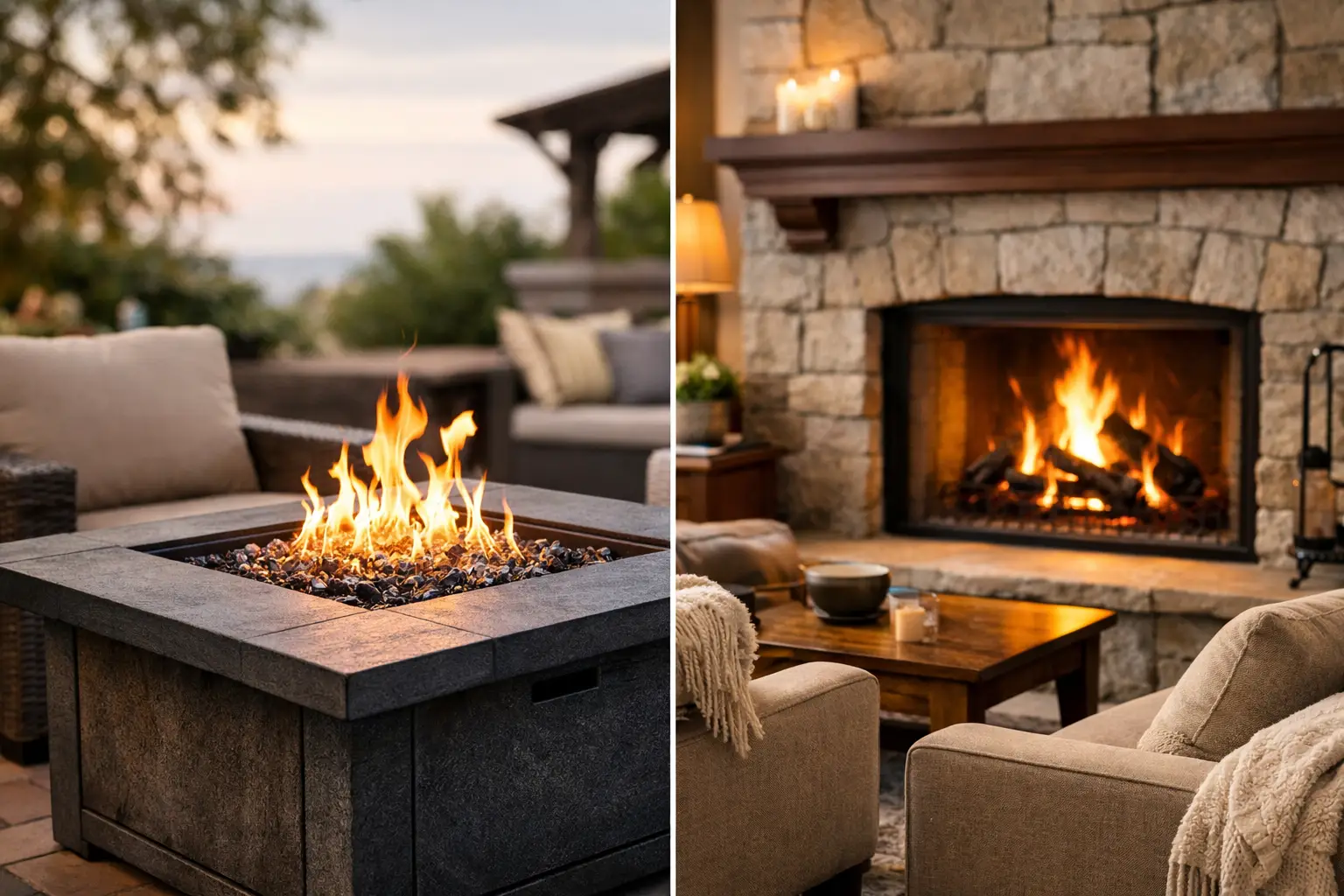
A fire feature can turn an unused patio corner into the place everyone gathers after dinner. When choosing a propane fire table versus fireplace, the better option is less about which one looks more impressive and more about how you want to relax, host, and use your outdoor square footage.
A propane fire table brings a low, inviting flame to the center of the conversation. An outdoor fireplace creates a stronger architectural focal point and a more defined sense of shelter. Both can make cool evenings more enjoyable, but they ask different things of your layout, budget, and lifestyle.
Propane Fire Table Versus Fireplace: The Everyday Difference
The simplest distinction is where each feature places the people. A propane fire table is designed to sit within a seating arrangement. Friends can rest a drink on the tabletop, pull up a chair, and enjoy the flame from every side. It is an easy match for conversation sets, lounge chairs, and smaller outdoor dining areas.
A fireplace is usually positioned along the edge of a patio, deck, or backyard living zone. It gives the area a natural front wall, much like a fireplace indoors. Seating faces it, which can make the space feel cozy and intentional, especially in a larger backyard or beneath a covered structure with proper clearances.
That difference affects how the space feels on an ordinary Tuesday night. A fire table is casual and flexible. You can light it for 20 minutes while you unwind outside. A fireplace feels more like a destination - a place to settle in with blankets, conversation, and a longer evening outdoors.
Choose a Propane Fire Table for Flexible Entertaining
For many patios, a propane fire table is the most approachable path to a warmer, more welcoming retreat. It combines a fire feature with a functional surface, so it earns its place even when the burner is off. Some styles resemble a coffee table, while taller designs work beautifully with outdoor bar seating or dining-height chairs.
Propane also keeps the experience simple. There is no firewood to stack, no smoke drifting toward guests, and no ash to sweep away after everyone leaves. With a compatible tank connected and checked according to the manufacturer’s instructions, you can usually start the flame with a turn of a control knob and enjoy consistent heat right away.
This convenience matters for families who use their patio often but do not want every gathering to require setup and cleanup. It also makes propane tables especially appealing for homes where neighbors are close by or local rules limit wood-burning features.
A fire table can be a smart choice when you want to:
- Create a central gathering spot on a small or medium patio
- Add warmth without committing to a permanent structure
- Pair a flame feature with a conversation set or sectional
- Rearrange your outdoor layout as your needs change
- Enjoy cleaner, lower-maintenance fires for casual weeknights
The trade-off is heat direction. Because the flame is open and low, a fire table offers a pleasant warming zone rather than the broad radiant warmth of a substantial fireplace. On a windy night, guests may need to sit closer. It is also important to consider where the propane tank will be stored or concealed, particularly if a polished, design-forward look is a priority.
Design Ideas for Fire Tables
A square or rectangular fire table works well with a sofa and two lounge chairs, creating a balanced outdoor living room. A round fire table softens a compact seating area and makes it easier for everyone to see one another. If you have an outdoor rug, choose a table with enough clearance and follow all product guidance for safe placement.
For a coordinated look, echo the table’s finish elsewhere in the space. A dark metal fire table can connect with black lanterns, planters, and chair frames. A woven or light-toned base can complement natural cushions, neutral rugs, and wood-look seating. Add solar path lighting around the patio perimeter so the fire remains the focal point without leaving walkways dark.
Choose an Outdoor Fireplace for Presence and Warmth
An outdoor fireplace has visual weight. It can anchor a wide patio, define a backyard lounge area, or make a gazebo-adjacent space feel like a true outdoor room. If you want your fire feature to become part of the home’s overall character, a fireplace offers that sense of permanence.
Its taller structure also directs warmth outward from a vertical firebox. Depending on the fuel type, size, and design, a fireplace may feel more comfortable for a group on a crisp fall evening than a low-profile fire table. The chimney or venting structure helps guide smoke upward for wood-burning models, although wind and fuel quality still affect the experience.
A fireplace is often the stronger fit for homeowners who entertain regularly, have a spacious patio, or want a focal point visible from inside the house. It can also help shape an open yard into distinct zones: dining near the grill, lounging by the fireplace, and a clear pathway between them.
The commitment is greater, however. Built-in or masonry fireplaces require careful planning, a stable foundation, and attention to local codes, permits, property lines, and fire-safety requirements. Installation may involve a professional, and a gas fireplace may require a dedicated fuel line. These are worthwhile considerations when you expect to stay in the home and use the feature for years.
A freestanding outdoor fireplace can offer some of the same visual appeal with a less involved installation, but it still needs proper placement and clearance from structures, furniture, trees, and combustible materials. Before purchasing, confirm the manufacturer’s requirements and check the rules that apply in your community or homeowners association.
Design Ideas for Fireplaces
Because a fireplace draws the eye upward, let it lead the layout. Place seating far enough away for comfort and safety, then use deep cushions, side tables, and outdoor throws to make the zone feel settled rather than sparse. A pair of matching chairs facing the fireplace creates a peaceful spot for two, while a sectional arranged in an L-shape leaves room for guests to move through the patio.
Avoid crowding the mantel or hearth area with too much decor. A few weather-friendly lanterns, a sculptural planter, or seasonal greenery can add personality without competing with the flame. Storage benches nearby are helpful for keeping blankets, cushions, and entertaining essentials protected between gatherings.
Consider Space, Budget, and How Long You Will Stay
Your patio’s dimensions may make the decision for you. A fire table needs open space around it for chairs, comfortable movement, and the clearances specified by its manufacturer. It is compact compared with a fireplace, yet it still should not be squeezed into a narrow passageway or placed under an unsuitable overhead cover.
A fireplace takes up more visual and physical space, but it can make a large, empty patio feel grounded. If your backyard currently feels like a collection of separate furniture pieces, a fireplace can provide the anchor that pulls the whole setting together.
Budget matters beyond the initial purchase. Propane fire tables generally offer a lower entry cost and simpler setup, although you will need to refill or exchange propane tanks. Fireplaces range widely in price. A portable model may be manageable, while a permanent gas or masonry installation can become a significant home project.
Think about your timeline, too. Renters and homeowners who expect to redesign their patio within a few years may appreciate the portability of a fire table. Homeowners creating a long-term outdoor living area may find that a fireplace adds the enduring structure they want.
Safety and Comfort Belong in the Plan
Whichever feature you choose, treat safe placement as part of the design. Use fire products outdoors only, on a stable surface, with the required clearance from your home, railings, overhead structures, umbrellas, furniture, and landscaping. Keep children and pets supervised, and never leave an active flame unattended.
For propane fire tables, inspect the hose and connections regularly, use the correct tank, and keep the burner area clean. For fireplaces, follow fuel recommendations, maintain the firebox and chimney as directed, and learn any local seasonal burn restrictions before planning an evening around the fire.
Comfort is also practical. Position seating so guests are not staring into direct smoke or strong wind. Keep a side table within reach for drinks, and have a storage solution for cushions and throws when weather changes. These small choices help your outdoor space feel easy to use, not like another chore.
At Patio Treasures, the goal is not simply to add a flame. It is to create a place where a quiet coffee, a family meal, or a last-minute visit can naturally linger outside. Choose the feature that fits the way you already live, then build the seating, lighting, and finishing touches around it. The right fire feature will give you a reason to step onto the patio more often - and stay a little longer.