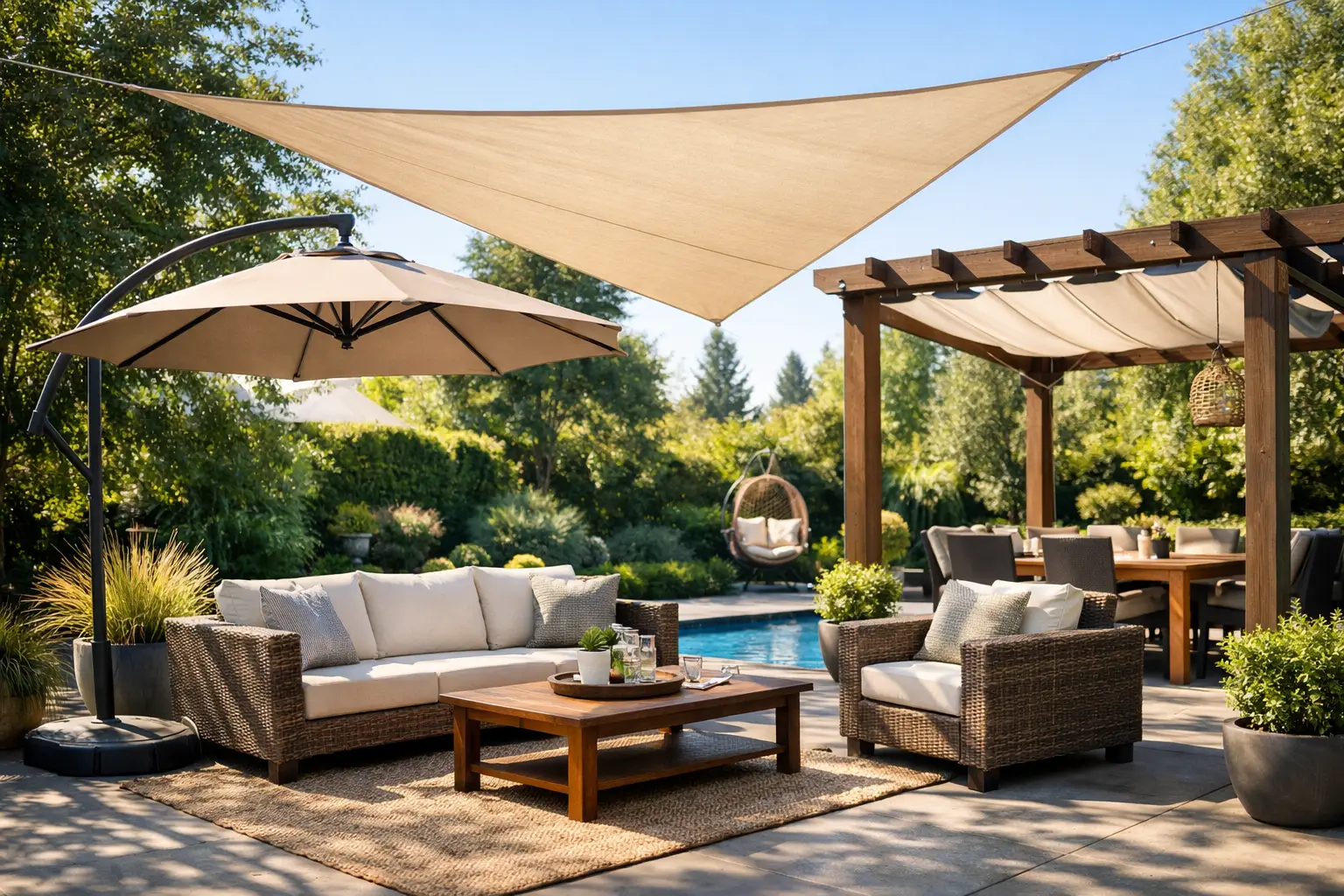
A patio can have beautiful furniture, a favorite grill, and plenty of room for guests, yet still sit empty when the afternoon sun arrives. The right shade changes that. This patio shade guide helps you choose a solution that makes your outdoor space more comfortable for morning coffee, family lunches, quiet reading, and long summer evenings with friends.
Shade is not one-size-fits-all. A small apartment balcony needs a different approach than a wide pool deck, and a breezy coastal yard has different demands than a sheltered garden patio. Start with how you want to use the space, then choose a shade style that fits your layout, climate, and personal design style.
Start With the Sun, Not the Structure
Before choosing an umbrella, gazebo, or canopy, spend a day noticing where sunlight lands. Watch your patio in the morning, at midday, and in the late afternoon. The hottest area is not always the area you expect, especially when your home, fence, trees, or neighboring buildings cast changing shadows.
Think about the moments you most want to be outdoors. If you enjoy breakfast outside, east-facing sun may be the concern. If you host weekend cookouts, late-day western sun is often the bigger challenge. A dining table may need direct overhead coverage, while a lounge area may benefit from adjustable side coverage as the sun moves lower.
Measure the usable area as well. Leave room to pull out chairs, open doors, walk around a grill, and access storage. Shade should make a patio feel inviting, not crowded. On compact patios and balconies, a flexible solution can often provide more comfort than a large permanent structure.
Patio Shade Guide: Choose the Right Shade Type
The best option depends on whether you need portable coverage, adjustable coverage, a permanent outdoor room, or a combination of all three.
Patio umbrellas for flexible everyday shade
A patio umbrella is often the easiest way to create a cooler seating area without changing the structure of your home. Center-pole umbrellas work especially well with dining tables that have an umbrella hole. They create a classic, balanced look and keep a table usable during bright midday hours.
Cantilever umbrellas, sometimes called offset umbrellas, place the pole to the side rather than in the middle of the seating area. That leaves more open space beneath the canopy, making them a smart choice for conversation sets, chaise lounges, and outdoor sectionals. Many tilt or rotate, so you can follow the sun instead of moving all the furniture.
The trade-off is that umbrellas need a properly weighted base. Larger canopies and offset styles require substantial support, particularly in windy areas. Close and secure the canopy when winds pick up or when the patio will be unattended. A beautiful umbrella is only a good investment if it is used safely.
Shade sails for a clean, modern look
Shade sails stretch between anchor points to create angled, airy coverage. Their simple lines work well over a small patio, a children’s play area, or a poolside seating zone. They can also be layered at different heights for a more architectural look and broader coverage.
Sails are excellent when you want shade without the visual weight of a solid roof. Because they are installed on an angle, they also create a sense of movement and can allow rainwater to run off rather than collect in the fabric. However, installation requires secure attachment points and careful tension. If your patio has no strong walls, posts, or trees positioned in the right places, a sail may need added support posts.
Choose a fade-resistant outdoor fabric and remember that not every shade sail is waterproof. A breathable sail can feel cooler because air moves through it, but it will not replace a rain shelter. For many homes, that is a worthwhile trade-off during the hottest months.
Pergolas for definition and long-term style
A pergola gives a patio the feeling of an outdoor room. It creates a visual frame for a dining set, lounge furniture, outdoor rug, planters, lighting, and decorative accents. If your goal is to make an open backyard feel more finished and intentional, a pergola can become the anchor for the entire design.
Traditional open-slat pergolas provide filtered sun rather than complete coverage. That dappled light is lovely in mild weather, but it may not be enough for a patio that receives intense afternoon heat. Add a retractable canopy, outdoor curtains, climbing vines, or a fabric cover when you want more protection.
A pergola is a bigger commitment than an umbrella, both in space and installation. It works best when you have a dedicated patio zone and want a more permanent setting for relaxing and entertaining outdoors. Consider local building rules, placement near property lines, and the height of nearby doors or windows before committing to a structure.
Gazebos and covered structures for maximum protection
For dependable shade and stronger shelter from light rain, a gazebo or hardtop structure offers the most complete solution. These designs are especially useful for outdoor dining areas, hot tubs, grilling stations, and patios used frequently through multiple seasons.
A hardtop gazebo can make a backyard feel like an extension of the home. Add comfortable seating, solar lighting, and a fire pit placed safely outside the covered area, and the space becomes a welcoming retreat after sunset. Soft-top gazebos are generally more flexible and approachable, but their fabric tops need seasonal care and may need to be removed or secured in severe weather.
Complete coverage comes with a larger footprint. Make sure a gazebo does not overwhelm the patio or block the path between the house and the yard. It should give your gatherings a home, not make outdoor circulation awkward.
Match Coverage to Your Furniture Layout
A common shade-shopping mistake is choosing a canopy based only on its diameter or width. What matters is the shaded footprint at the time you use it. For a dining table, the canopy should extend beyond the tabletop enough to protect seated guests as the sun shifts. For a conversation set, center the shade over the people rather than the coffee table.
If one structure cannot cover every part of a large patio, create zones. An umbrella can shade the dining table while a sail or pergola covers a lounge area. This approach makes a broad backyard feel organized and gives guests a choice between sun and shade.
Color matters, too. Lighter canopies often feel bright and airy, while charcoal, navy, forest green, and warm neutral tones can add definition to an outdoor design. Darker fabrics may show less staining, but they can make a small patio feel more enclosed. Coordinate the canopy with cushions, rugs, planters, and outdoor decor for a look that feels collected rather than pieced together.
Choose Materials That Fit Your Climate
Outdoor shade has to handle more than sunshine. Heat, rain, wind, humidity, pollen, and falling leaves all affect how a structure performs and how much maintenance it needs.
Aluminum frames are lightweight, rust-resistant, and easy to move, making them popular for umbrellas and many gazebos. Steel can offer a sturdy feel but should have a quality protective finish. Wood brings natural warmth to pergolas but needs periodic sealing or staining, especially in wet or sunny climates.
For canopy fabric, look for UV-resistant materials made for outdoor exposure. Solution-dyed fabric generally holds color well over time, while polyester can be a practical option for seasonal or lighter-duty use. A vented umbrella canopy can help air circulate and reduce wind pressure, though it is still not a substitute for closing the umbrella during storms.
Make Shade Feel Like Part of the Retreat
The structure provides comfort, but the finishing details make people want to stay outside. Hang string lights along a pergola, place lanterns near the seating area, and use outdoor rugs to define a lounge or dining zone. Planters can soften the edges of a gazebo, while outdoor curtains can add privacy and help filter low-angle sun.
Keep practical items close by. A weather-ready storage box can hold cushions, throws, games, and umbrella covers so the patio stays tidy between gatherings. If evenings turn cool, outdoor heating can extend the season, but always follow clearance and ventilation guidance around canopies and structures.
At Patio Treasures, it is easy to build around one shade piece with coordinated seating, lighting, decor, and storage, so the result feels like a complete outdoor room rather than a collection of separate purchases.
A Few Safety Habits Protect Your Investment
Every shade solution needs routine attention. Check umbrella bases, bolts, anchors, and fabric tension at the start of the season and after strong weather. Brush off leaves and debris before they hold moisture against fabric or roofing. Clean canopies with the method recommended for their material, and let them dry completely before storing them away.
Most importantly, respect the forecast. Close umbrellas before storms, remove or secure soft canopies when severe weather is expected, and avoid placing open flames beneath a fabric-covered structure. These simple habits help your shade stay attractive and ready for the days you want to enjoy it most.
The right patio shade does more than block the sun. It gives your favorite outdoor moments a comfortable place to happen, whether that means one quiet chair beneath an umbrella or a full table of friends gathered under a beautifully defined backyard retreat.