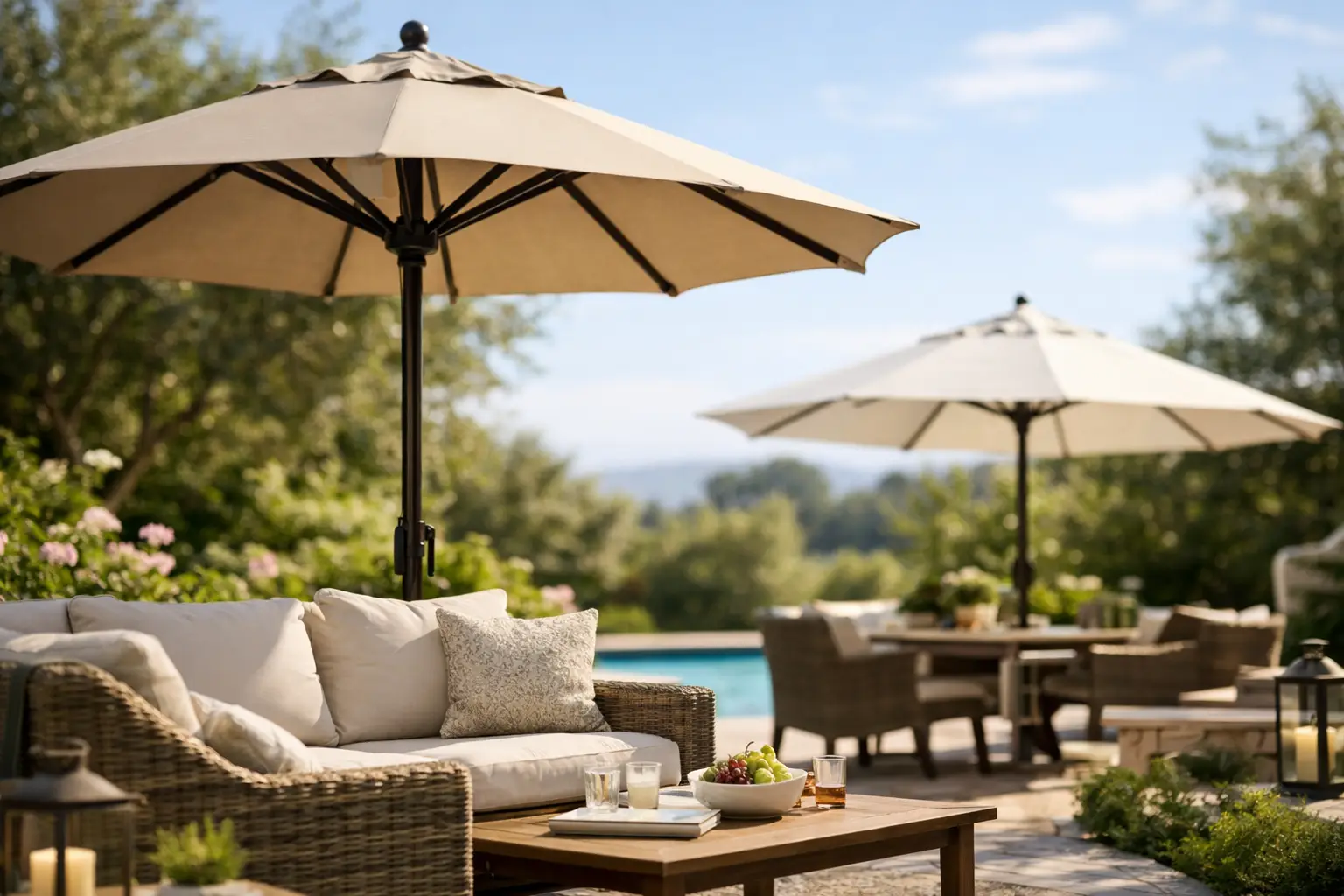
A patio can have beautiful furniture, a well-set table, and plenty of room to gather, yet still sit empty at noon because the sun is simply too strong. Patio umbrellas solve that everyday problem with one purposeful addition: they create a cooler, more inviting place to linger for lunch, read after work, or host a relaxed weekend cookout.
The best choice is not always the biggest or most decorative option. The right umbrella depends on where you need shade, how much wind your space receives, and whether it will cover a dining table, conversation set, chaise lounges, or a favorite corner of the deck. A little planning helps you choose a piece that looks at home in your outdoor retreat and works beautifully through the season.
Start With How You Use Your Outdoor Space
Think about the moments you want to make more comfortable. If your family eats outside often, an umbrella centered over the dining table offers practical shade where it counts. For a pair of lounge chairs beside the garden or pool, a side-mounted cantilever design may give you more flexibility without placing a pole between the seats.
Measure the area you want to cover before choosing a canopy. As a general rule, the umbrella should extend about 2 feet beyond the table or seating area on each side. A 9-foot canopy is a popular fit for many 48- to 54-inch round tables, while a larger rectangular canopy can better serve a long dining table or outdoor sectional.
Shade moves as the day goes on, so consider the sun's path as well. A fixed center-pole umbrella is a dependable choice for midday meals. If your patio gets strong afternoon sun from one direction, look for a canopy with a tilt feature or a cantilever arm that can angle shade where it is needed. The trade-off is simple: more adjustment options bring more convenience, but they also call for a sturdier base and a bit more room around the furniture.
Patio Umbrellas Come in Three Useful Styles
A market umbrella is the familiar center-pole style seen over café tables and backyard dining sets. It is versatile, easy to coordinate with existing furniture, and available in a wide range of colors and canopy shapes. For most patios, it is an approachable starting point.
A cantilever umbrella, also called an offset umbrella, has its support pole positioned to the side. That open space beneath the canopy is especially welcome over a sectional, deep seating arrangement, hot tub, or pair of reclining chairs. These designs can make a compact patio feel less crowded, though they require a weighted base designed specifically for their size and construction.
A beach-style or smaller portable umbrella can work nicely for a balcony bistro set or a small nook, but it is not automatically the right choice for a breezy patio. Its lighter build is convenient to move, yet it may offer less stability and coverage than a full-size model. Match the style to the setting rather than choosing based on appearance alone.
Round, Square, or Rectangular Canopies?
Canopy shape should follow the furniture below it. Round umbrellas complement round tables and soft, casual seating arrangements. Square canopies offer a clean, tailored look and can fit neatly over square tables or smaller conversation areas. Rectangular umbrellas are practical for long dining tables, outdoor kitchens, and narrow patios where the shade needs to reach along one direction.
If your furniture has crisp lines, a square canopy can echo that structure. If your space is filled with curved chairs, planters, and garden details, a round canopy may feel more relaxed. This is a small design decision, but it helps the patio look thoughtfully put together rather than pieced together over time.
Choose Fabric That Holds Up to Your Season
The canopy fabric affects color, shade quality, care needs, and longevity. Polyester is a common, budget-friendly choice that offers attractive color options and dependable everyday coverage. Solution-dyed acrylic typically costs more, but it is known for stronger resistance to fading and can be a smart investment for patios that receive intense sun or for umbrellas that stay outdoors much of the year.
Look for outdoor-rated fabric with UV protection, but remember that no canopy is permanent. Sun, rain, pollen, and airborne dust all take a toll. A lighter color can create a bright, airy feeling and may feel cooler beneath the canopy. Deep navy, charcoal, forest green, or terracotta can create more visual contrast and help anchor a large patio arrangement.
The best color is often one already present in your space. Pull a shade from outdoor cushions, a rug border, planters, or the trim on your home. Neutral patio umbrellas are easy to refresh with seasonal pillows and table linens, while a colorful canopy can become the feature that gives a simple deck more personality.
Frame Materials Matter Too
Aluminum frames are lightweight, rust-resistant, and easy to move when you are rearranging the patio. They are an excellent fit for many homeowners and renters who want low-maintenance shade. Wood frames bring a warm, classic look that pairs beautifully with natural wicker, teak, or garden settings, though they generally need more care over time.
Fiberglass ribs deserve attention if wind is a regular part of your forecast. Their flexibility can help the canopy handle mild gusts better than rigid ribs. Still, even a well-made umbrella should be closed when winds pick up. An umbrella is a shade solution, not a structure meant to stay open through storms.
A Strong Base Is Part of the Purchase
A beautiful canopy cannot do its job safely without the right base. This is one of the most overlooked parts of shopping for patio shade. Some tables provide a stabilizing center hole, but the umbrella still needs a base on the ground. A freestanding umbrella needs one that is heavy enough for its height, canopy size, and local conditions.
Check the manufacturer's recommended base weight before making a decision. A 9-foot market umbrella often needs at least a 50-pound base, and a heavier option may be appropriate in open or windy areas. Large cantilever models commonly require much more weight, sometimes using fillable base sections or weighted pavers.
Avoid the temptation to use a small, lightweight stand because it is easier to carry. Stability is worth more than convenience here. Close the umbrella when you leave home, before rainstorms, and anytime gusts become noticeable. This habit protects the frame, nearby furniture, windows, and guests.
Small Features That Improve Everyday Comfort
A crank-lift mechanism makes opening a larger umbrella simple, while a push-button tilt lets you adjust coverage as the sun shifts. A vented canopy is another useful feature because it allows some air to pass through the top, which can improve stability and reduce trapped heat beneath the fabric.
For evening entertaining, consider a canopy with built-in solar lights or add soft lighting nearby with lanterns, string lights, or solar path lights. The umbrella provides daytime relief, while the lighting keeps the setting welcoming after sunset. An outdoor rug, coordinated cushions, and a storage box for throws can turn that shaded spot into a favorite destination from morning coffee to late-night conversation.
Keep Your Umbrella Looking Its Best
Regular care is uncomplicated and pays off. Brush off loose leaves and pollen, then clean the canopy with mild soap, water, and a soft brush when needed. Let it dry fully before closing it for an extended period, since trapped moisture can lead to mildew and unpleasant odors.
Use a fitted cover when the umbrella is not in use for several days or more. In regions with snow, freezing temperatures, or frequent winter storms, storing the canopy indoors can extend its useful life and keep colors looking fresher. Inspect the crank, ribs, pole, and base at the start of each season so minor issues do not interrupt your first outdoor gathering.
At Patio Treasures, a well-chosen umbrella can be the finishing piece that makes your dining set, lounge area, and garden decor feel connected. Choose the shade that suits the way you actually relax and entertain, then give yourself a comfortable reason to spend a little longer outside.