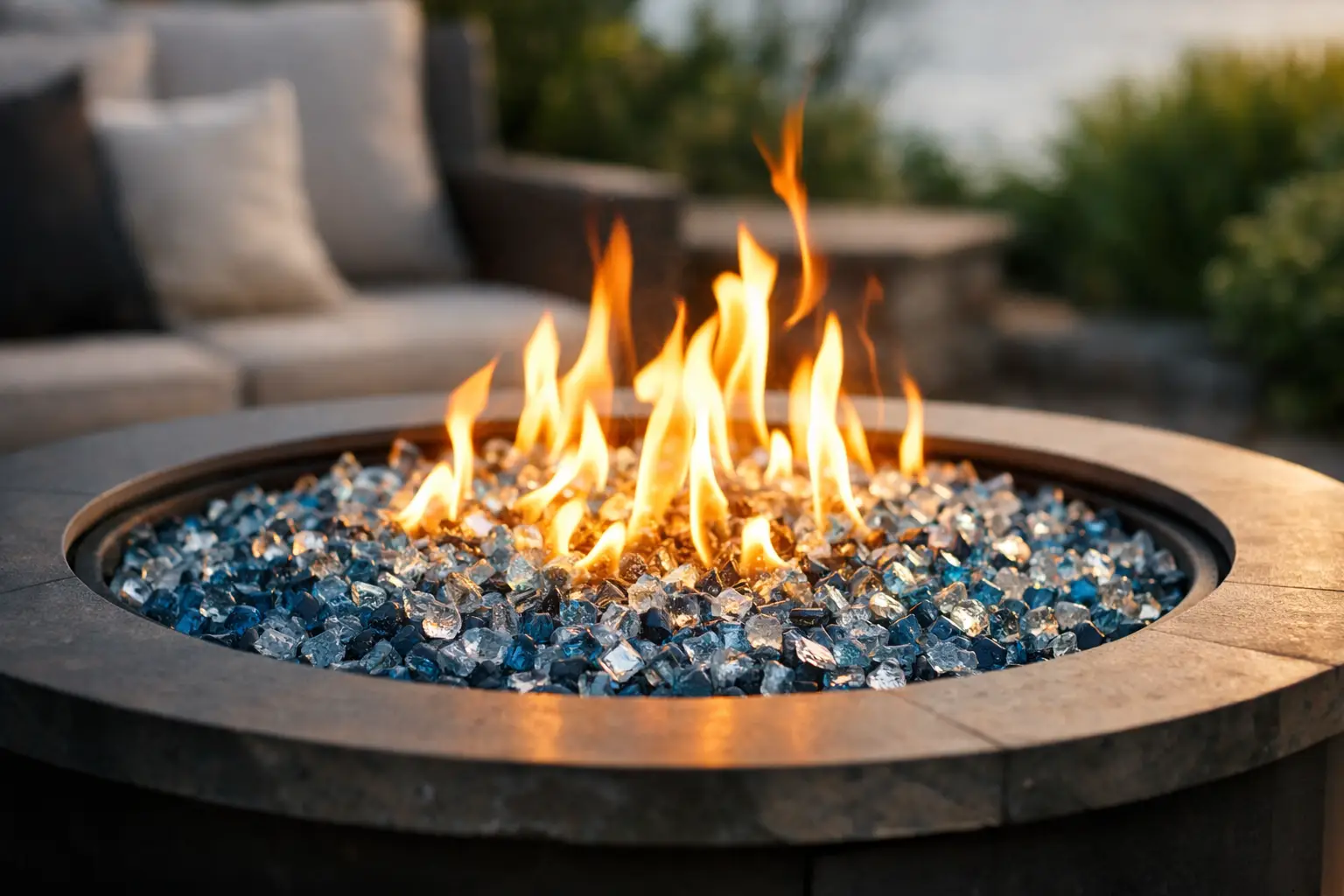
A fire pit can be the piece that turns a patio from a place you pass through into a spot where everyone lingers. Knowing how to use fire glass gives a gas fire feature a clean, colorful finish while helping you create a warm focal point for relaxed evenings, family meals, and backyard entertaining.
Fire glass is designed for gas fire pits and fire tables, not wood-burning pits. When installed correctly, it sits around the burner and reflects the flame for a polished look that feels more like outdoor decor than a pile of logs. The process is approachable, but safety and the right fit for your fire feature come first.
Start With a Fire Pit Made for Fire Glass
Before choosing a color or filling the burner pan, confirm that your fire pit or fire table is approved for fire glass. Check the owner's manual or the manufacturer's specifications. Many gas fire features are designed for decorative media, but some require a particular type, depth, or amount.
Fire glass should only be used with natural gas or propane fire features. Do not add it to a wood-burning fire pit, charcoal grill, chiminea, or fireplace that is not specifically rated for gas decorative media. It is also not a substitute for burner components, heat shields, or lava rock required by the manufacturer.
Use tempered fire glass made for fire pits. Unlike ordinary decorative glass, quality fire glass is manufactured to handle high temperatures without melting, smoking, or creating sharp fragments under normal use. If you are refreshing an existing fire feature, remove old media only after the unit is fully cool and the gas supply is turned off.
Choose Fire Glass That Fits Your Outdoor Style
The best fire glass color depends on the mood you want to create and the materials already on your patio. Clear or reflective glass brings a bright, upscale sparkle that works beautifully with modern metal furniture and clean-lined fire tables. Black, bronze, copper, and gray glass create a more grounded look beside stone, wicker, or warm wood tones.
For a lively entertaining area, blues, aquas, reds, or mixed-color blends can bring personality to a neutral deck or paver patio. A single color often looks calm and intentional, while a blend can add dimension without needing additional decor. If your seating, outdoor rug, and planters already have strong patterns, a solid neutral fire glass color usually keeps the whole space balanced.
The shape matters, too. Small crushed pieces create a glittering, jewel-like surface. Larger nuggets offer a bolder, more sculptural appearance. Fire beads and smooth pebbles tend to look especially at home in contemporary fire tables, while crushed glass can suit nearly any style.
How Much Fire Glass Do You Need?
Your burner pan should look full enough to conceal the burner hardware while leaving the burner ports able to produce an even flame. In many fire pits, a layer around 1 to 2 inches deep is appropriate, but your product manual is the final word. Adding too much glass can interfere with flame performance and create uneven heating.
To estimate the amount, measure the inside length and width of the pan, then decide on the recommended fill depth. Multiply length by width by depth in inches, then divide by 231 to estimate the number of gallons needed. Product packaging may list coverage by pounds rather than gallons, so use the seller's coverage chart to convert your measurement before ordering.
Round up modestly if you are between amounts. It is easier to save a small amount for touch-ups than to have a thin layer that exposes the pan. Avoid piling glass above the rim of a fire bowl or filling past the level recommended for a fire table.
When Lava Rock Belongs Underneath
Some larger fire pits use lava rock as a lower filler layer, with fire glass placed on top for the visible finish. This can reduce the amount of premium glass needed in a deep pan. Only use this approach if the fire pit manufacturer permits it and specifies that the lava rock is compatible with the burner system.
Never use random landscape stones, beach rocks, glass marbles, or gravel as filler. Moisture trapped inside non-rated materials can cause cracking or popping when exposed to heat. A fire feature is one area where using materials made for the job is worth it.
How to Install Fire Glass Safely
Installation is simple when the fire feature is cool, clean, and off. Turn off the gas at the shutoff valve and allow the unit to cool completely. Remove any existing decorative media that is being replaced, then inspect the burner for dirt, leaves, insects, and other debris. A clean burner helps the flame stay consistent.
Pour the fire glass slowly and spread it evenly by hand while wearing gloves. Keep the layer level rather than mounding it over the burner. The burner holes or ports should not be blocked by oversized pieces, and the igniter and thermocouple should remain positioned according to the manufacturer's instructions.
After installation, turn the gas back on and light the fire feature following its normal ignition steps. Watch the flame for several minutes. A healthy flame should rise evenly through the glass without excessive sputtering, delayed ignition, or a strong gas odor. If the flame looks irregular, turn the unit off and let it cool before checking the media depth and burner area.
Do not rearrange fire glass while the fire pit is lit or still hot. Although the glass is designed for high heat, it can retain heat long after the flame is off. Keep children and pets from touching the media, and maintain the same clear space around the fire pit that your manual requires.
Keep Your Fire Glass Looking Its Best
Fire glass needs very little routine care, which makes it a practical choice for a busy outdoor space. Leaves, pollen, and dust can dull its shine over time, especially in uncovered fire pits. When the unit is off and completely cool, remove larger debris by hand or use a soft brush around the surface.
If the glass needs a deeper refresh, take it out in manageable batches and rinse it with water in a bucket. Let it dry fully before returning it to the fire pit. Do not use flammable cleaners, oils, or harsh chemical products near a gas burner. For many homeowners, keeping the fire pit covered when it is not in use is the easiest way to limit debris and help the glass stay bright.
Over time, you may notice a few pieces that have shifted, chipped, or become discolored. Replace only the affected pieces or add a small amount of matching glass. Keeping a little extra from the original purchase makes seasonal touch-ups easy, particularly if your patio gets frequent use during grilling and entertaining season.
Common Fire Glass Mistakes to Avoid
The most common mistake is treating fire glass like a universal fire pit accessory. It is intended for approved gas features only. Another is buying based on color alone without measuring the burner pan or checking the required fill depth.
Avoid mixing in materials that are not rated for fire use, even if they look similar. Regular craft glass and decorative stones may crack, pop, melt, or release unwanted odors. It is also wise to resist the urge to overfill the pan for a fuller appearance. The best result is a level, properly sized layer that lets the flame move naturally through the glass.
If you smell gas, hear unusual hissing, see soot buildup, or have trouble lighting the unit, stop using the fire pit and follow the manufacturer's troubleshooting and service guidance. Decorative media should never be used to hide a mechanical issue.
Make the Fire Pit the Center of Your Patio
Once the fire glass is in place, let its color guide a few simple finishing touches. Pull a copper or amber tone into outdoor throw pillows, lanterns, or planters for a cozy gathering space. Pair clear or blue glass with crisp white cushions, charcoal seating, and solar lighting for a cooler, contemporary retreat.
A fire pit feels most inviting when seating is close enough for conversation but still arranged with the required safety clearance. Add a weather-ready rug, comfortable chairs, and a side table for drinks, and the space becomes useful long after sunset. Patio Treasures makes it easier to coordinate those layers, from the fire feature to the furniture and accents around it.
A thoughtful layer of fire glass does more than dress up a burner. It gives your outdoor room a reason to glow, inviting you to step outside, settle in, and enjoy the evenings you have been saving the patio for.