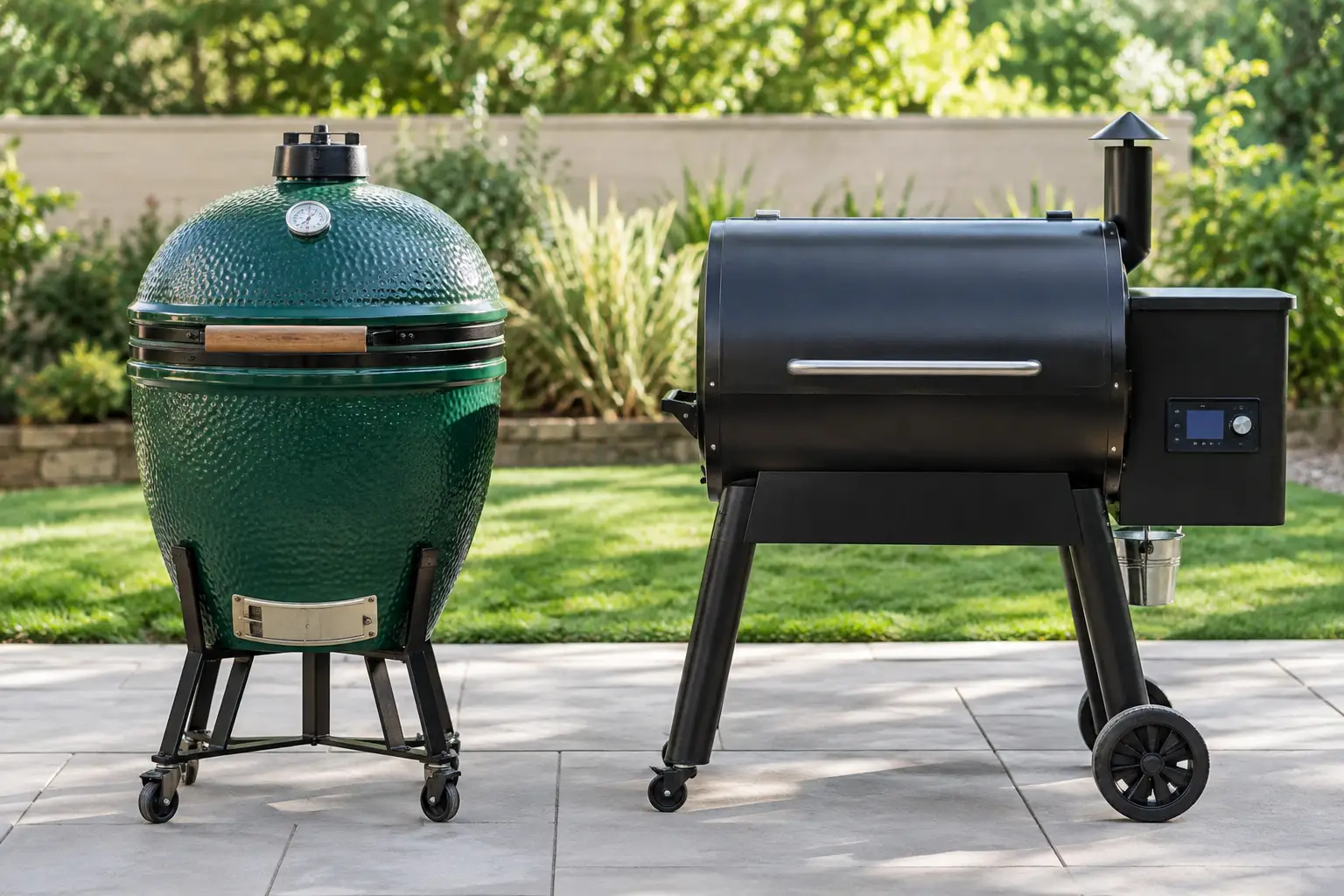
The best grill is not always the one with the most features. It is the one you will be excited to use on a Friday night, dependable enough for a birthday cookout, and well suited to the way your patio works. When weighing a ceramic grill versus pellet grill, the decision usually comes down to how hands-on you want to be, what you love to cook, and whether you value classic live-fire flavor or push-button convenience.
Both can turn an ordinary backyard meal into an occasion. A ceramic grill brings the ritual of charcoal cooking and impressive versatility, while a pellet grill makes low-and-slow barbecue wonderfully approachable. Here is how to choose the cooker that feels at home in your outdoor retreat.
Ceramic Grill Versus Pellet Grill: The Core Difference
A ceramic grill, often called a kamado grill, burns lump charcoal inside a thick ceramic body. Its insulated construction holds heat exceptionally well, making it capable of smoking ribs for hours, baking pizza at high heat, or searing steaks with a deep crust. You control the fire by adjusting the top and bottom vents.
A pellet grill burns compressed hardwood pellets. An electric controller feeds pellets from a hopper into a fire pot, then regulates airflow and temperature for you. Set a target temperature, add your food, and let the grill do much of the monitoring. Most pellet grills still benefit from an occasional check, but they remove much of the learning curve of managing a live charcoal fire.
Neither approach is automatically better. Think of ceramic as a more tactile, fire-focused cooking experience. Pellet is the choice for cooks who want flavorful results with less tending and more time around the patio table.
Flavor: Charcoal Depth or Wood-Fired Ease?
Ceramic grills develop a bold, savory charcoal character that many steak and burger fans love. Lump charcoal burns cleanly and hot, and adding a few hardwood chunks can bring in smoke without overwhelming the food. Because the ceramic walls retain heat and moisture, chicken, pork, and roasts can stay especially juicy.
Pellet grills produce a gentler, cleaner wood-smoke flavor. Pellets are available in familiar varieties such as hickory, oak, apple, cherry, and mesquite, so it is easy to tailor the profile to the meal. Apple or cherry pellets work beautifully with poultry and pork, while hickory and oak are dependable choices for brisket and ribs.
For a long barbecue session, a pellet grill delivers consistent smoke with very little adjustment. For high-heat grilling, ceramic often has the edge. Some pellet models can sear well, but many cook more like outdoor convection ovens than a traditional charcoal grill. If your favorite meal is a thick ribeye with a restaurant-style crust, ceramic deserves serious consideration.
Temperature Control and Everyday Convenience
This is where the two styles feel most different in daily use. With a pellet grill, you fill the hopper, plug in the unit, select a temperature, and allow it to preheat. The digital controller maintains a steady cooking environment, which is especially helpful for overnight pork shoulder or a busy afternoon when you are also setting out drinks, arranging cushions, and welcoming guests.
Ceramic grills ask more of the cook at first. You light the charcoal, allow the grill to settle at temperature, and make small vent adjustments as needed. It is not difficult, but it takes practice. Weather, the amount of fuel, and how often you open the lid all affect the fire.
The payoff is remarkable temperature range. A ceramic grill can hold low smoking temperatures for hours, then climb to pizza-oven territory for flatbreads or blistered vegetables. Pellet grills are excellent at stable medium and low temperatures, though their top-end heat varies by model.
Choose pellet if predictable control matters more than fire management. Choose ceramic if you enjoy learning the rhythm of cooking over charcoal and want one cooker that can smoke, roast, bake, and intensely sear.
Fuel, Cleanup, and Maintenance
Pellets are tidy to store and simple to portion, but they must stay dry. Moisture can cause pellets to swell or break down, so a covered storage container is a smart addition to a well-organized patio. Pellet grills also need electricity, which means you will want a convenient outdoor outlet and a plan for protecting the controller from heavy rain.
Ceramic grills use lump charcoal, which is widely available and can be stored in a dry bin. Charcoal produces ash, so you will need to empty the ash drawer or fire box periodically. The grill itself has few mechanical components, but the ceramic body should be handled carefully. It is durable in normal use, yet it can crack if dropped or struck hard.
Pellet grills require their own routine care. Vacuum ash from the fire pot according to the manufacturer’s guidance, clean grease from the drip system, and keep the hopper clear. Because they include an auger, fan, controller, and igniter, there are more parts to maintain over time than on a ceramic grill.
In either case, a fitted cover helps protect your investment between cookouts. A nearby deck box or outdoor storage cabinet can keep grilling tools, pellets, charcoal, gloves, and serving trays neatly within reach.
Space, Style, and Patio Placement
A grill affects the look and flow of your outdoor space as much as your menu. Ceramic grills have a compact footprint and a distinctive rounded shape that suits both classic and modern patios. Many owners place them in a wheeled nest or a purpose-built outdoor kitchen table, where side shelves create useful prep space.
Pellet grills tend to be longer and more rectangular, with a hopper on one side and a chimney or exhaust on the other. They can offer generous cooking capacity for a crowd, but they need enough clearance for the lid to open comfortably and for heat and smoke to vent safely.
Before choosing either type, measure the intended location. Leave room to stand and cook without blocking a dining set, pathway, or patio door. Place the grill on a stable, noncombustible surface where possible, follow the manufacturer’s clearance requirements, and never use it beneath a low, enclosed structure. A grill station feels more inviting when it has a small landing area for platters and an outdoor rug or seating arrangement positioned outside the cooking zone.
Cost: Look Beyond the Price Tag
Ceramic grills can be a significant upfront purchase, especially when you add a stand, side tables, heat deflectors, and pizza accessories. Their efficient insulation helps charcoal last, however, and their simple design can provide years of use with routine care.
Pellet grills are available across a broad range of prices. Consider the hopper capacity, controller quality, cooking area, construction, and included shelves rather than focusing only on the initial cost. Pellet fuel is convenient but usually costs more per cook than basic charcoal, particularly during frequent long smoking sessions.
Accessories matter with either choice. A reliable instant-read thermometer, grill brush, heat-resistant gloves, cover, and proper storage make cooking easier and help your setup stay looking polished. If entertaining is a priority, a serving cart or outdoor bar table can keep the cook from making repeated trips inside.
Which Grill Fits Your Cooking Style?
A pellet grill is likely the better match if you want to smoke brisket, ribs, chicken, and salmon with dependable results while spending more time with family and friends. It is also a welcoming choice for newer grillers who want wood-fired flavor without a lengthy charcoal-learning period.
A ceramic grill may be the better fit if you love steakhouse-style searing, homemade pizza, and the hands-on satisfaction of building and managing a fire. It works particularly well for households that want a compact cooker with wide temperature capabilities and do not mind giving cooking a little more attention.
For some patios, the deciding factor is practical. Choose pellet when an outdoor outlet, ample deck space, and easy temperature control are already part of the plan. Choose ceramic when you have a sturdy location, enjoy charcoal cooking, and want a sculptural centerpiece for your grilling area.
The most welcoming backyard setups make cooking feel like part of the gathering, not a task that pulls you away from it. Give your grill a safe, convenient home, add comfortable seating nearby, and choose the cooker that makes you want to light it up for the next easy weeknight dinner or unhurried weekend meal.