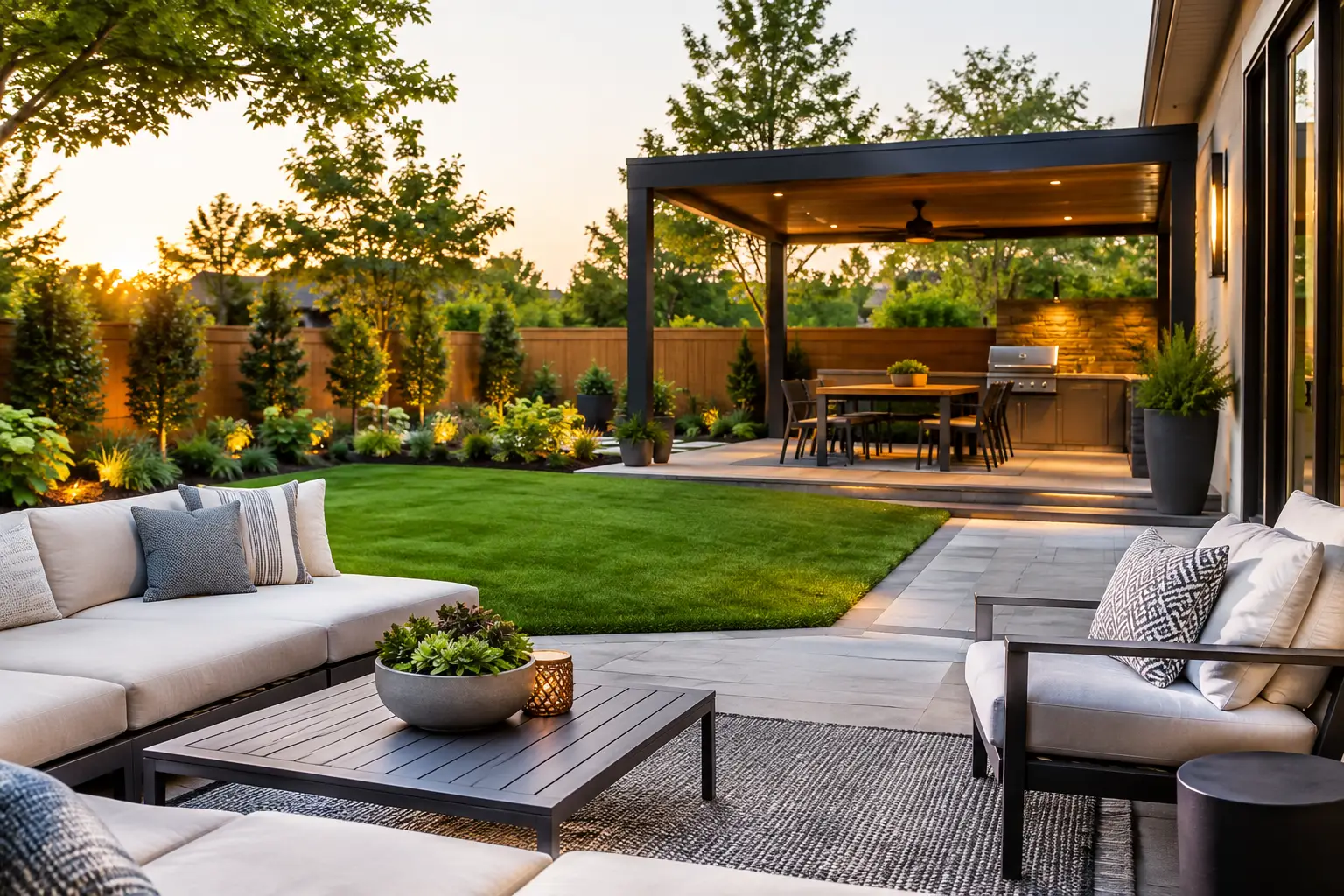
A backyard should not have to choose between looking beautiful and being useful. The best backyard design trends make outdoor space easier to enjoy on an ordinary Tuesday, then ready for a relaxed dinner or weekend cookout with very little rearranging. Instead of treating the patio as a spot for a table and a couple of chairs, homeowners are creating comfortable outdoor rooms with purpose, personality, and practical finishing touches.
The good news is that this look is less about chasing a single style and more about making thoughtful choices. A small patio can feel generous with the right seating and lighting. A larger yard can feel more welcoming when it has clear places to gather, grill, relax, and put things away.
Backyard Design Trends Center on Everyday Living
The strongest trend is a shift from decorative outdoor spaces to livable ones. People want a backyard that supports coffee in the morning, homework at the patio table, a quiet hour with a book, and a full house for summer celebrations. That means comfort is no longer an extra. It is the starting point.
Begin by deciding what you want your outdoor area to do most often. A family that loves to grill may place the dining area near the cooking zone, while someone seeking a peaceful retreat may prioritize a deep-seat sofa, side table, and shade. One backyard can certainly serve both needs, but a clear primary purpose makes every purchase easier.
Defined zones create a more polished retreat
Outdoor rooms feel more intentional when each area has a job. An outdoor rug can ground a conversation set, while a dining table creates an obvious place to share meals. A fire pit or fire table can establish a natural gathering point a few steps away. Even in a compact space, separating these moments visually makes the area feel better planned.
You do not need built-in walls to create zones. Position furniture with its back toward the edge of the patio, use planters as gentle dividers, or place a gazebo over the dining area. The goal is not to make the backyard formal. It is to make it intuitive, so guests know where to settle in and you have room to move comfortably.
Flexible seating beats a single oversized set
Large sectional seating remains popular, especially for families and frequent hosts. But flexible arrangements are often the smarter choice. A pair of lounge chairs, a loveseat, and a few lightweight ottomans can shift from a conversation circle to extra seating at a gathering. Benches are useful near a dining table because they seat more people without adding visual bulk.
Consider how many people use the space on a typical day, not just during the biggest party of the year. A massive dining set can overwhelm a small deck if it is usually used by two people. In that case, a bistro table plus movable chairs may leave more room for plants, a grill, or a cozy seating area.
Shade Is Becoming a Design Feature
Shade has moved beyond a purely practical purchase. A well-chosen umbrella, pergola-style structure, gazebo, or canopy changes the entire mood of an outdoor space. It makes the patio usable during bright afternoons and gives the eye a sense of height and structure.
For a dining table, an umbrella is often the most flexible option. Choose a size that extends beyond the table edge when open, rather than one that barely covers the center. Cantilever umbrellas work well beside a lounge area because the pole stays out of the seating arrangement. They do require a properly weighted base, especially in breezy locations.
Gazebos and trellises offer a more permanent sense of enclosure. They can make a wide-open yard feel like a destination, particularly when softened with climbing plants, outdoor curtains, or string lights. The trade-off is footprint and commitment. Measure carefully, check local rules where needed, and leave enough clearance around the structure for circulation and maintenance.
Warm Neutrals Meet Natural Texture
Bright accent colors still have a place outdoors, but the current direction favors relaxed, layered palettes. Think sandy beige, charcoal, soft gray, terracotta, olive green, and muted blue. These colors make it easier to add seasonal pillows, lanterns, or garden décor without needing to replace the foundation every year.
Texture does much of the visual work. Woven outdoor rugs, wood-look tables, weathered planters, cushions with subtle patterns, and metal lanterns add depth without making the space feel busy. When furniture is neutral, a few colorful accessories can bring in personality and be changed as your tastes shift.
Materials should suit the local climate as well as your preferred look. In hot, sunny areas, fade-resistant fabrics and shade matter more than a delicate color palette. In wet or snowy regions, durable frames, protective covers, and easy-to-store cushions can save time and extend the life of your furniture. A beautiful backyard is more rewarding when it is easy to care for.
Layered Lighting Extends the Evening
One harsh porch light can make a backyard feel unfinished. Layered lighting is one of the most useful backyard design trends because it helps the space feel inviting after sunset while improving safety around steps, pathways, and dining areas.
Start with low-level lighting where people walk. Solar path lights can define a garden edge or guide guests from the deck to the patio. Add ambient light near seating with lanterns, string lights, or tabletop lighting, then use a brighter source only where it is needed for grilling or serving food.
Warm light generally feels more relaxed than a cool, bluish glow. Keep decorative lighting at eye level or below when possible, and avoid aiming strong lights toward neighboring homes. The effect should feel like a welcoming glow, not a spotlighted stage.
Fire and Cooking Areas Bring People Together
A fire feature remains one of the most effective ways to make a backyard feel usable beyond peak summer. A compact fire pit can turn an unused corner into a favorite gathering spot, while a fire table offers a convenient surface for drinks and snacks. For households with young children or limited space, a higher fire table may be easier to manage than a low, open pit.
Cooking spaces are getting more thoughtful, too. Rather than placing a grill wherever there is room, homeowners are creating a simple working zone with a stable prep surface, storage for tools, and nearby seating that keeps the cook part of the conversation. Leave a safe buffer between heat sources and furniture, rugs, umbrellas, or structures.
You do not need a full outdoor kitchen to get this benefit. A quality grill, a weather-ready serving cart, and a small storage cabinet can make cookouts more organized and more enjoyable.
Smart Storage Keeps the Retreat Relaxing
Nothing interrupts a polished patio faster than cushions stacked in a corner, garden tools leaning against the fence, and grilling accessories scattered around the deck. Storage is becoming a central part of backyard design because it protects outdoor essentials while keeping the view calm.
A deck box can hold cushions, throws, pool toys, and entertaining supplies close to where they are used. A storage bench provides seating and a place to put away smaller items. If your space is tight, choose pieces that do double duty rather than adding another standalone cabinet.
Before buying, measure more than the available floor space. Check that lids can open fully, doors have clearance, and pathways remain open when storage is in use. The best option is one you can reach easily after a long day, because convenience is what keeps clutter from returning.
Make Trends Work for Your Own Backyard
The most successful outdoor spaces do not look copied from a showroom. They reflect how the people who live there relax and entertain. A renter may rely on freestanding furniture, outdoor rugs, umbrellas, and solar lighting that can move to a new home. A homeowner planning to stay for years may choose a gazebo, substantial storage, or a permanent fire feature.
Start with the change that solves your biggest frustration. If the patio is too hot, add shade first. If no one sits outside after dinner, focus on lighting and comfortable seating. If hosting feels chaotic, build a clearer dining, grilling, and storage plan. Small improvements become more valuable when they work together.
At Patio Treasures, coordinating furniture, shade, lighting, décor, and practical outdoor essentials makes it easier to shape a backyard that feels personal rather than pieced together. Choose the pieces that invite you outside more often, and your favorite part of home may be waiting just beyond the back door.