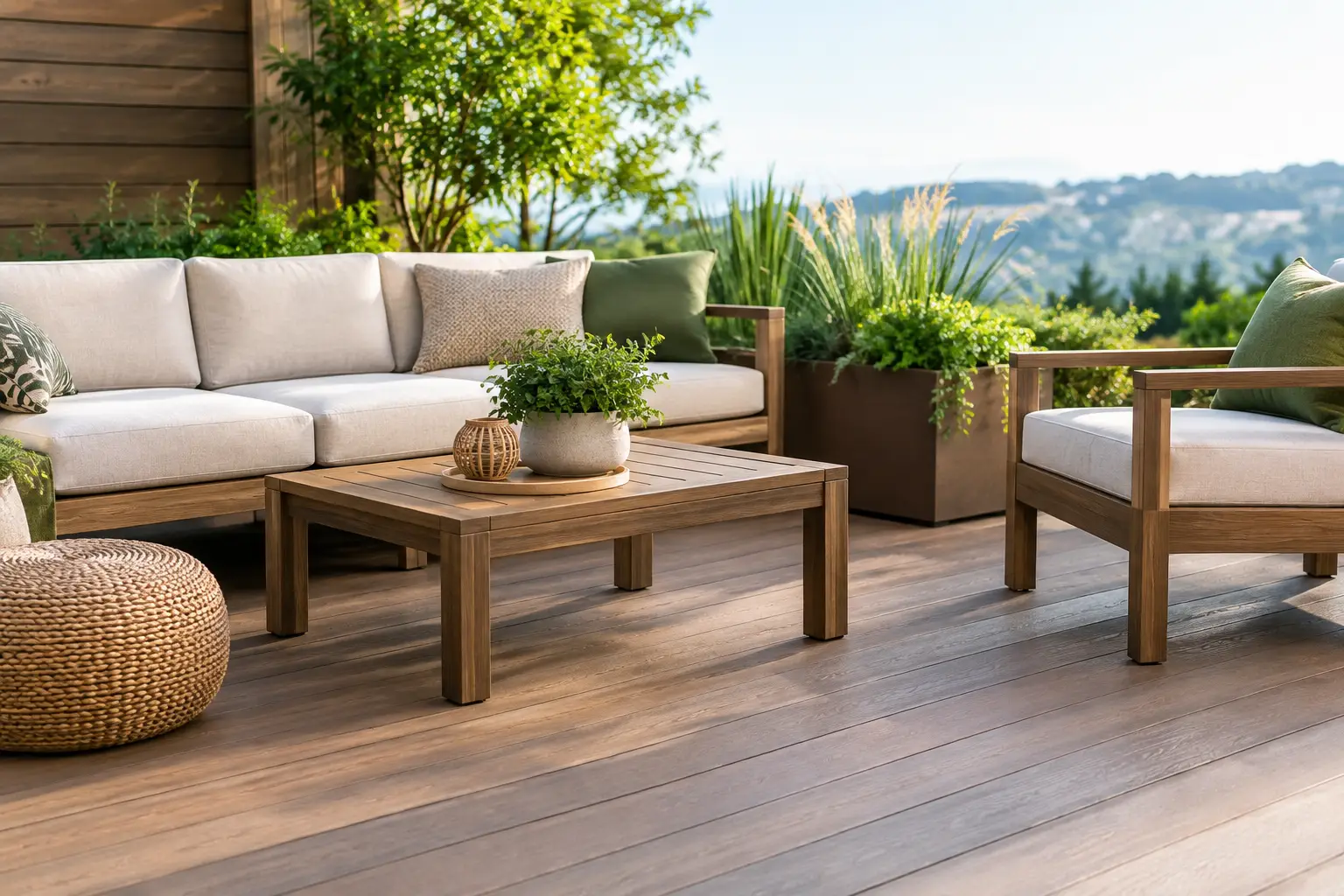
A patio should feel good in more ways than one. The right surface can turn an unused stretch of yard, deck, or balcony into the place where morning coffee lingers, dinners move outside, and friends gather after sunset. Choosing sustainable patio materials lets you create that welcoming retreat while considering where materials come from, how long they last, and what happens when they eventually need to be replaced.
The most earth-conscious choice is rarely a single perfect product. It is the material that fits your climate, works with your home, avoids unnecessary replacement, and gives you a space you will actually enjoy using. Start with the patio's job: Is it a quiet spot for two chairs, a family dining area, a grilling station, or a complete outdoor entertaining zone? From there, the best option becomes much easier to see.
What Makes a Patio Material Sustainable?
A material earns its sustainable reputation for different reasons. Some are made from recycled content. Others use renewable resources, require less energy to produce, can be reused, or simply last for decades with modest care. Durability matters more than it may seem. A surface that stays attractive through years of sun, rain, foot traffic, and patio furniture is often a better long-term choice than one that needs frequent repairs or replacement.
Local availability is another practical consideration. Stone, gravel, or reclaimed materials sourced closer to home can reduce transportation impacts while helping a patio feel connected to its setting. Water management matters, too. Hard, nonporous surfaces can send rainwater rushing toward drains, while permeable options allow more water to soak gradually into the ground.
There are trade-offs. Natural materials can cost more upfront or need periodic sealing. Recycled products vary in appearance and heat retention. The goal is not to chase a label. It is to choose a surface that supports the way you live outdoors and stays in service for years.
Sustainable Patio Materials Worth Considering
Reclaimed Brick for Warm, Timeless Character
Reclaimed brick brings instant history to a patio. Salvaged from older buildings and projects, it gives existing material another useful life while creating a warm, lived-in look that pairs beautifully with wood furniture, black metal accents, terracotta planters, and soft outdoor lighting.
Brick is also a practical choice for patios used for dining and entertaining. It handles foot traffic well, offers texture for grip, and can be laid in patterns that add personality without competing with your decor. Individual bricks can often be reset if the ground shifts, rather than replacing an entire surface.
Keep in mind that reclaimed brick may have color variation, chipped edges, and different dimensions. That is part of its charm, but it is not the best fit for every sleek, highly uniform design. A properly prepared base is essential, especially in areas with freeze-thaw cycles.
Natural Stone That Stays Beautiful for Decades
Flagstone, bluestone, slate, and other natural stones offer exceptional longevity. When selected responsibly and installed well, stone can remain a beautiful patio foundation for generations. Its natural variation makes each space feel personal, whether you prefer a formal dining terrace or a relaxed garden path that opens into a seating area.
Stone works especially well for homeowners creating a layered backyard retreat. Pair broad stone pavers with a pergola or gazebo, comfortable lounge seating, planters, and a fire pit to make the patio feel like an outdoor room. In warmer climates, lighter-colored stone may be more comfortable underfoot than darker options that absorb heat.
The sustainability question is largely about sourcing and installation. Ask where the stone comes from and consider materials available in your region when possible. Stone is heavy to transport, and some varieties need sealing to resist stains from grilling, drinks, or fallen leaves. Still, its long lifespan can make the investment worthwhile.
Permeable Pavers for Smarter Rainwater Management
Permeable pavers are designed with small spaces between units or with a porous structure that lets water pass through the surface and into a gravel base below. For patios prone to puddles or properties where runoff is a concern, this can be a thoughtful and highly functional choice.
Many permeable pavers are made with recycled aggregate or recycled concrete content. They come in a range of shapes and colors, making it possible to create a polished patio that suits traditional, modern, or cottage-inspired homes. Their modular format also makes spot repairs easier if a section settles over time.
Installation is more involved than simply placing pavers over soil. The base must be graded and layered correctly for drainage to work as intended. It is a project where professional help can be well worth considering, particularly for large patios or yards with drainage challenges.
Recycled Composite Decking for Low-Maintenance Spaces
For a raised patio, deck, rooftop terrace, or balcony, recycled composite decking can be a strong alternative to new wood. Many composite boards blend recycled plastic with reclaimed wood fibers, creating a surface that resists splintering, fading, and frequent staining. It is an appealing option for busy households that want more time relaxing outdoors and less time sanding or refinishing.
Composite decking delivers a clean, consistent look that makes decorating easy. Add an outdoor rug, a storage bench, coordinating dining furniture, and solar lighting, and even a compact deck can feel ready for weekend hosting. Look for boards with a high recycled-content percentage and a warranty that reflects their expected lifespan.
The trade-off is that composite can get warm in full sun, especially in deep colors. It is also not biodegradable. Choose a lighter shade for hot, sunny spaces and plan for an umbrella, shade structure, or pergola if your patio receives intense afternoon light.
FSC-Certified Wood for a Natural Look
Real wood has an unmistakable warmth, whether it is used for decking, privacy screens, built-in benches, or a small platform patio. Wood from responsibly managed forests, often identified by Forest Stewardship Council certification, supports more thoughtful forestry practices than wood with an unknown source.
Naturally durable species can perform well outdoors, but every wood option needs some level of care. Finishes, sealers, and regular cleaning help protect against moisture, UV exposure, and stains. This makes wood a good match for homeowners who appreciate natural aging and do not mind seasonal maintenance.
For a softer, more relaxed outdoor style, wood creates a beautiful backdrop for woven seating, lanterns, garden decor, and leafy container plants. If your patio is exposed to heavy rain, termites, or strong year-round sun, compare maintenance needs carefully before committing.
Recycled Gravel and Crushed Concrete for Flexible Patios
A gravel patio can be one of the simplest ways to make a backyard more usable without pouring a large concrete slab. Recycled gravel or crushed concrete offers a second life for demolition material and creates a surface with excellent drainage. It is particularly useful for casual seating areas, fire pit circles, garden-side dining spots, and paths between outdoor zones.
The look can be surprisingly refined with proper edging, a compacted base, and furniture with broad, stable feet. Choose angular gravel rather than rounded pea gravel for a firmer walking surface. A level area rug can also help define a conversation zone and add softness underfoot.
Gravel is not ideal for every situation. Chair legs may sink, loose stones can travel into the lawn, and mobility needs should guide the decision. For an accessible patio or a space used frequently for rolling carts, smooth pavers or decking may be the better fit.
Match the Material to How You Use Your Patio
The best sustainable patio materials support the life happening on top of them. A busy grilling and dining area benefits from a stable, easy-to-clean surface such as stone, brick, or pavers. A tucked-away fire pit setting may feel more natural with gravel and simple garden seating. A balcony or elevated deck calls for materials that balance weight, maintenance, and comfort.
Also consider the details that make the patio more useful after it is built. Shade keeps a sunny surface comfortable at lunchtime. Outdoor storage protects cushions and serving supplies. Solar lights guide guests safely after dark, while a fire pit or outdoor heater can extend the season. These additions help you enjoy the patio more often, which is one of the best reasons to invest in a durable foundation.
Build a Patio You Will Keep Using
Sustainability is not limited to the surface under your feet. Plan dimensions carefully so furniture has room to move, select pieces made for outdoor conditions, and choose a style you will still love after a few seasons. A patio that feels intentional is less likely to be torn out for a quick redesign later.
Whether you are refreshing a small balcony or shaping a full backyard gathering space, start with a material that suits your climate and your everyday routine. Then bring in the seating, shade, lighting, and finishing touches that invite you outside. Patio Treasures can help you layer those comfortable details into a space that feels ready for quiet evenings, family meals, and every easygoing get-together ahead.