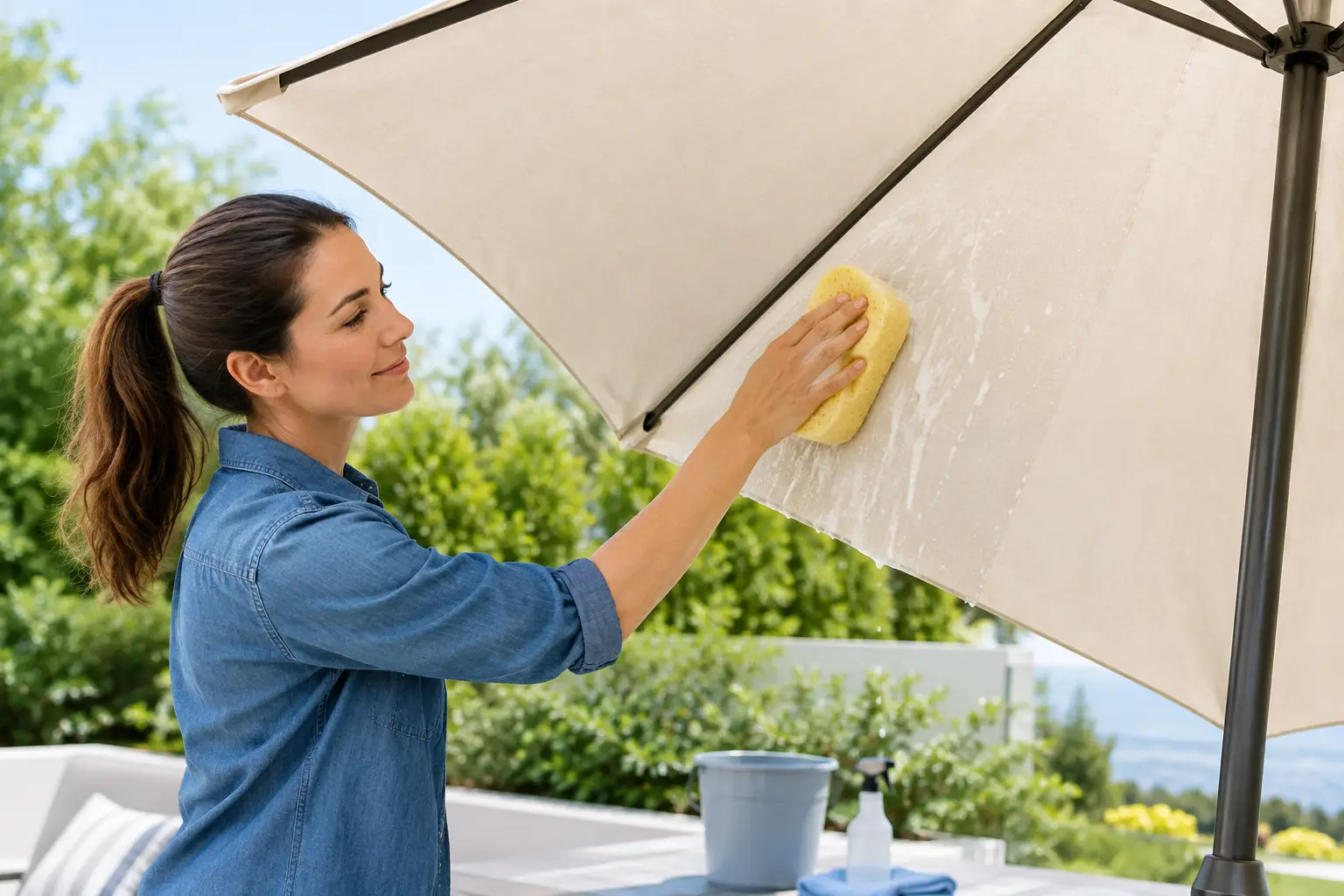
A patio umbrella does more than block bright afternoon sun. It makes the dining table more inviting, gives a lounge area a finished look, and helps turn open square footage into a comfortable place to relax and entertain. Knowing how to clean outdoor umbrellas keeps that hardworking shade looking polished instead of faded, spotted, or musty by the middle of summer.
The good news is that most routine cleaning takes less than an hour, does not require harsh chemicals, and can make a noticeable difference in the look of your whole patio. The key is using a gentle approach that protects the fabric's color, water resistance, and stitching.
Start by Checking the Umbrella Fabric
Before mixing any cleaner, look for the care tag sewn inside the canopy or consult the umbrella's product instructions. Acrylic, polyester, olefin, and Sunbrella-style performance fabrics can all handle outdoor conditions well, but they do not always respond the same way to bleach, detergents, or stain removers.
If the tag recommends a specific cleaning method, follow it. If there is no guidance, test any cleaning solution on a small, hidden part of the canopy first. This simple step can prevent a clean spot from becoming a faded spot.
Choose a dry, mild day for the job. You will want enough time for the umbrella to air-dry completely before closing it. Folding damp fabric traps moisture, which is one of the easiest ways for mildew odors and dark spots to return.
What You Need to Clean an Outdoor Umbrella
For regular seasonal cleaning, gather a soft-bristle brush, a bucket, mild dish soap, lukewarm water, clean cloths, and a garden hose with a gentle spray setting. A microfiber cloth works well for the pole and frame, while an old toothbrush can help lift dirt from small joints and hardware.
Avoid pressure washers, stiff scrub brushes, and strong household cleaners. They can weaken fabric fibers, strip protective finishes, or force water into the umbrella mechanism. A little patience is much kinder to a quality umbrella than a powerful blast of water.
How to Clean Outdoor Umbrellas Step by Step
Open the umbrella fully and move it away from furniture, rugs, cushions, and grill equipment. Brush off loose debris first, including pollen, leaves, bird droppings, cobwebs, and dry soil. Starting dry keeps loose dirt from turning into muddy streaks once water is added.
Mix a small amount of mild dish soap into a bucket of lukewarm water. You want light suds, not a concentrated solution. Dip the soft brush into the soapy water and gently scrub the canopy in sections, working from the top down. Use small circular motions and spend a little more time along seams, edges, and folds where dust tends to collect.
Let the solution sit on the fabric for about 10 to 15 minutes. Do not let it dry completely on the canopy, especially on a hot day. Then rinse thoroughly with a low-pressure hose until the water runs clear and no soap remains. Soap residue can attract more dirt later and may leave the fabric feeling stiff.
Leave the umbrella open to dry in the sun and breeze. Check the underside, ribs, and center hub before closing it. If any area still feels damp, give it more time. A fully dry canopy will store better and stay fresher between gatherings.
Clean the Frame, Pole, and Crank System
While the canopy dries, wipe down the frame with a damp microfiber cloth and mild soapy water. Aluminum and powder-coated steel frames usually need only gentle cleaning. For wood poles, use minimal water and dry the surface right away so moisture does not linger in the grain.
Clean around the crank, tilt joint, and rib connections with a soft cloth or toothbrush. Remove trapped grit, but do not flood moving parts with water. If the crank feels rough after cleaning, use only the lubricant recommended by the manufacturer. The wrong oil can collect dust and make the mechanism harder to use over time.
Removing Mildew, Bird Droppings, and Stubborn Stains
Not every umbrella needs stain treatment, and aggressive cleaning can do more harm than a faint seasonal mark. Still, a few common messes deserve attention before they settle in.
For fresh bird droppings, rinse away as much as possible before scrubbing. Then use the mild soap solution and a soft brush. For tree sap or greasy food splatters, blot gently first rather than rubbing the stain deeper into the weave.
Mildew needs a little more care. Brush away dry surface growth outdoors while wearing gloves, then clean the fabric with a manufacturer-approved mildew solution. Some outdoor fabrics can tolerate a diluted bleach mixture, while others should never be treated with bleach. When in doubt, stay with a fabric-safe cleaner designed for outdoor textiles and test it in an inconspicuous area.
Rust-colored marks can come from metal hardware, nearby furniture, or runoff from a deck railing. Treat these cautiously. A specialty fabric cleaner may help, but harsh rust removers are often too strong for a colored canopy. If the stain is small and the umbrella is otherwise in great shape, professional cleaning can be the safer choice.
Do You Need to Remove the Canopy?
Usually, no. Most patio umbrellas can be cleaned successfully while open on the frame, which is easier and reduces the chance of reinstalling the canopy incorrectly. Removing it can make sense when the care label specifically permits machine washing or when deep mildew has reached the underside and seams.
If you do remove the canopy, take a few photos first. Note how the fabric attaches at the finial, rib ends, and center hub. Machine washing is only appropriate when the manufacturer says it is safe. Even then, use a gentle cycle, mild detergent, and air-dry only. High dryer heat can shrink fabric, damage coatings, and weaken stitching.
Keep Your Umbrella Cleaner Between Washes
A little ongoing care makes spring cleaning much easier. Shake off leaves and pollen once a week during heavy-use months, especially if your patio sits near trees. After rain, open the umbrella when the weather clears so the fabric can dry instead of staying folded and damp.
A fitted umbrella cover is one of the simplest ways to protect your shade when it is not in use for several days. It helps block dust, UV exposure, bird mess, and falling debris. Make sure the canopy is dry before covering it, and choose a breathable cover rather than wrapping the umbrella in plastic.
During high winds, close and secure the umbrella even if the base is heavy. Wind damage often starts with a bent rib or strained seam, not a dramatic topple. For winter or a long stretch without outdoor use, clean and dry the umbrella, close it carefully, add a cover, and store it in a sheltered location if possible.
When Cleaning Is Not Enough
Cleaning refreshes fabric, but it cannot always reverse sun fading, torn seams, brittle material, or a bent frame. If the canopy has become thin enough to let harsh sunlight through, replacement may be a better investment than repeated treatments. A fresh umbrella can also be an easy way to introduce a new color, pattern, or coordinating accent to a patio refresh.
For a welcoming retreat that works from quiet coffee mornings to weekend cookouts, keep shade as thoughtfully maintained as your seating and table. A clean, dry umbrella is a small detail that makes the entire outdoor space feel ready to enjoy.