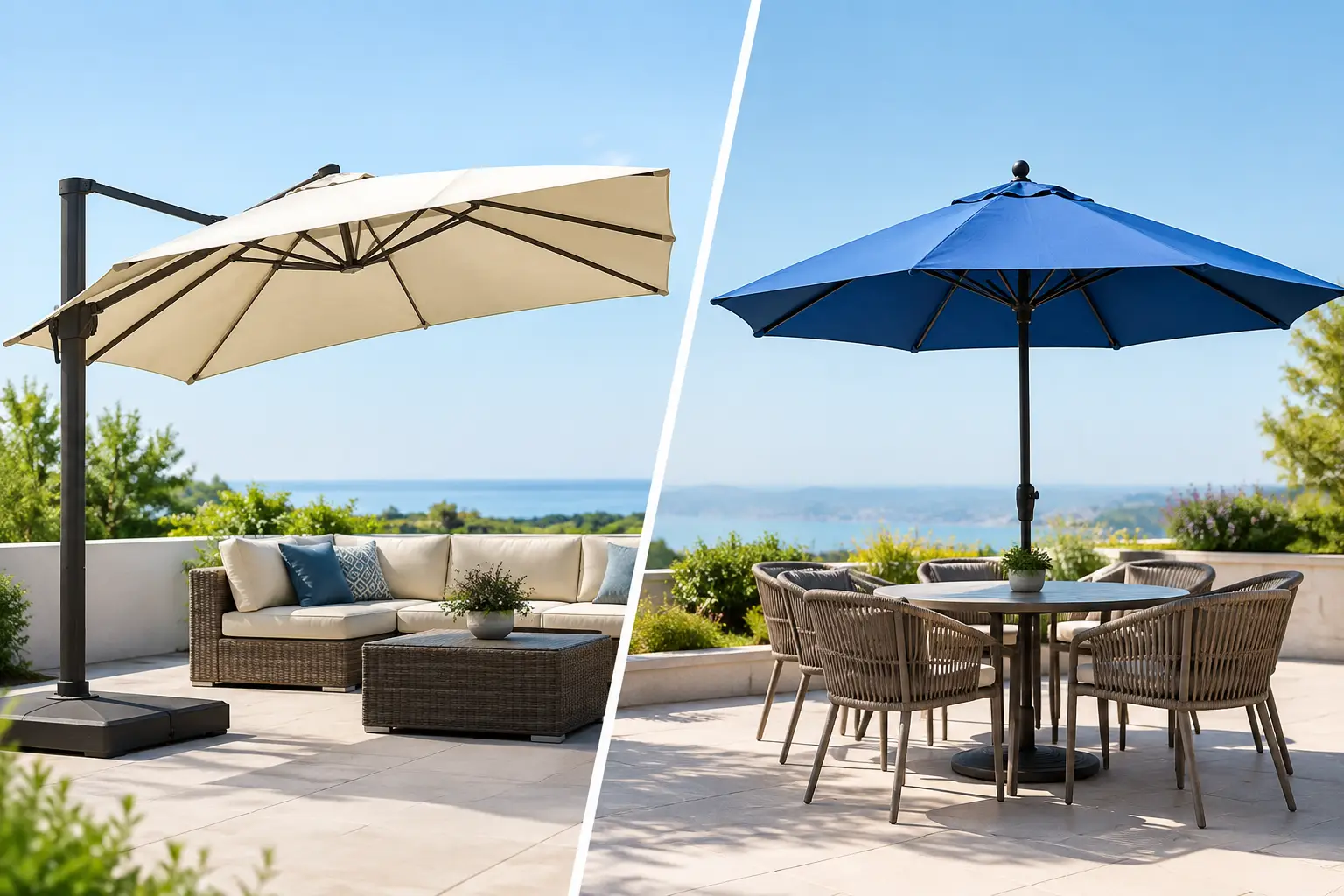
A patio can look beautifully furnished and still sit empty at noon if the sun lands directly on the table, lounge chairs, or conversation set. The real question in a cantilever umbrella versus market umbrella decision is not which style looks better in a product photo. It is which one puts comfortable shade exactly where your family and guests spend time.
Both designs can make an outdoor area more usable for coffee on the deck, long summer lunches, poolside reading, and relaxed evenings around the table. Their structure, footprint, flexibility, and price point are very different, though. Choosing well starts with how you use your space, not just the size of your patio.
Cantilever umbrella versus market umbrella: the main difference
A market umbrella has a center pole that rises through the middle of the canopy. It is the familiar, classic umbrella style often placed through a hole in an outdoor dining table and secured with a weighted base below. The canopy shades the area around that central point.
A cantilever umbrella, sometimes called an offset umbrella, has its support pole positioned to one side. An extended arm holds the canopy over a seating or dining area without placing a pole in the middle. This open space underneath is the feature that makes cantilever umbrellas especially appealing for sectional seating, chaise lounges, and tables without umbrella holes.
Neither option is automatically better. A market umbrella is often the straightforward choice for a compact dining setup. A cantilever umbrella offers greater placement freedom and a more open, resort-inspired feel, but it needs more room and more attention to base weight.
Choose a market umbrella for simple, centered shade
Market umbrellas work beautifully when your shade needs are centered around an outdoor dining table. The pole passes through the table, helping create a balanced setup that feels familiar and tidy. For a bistro set on a balcony, a four-person table on a small patio, or a casual breakfast area near the kitchen, this straightforward design is often all you need.
Because the construction is simpler, market umbrellas are generally easier to move, set up, and store. They also tend to have a smaller visual footprint. That matters when a patio already includes dining furniture, planters, a grill, storage, or a fire pit.
When a market umbrella makes the most sense
A market umbrella is a strong fit if you have a table with a built-in umbrella hole and want shade for meals rather than an entire lounge area. It also works well for homeowners who prefer a classic look that can be updated seasonally with a new canopy color or a coordinating outdoor rug and cushions.
Keep in mind that the pole occupies valuable space at the center of the table. For most dining setups, this is a minor trade-off. But if you want an unobstructed tabletop for shared platters, games, or a large centerpiece, the pole may feel less convenient.
Market umbrellas can also include helpful features such as a crank lift, a push-button tilt, or a collar tilt. Tilt capability is particularly useful in the late afternoon, when the sun sits lower and overhead coverage alone no longer reaches your chairs.
Choose a cantilever umbrella for flexible coverage
A cantilever umbrella earns its place when the furniture layout does not have a natural center point. Picture a deep-seating conversation set, two chaise lounges by the pool, or a rectangular dining table without an umbrella hole. An offset canopy can extend overhead while leaving the seating area open and comfortable.
This design is especially useful for creating shade over the edge of a deck or patio. Since the base can sit beside the furniture rather than underneath it, you have more freedom to arrange chairs, side tables, and ottomans the way you actually want to use them.
Many cantilever styles rotate, tilt, or glide into multiple positions. That flexibility can make a noticeable difference throughout the day, letting you follow the sun without dragging furniture across the patio. For households that entertain often, it is a welcome convenience: guests can stay in the conversation instead of constantly shifting seats to find shade.
What to plan for before buying a cantilever umbrella
The biggest consideration is the base. A cantilever canopy creates leverage because its weight extends away from the support pole. It needs a substantial base designed for that umbrella's size and style, often using weighted plates or a base filled with sand or water. Always follow the manufacturer's specifications rather than guessing at the amount of weight needed.
Cantilever umbrellas also need clearance behind and beside the canopy. Measure the full swing area, not only the shaded area you hope to cover. A canopy that looks perfect over your sectional may not work if it bumps a railing, tree branch, exterior wall, or outdoor kitchen when opened or rotated.
They are usually a larger investment than market umbrellas, and their moving parts deserve routine care. That does not make them difficult to own. It simply means the added comfort and flexibility come with a little more planning.
Size your umbrella to the furniture, not the patio alone
A common mistake is choosing an umbrella based on the total size of the outdoor area. Shade should match the footprint of the activity zone. A large deck may only need coverage over a six-person dining table, while a modest patio may need a wide canopy to shade a sectional and coffee table.
For dining, the canopy should extend beyond the table edge enough to cover seated guests, not just the tabletop. A round umbrella suits many round or square tables, while rectangular canopies can be a natural match for long dining tables and modular sectionals. The shape should echo the furniture zone instead of competing with it.
Height matters as well. You want clearance for standing, serving, and moving chairs, while still keeping the canopy low enough to provide useful shade. If your patio catches strong afternoon sun, a tilt feature can be more valuable than simply buying a larger canopy.
Think about wind before color and style
A handsome umbrella cannot do its job if it is constantly closed because the area gets breezy. No freestanding patio umbrella should be left open in strong winds, storms, or when no one is home. Closing it promptly protects the canopy, frame, nearby furniture, and people using the space.
Look for a stable base matched to the umbrella, a durable frame, and a canopy material intended for outdoor exposure. Ventilated canopies can help air pass through, which may improve comfort on warm days and reduce some upward pressure from a light breeze. They are not a substitute for closing the umbrella in windy conditions.
If your yard is particularly exposed, a market umbrella secured through a sturdy table may feel more manageable than a large cantilever model. If you have a sheltered patio and want broad, adjustable coverage, the cantilever design can be a standout addition. This is one of those decisions where local conditions matter more than a trend.
Build a more coordinated outdoor retreat
Your umbrella can do more than block the sun. It can tie together the colors and scale of your outdoor space. A neutral canopy in sand, charcoal, or soft gray offers a versatile foundation for patterned pillows, colorful planters, and seasonal decor. A navy, green, or terracotta canopy can become a stronger focal point in a simple furniture arrangement.
For a market umbrella, coordinate the canopy with the dining set and tabletop accessories. For a cantilever umbrella, consider the canopy as part of the larger lounge scene: outdoor rugs define the seating area, lanterns add evening warmth, and side tables keep drinks and books within reach. Patio Treasures makes it easier to bring these practical and decorative pieces together in one welcoming outdoor plan.
The best choice for your outdoor routine
Choose a market umbrella when you want classic, affordable shade centered over a table, especially in a smaller or more compact setup. Choose a cantilever umbrella when you want a clear, pole-free seating area and the ability to position shade over a lounge, poolside chairs, or a table without a center hole.
Before deciding, step outside at the time you use the patio most. Notice where the sun falls, measure the furniture zone, and picture where guests will walk and sit. The right umbrella should make your favorite outdoor moments feel easier, cooler, and more inviting - from a quiet morning cup of coffee to a backyard dinner that lingers after sunset.