A pile of patio cushions by the back door can make even a beautifully furnished outdoor space feel unfinished. The deck box versus storage shed question comes down to more than how much gear you own. It is about how you use your patio, what you want close at hand, and how much room you have to create a relaxing, welcoming retreat.
A deck box keeps everyday essentials within easy reach of the seating area. A storage shed gives larger equipment a protected home away from the places where you relax and entertain. Both can make outdoor life easier, but the right choice depends on your storage needs, layout, and plans for the space.
Deck Box Versus Storage Shed at a Glance
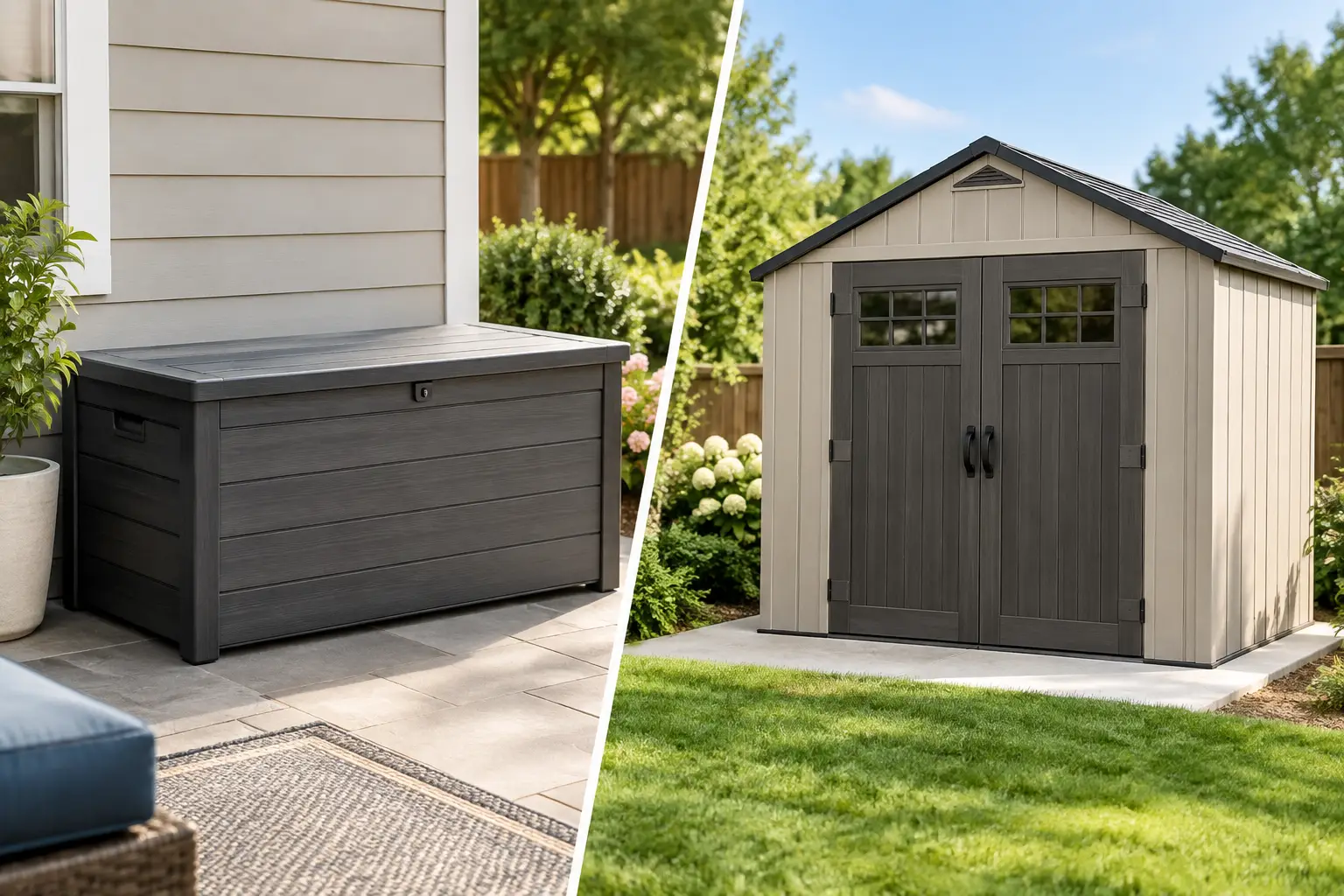
A deck box is a compact, weather-resistant container designed for the items you reach for often: seat cushions, throw pillows, outdoor blankets, pool toys, garden gloves, or a cover for the grill. Most sit neatly along a wall, beside a seating set, or at the edge of a deck. Many also offer a flat lid that works as extra seating or a small serving surface during a casual gathering.
A storage shed is a separate outdoor structure with enough room for bulky, less decorative necessities. Think lawn mowers, bicycles, rakes, potting supplies, leaf blowers, folding chairs, and seasonal decorations. It is the better match when your outdoor storage needs extend beyond patio accessories.
The simplest distinction is this: a deck box supports the outdoor space you use every day, while a shed handles the equipment that supports the whole yard.
When a Deck Box Is the Better Choice
Choose a deck box when convenience and a clean patio look matter most. If you regularly bring cushions out for morning coffee, family dinners, or weekend entertaining, storing them steps from the furniture saves time and protects your investment. Instead of carrying cushions through the house or leaving them exposed to rain and sun, you can put them away in a minute.
This is also a smart solution for renters and homeowners with smaller decks, balconies, porches, or townhome patios. A box does not require a dedicated footprint in the lawn, and it can move with you if your needs change. Look for a size that fits your cushions without forcing you to cram or bend them. Measure the largest cushion first, then allow a little extra room for pillows or covers.
Deck boxes also help preserve the calm, designed feeling of your outdoor room. A neutral resin finish can blend with most furniture, while wood-look styles bring warmth alongside planters, outdoor rugs, and lanterns. The goal is not to hide everything in a corner. It is to make storage feel like a purposeful part of the patio.
A deck box does have limits. It is not ideal for fuel, hazardous chemicals, heavy power equipment, or tall-handled garden tools. It may also be too small for a household with a large pool, extensive gardening supplies, or several bikes.
When a Storage Shed Makes More Sense
A storage shed earns its space when your backyard equipment is taking over the garage, patio, or side yard. It gives you room to organize belongings vertically, keep tools together, and clear visual clutter from entertaining areas. For homeowners who garden, maintain a lawn, or host larger gatherings, that extra capacity can be a major relief.
Before selecting a shed, think through the items that need a permanent home. A compact shed may suit a few garden tools and folding chairs. A larger model may be necessary for a mower, bikes, sports gear, and seasonal décor. Door width matters as much as floor space. A shed can look generously sized on paper but become frustrating if a mower or bike cannot move through the entrance comfortably.
Placement deserves attention, too. You want a level, well-drained location that allows easy access without interrupting traffic around the patio. Check local HOA rules, property setbacks, and permit requirements before ordering a larger shed. These practical details help prevent a great storage idea from becoming a complicated installation project.
Sheds are functional first, but they can still complement a thoughtfully designed backyard. Choose a finish that works with your home exterior, fence, gazebo, or deck color. Surrounding the structure with simple landscaping can help it feel settled into the yard rather than dropped into it.
Think About What You Store Most Often
The best choice often becomes clear when you separate everyday items from occasional-use items. Patio cushions, dining accessories, pool towels, and kids' outdoor toys belong near the action. Lawn equipment, gardening tools, holiday decorations, and maintenance supplies generally belong in a shed.
Consider how often you want to carry something across the yard. If you use it every sunny afternoon, keeping it in a shed may create an annoying extra step. If you pull it out once a month, storing it in a deck box may waste valuable patio-side space.
For many households, the answer is not strictly one or the other. A deck box can hold the soft goods and entertaining essentials that make the patio comfortable, while a shed handles the heavier, messier, and bulkier items. This combination keeps your favorite seating area tidy without asking one storage piece to do every job.
Match the Storage to Your Available Space
Small outdoor areas benefit from furniture-scale storage. A deck box placed behind a sofa or against a railing can hold a surprising amount without making the patio feel crowded. Keep walkways clear, especially around grill stations, dining chairs, and doors. If opening the lid blocks the main path, reposition the box or choose a narrower option.
Larger yards offer more freedom, but bigger is not always better. An oversized shed can dominate a modest backyard and reduce open space for play, gardening, or outdoor dining. Make a simple layout before you buy. Mark the storage footprint, door swing, and access route with painter's tape, string, or cardboard. This small step makes scale easier to picture.
Also consider future purchases. If you plan to add a fire pit, dining set, patio umbrella, or play equipment, leave room for the outdoor space to grow with your household. Storage should make your backyard more usable, not claim the square footage you hoped to enjoy.
Weather Protection and Material Matter
Outdoor storage has one basic job: protect the items inside from moisture, dirt, sunlight, and pests. Resin deck boxes and sheds are popular because they are low-maintenance and resist rust and rot. They work well for busy households that want a polished look without regular refinishing.
Wood storage can bring classic character to a deck or garden, but it usually needs more upkeep to stay protected from the elements. Metal sheds can be durable and secure, though they may collect heat in sunny locations and can show condensation if ventilation is limited. Whatever material you choose, make sure the lid or doors close securely and that the base sits level.
For cushion storage, check that the box is designed to keep out rain rather than simply cover contents. Even water-resistant cushions benefit from a dry storage area, especially in humid climates or during stretches of wet weather. Avoid packing damp textiles inside. Let them dry first so your next outdoor gathering starts fresh.
Choose Storage That Supports Your Outdoor Style
Practical storage does not have to interrupt the atmosphere you are creating. A deck box can anchor a lounge area with a pair of planters nearby, or provide a convenient spot for extra blankets beside a fire pit. A shed can keep the visual focus on your furniture, shade, lighting, and garden décor by moving maintenance items out of sight.
At Patio Treasures, the most inviting spaces usually balance comfort with a place for every essential. When cushions, grilling tools, and garden supplies are easy to put away, it is easier to say yes to an impromptu dinner outside or a quiet hour on the patio.
Choose the storage that removes the most friction from your routine. A well-placed deck box may be all you need to enjoy a neater patio tonight, while a shed can give a busy backyard the breathing room it has been missing. Either way, organized storage leaves more space for the moments that make being outdoors worthwhile.