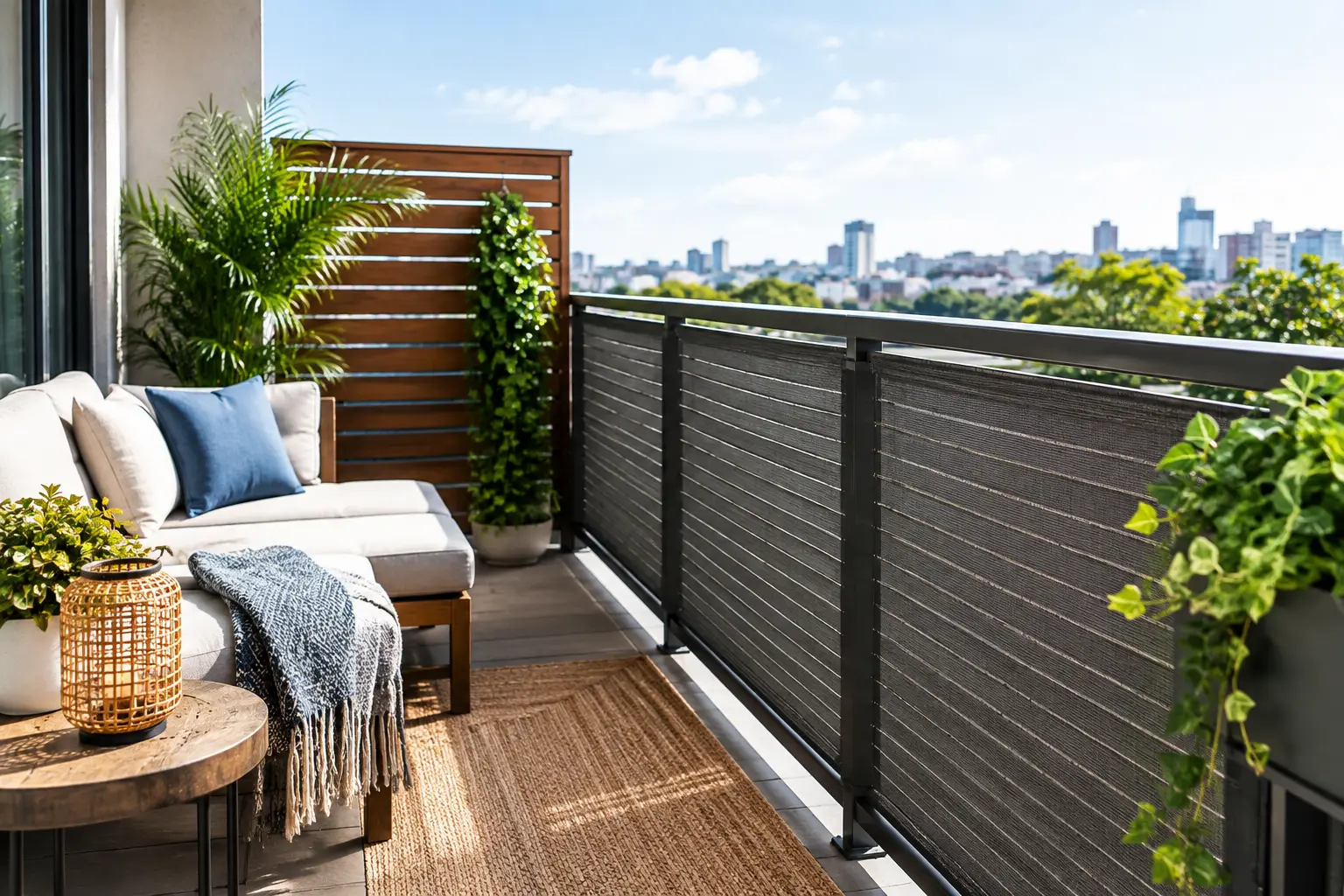
A balcony can have a beautiful view and still feel a little too exposed for morning coffee, family dinners, or a quiet hour with a book. The best balcony privacy screen ideas do more than block sightlines. They add softness, shade, and a sense that this small outdoor space truly belongs to you.
The right choice depends on your building rules, how much wind your balcony gets, and whether you need a renter-friendly solution. Start by looking at the direction of unwanted views. A screen along the railing solves a different problem than privacy from a neighboring balcony above or beside you. Once that is clear, you can create a more comfortable retreat without crowding the square footage you have.
12 Best Balcony Privacy Screen Ideas
1. Weather-Resistant Railing Screens
Fabric or woven screens that attach directly to a balcony railing are a smart answer when the view from below is the issue. They create an immediate boundary while still allowing air to move through the space. Look for fade-resistant, outdoor-rated materials in neutral shades such as warm gray, sand, or charcoal for an easy match with most furniture.
Choose a tightly woven style when privacy is the priority. An open weave feels lighter and more decorative, but it may not conceal a close neighbor as well. Secure every tie point carefully, especially on upper-floor balconies where wind can turn a loose panel into a nuisance.
2. Tall Planters With Layered Greenery
Planters offer privacy with the added reward of color, texture, and a more relaxed garden feel. Place tall, narrow planters along the edge where you need coverage, then fill them with upright grasses, compact evergreens, or climbing plants trained on a slim trellis.
This option is especially inviting around a bistro set or lounge chair because it softens the hard lines of railings and walls. Keep weight in mind. Wet soil and oversized containers add up quickly, so confirm your balcony's guidelines and choose lightweight resin or fiberglass planters when needed.
3. A Freestanding Trellis
A trellis makes a blank side wall feel purposeful without permanently changing it. A narrow freestanding design can support potted vines, hanging baskets, or a simple arrangement of faux greenery. It also gives you a vertical decorating surface for small lanterns or outdoor-safe string lights.
For renters, a trellis can be one of the most flexible choices because it moves with you. Select a stable base and position it where it cannot shift into a shared walkway or lean against a neighbor's property.
4. Outdoor Curtains for a Softer Look
Outdoor curtains bring the comfort of an indoor sitting room to a covered balcony. Hung from a tension rod, pergola frame, or approved ceiling track, they can shield a side view while making the area feel more finished for evening entertaining.
Use mildew-resistant panels designed for outdoor use, and add tiebacks so you can open them when you want sunlight and a wider view. Curtains are not ideal for an uncovered, high-wind balcony unless they can be secured firmly, but they are a lovely fit for sheltered spaces.
5. Bamboo or Reed Roll-Up Shades
Natural roll-up shades add warm texture without the visual weight of a solid wall. They work well along a railing or at the edge of a covered balcony, filtering harsh afternoon sun while offering a comfortable level of privacy.
Because natural materials can weather over time, this is best for balconies with some overhead protection. Synthetic versions offer a similar look with easier care and better resistance to rain and fading. Either way, make sure the shade has a secure lower attachment point so it stays put on breezy days.
6. Artificial Hedge Panels
If you want year-round green coverage without watering, artificial hedge panels make a convincing and low-maintenance screen. They are useful on railings, wire fencing, and trellises, where they create an instant leafy backdrop for outdoor seating.
Quality matters here. Choose UV-protected panels so the color stays fresh rather than turning blue-gray after a season in the sun. A hedge screen can look especially polished when paired with a coordinating outdoor rug and a few real potted plants for contrast.
7. A Folding Outdoor Room Divider
A folding divider is a practical choice for renters and anyone who wants privacy only when they are using the balcony. Open it to shield a lounge corner, then fold it away when you want more light or need access to the railing.
Look for a divider made from weather-friendly metal, resin wicker, or treated wood. It needs a broad, stable footprint, but it should not be so bulky that it makes a narrow balcony difficult to navigate. This is a better visual screen than a wind-blocking solution.
8. A Slatted Wood Screen
A slatted screen has a clean, modern appearance that works beautifully with wood furniture, black metal accents, and simple planters. The small gaps preserve airflow and let in dappled light, while the repeated vertical or horizontal lines draw the eye upward and make a compact balcony feel more intentional.
For a permanent installation, check with your HOA, landlord, or building manager first. A freestanding slatted panel can deliver a similar effect with fewer approvals. Choose exterior-rated finishes and inspect the hardware at the beginning of each season.
9. Climbing Plants on a Railing Trellis
A railing-mounted trellis is ideal for gardeners who want privacy that feels alive. Fast-growing annual vines can create seasonal coverage, while perennial climbers may be suitable in climates where your balcony gets enough light and you can provide consistent care.
Use a trellis rather than allowing plants to cling directly to the railing. This keeps the setup tidier and makes cleanup easier at the end of the season. Be considerate with trailing growth, too. Plants should stay within your space instead of reaching into a neighbor's balcony.
10. Shade Sails for Top-Down Coverage
Sometimes the most uncomfortable views come from apartments above. A compact shade sail can make a balcony feel more private from overhead while cutting glare and creating welcome shade for lunch or afternoon lounging.
This option requires secure anchor points and careful measuring. It may not be permitted on every building, and it should never be attached to a railing that is not designed for that type of tension. When it is feasible, a shade sail pairs nicely with a lower railing screen for a more sheltered outdoor room.
11. Decorative Outdoor Panels
Laser-cut metal, composite, or resin panels add privacy with personality. Choose a botanical pattern for a garden-inspired space, a geometric design for a contemporary balcony, or a classic lattice motif for a more traditional look.
Decorative panels usually provide partial privacy rather than complete coverage, which can be an advantage if you want to keep daylight and an open feel. Mount them only with approved hardware, or place them in planters designed to hold upright panels. A few well-chosen pieces often look better than covering every available surface.
12. Mix Screens, Plants, and Lighting
The most comfortable balconies often use two lighter privacy solutions instead of one heavy barrier. For example, a simple railing screen can block direct views, while a tall planter adds softness near the seating area. String lights, solar lanterns, or a tabletop lamp then make the space feel welcoming after sunset.
This layered approach lets you adjust the mood without sacrificing every bit of openness. It is also an easy way to build a coordinated look around your existing chairs, outdoor rug, storage bench, or small dining table.
How to Choose a Balcony Privacy Screen That Works
Before ordering anything, measure the railing length, the height you need for coverage, and the clear walking space left behind. On a narrow balcony, a screen that projects several inches inward can make the area feel cramped. Slim planters, mounted fabric panels, and vertical trellises are often better use of space.
Also consider wind, sun, and maintenance. Solid panels and curtains give more privacy but catch more wind. Plants are beautiful but need watering and seasonal attention. Synthetic hedge panels and resin screens are easy to care for, though they may not have the same natural character as living greenery or wood.
If you rent, prioritize options that attach with ties, clips, tension rods, or freestanding bases. Keep any building policies in writing before making a major purchase. A little planning helps prevent a screen from becoming an unexpected removal project.
At Patio Treasures, it is easy to bring the pieces together with outdoor planters, trellises, rugs, lighting, and comfortable seating that suit your style. Start with the privacy solution that solves your biggest concern, then add the details that make stepping outside feel like a small daily escape.