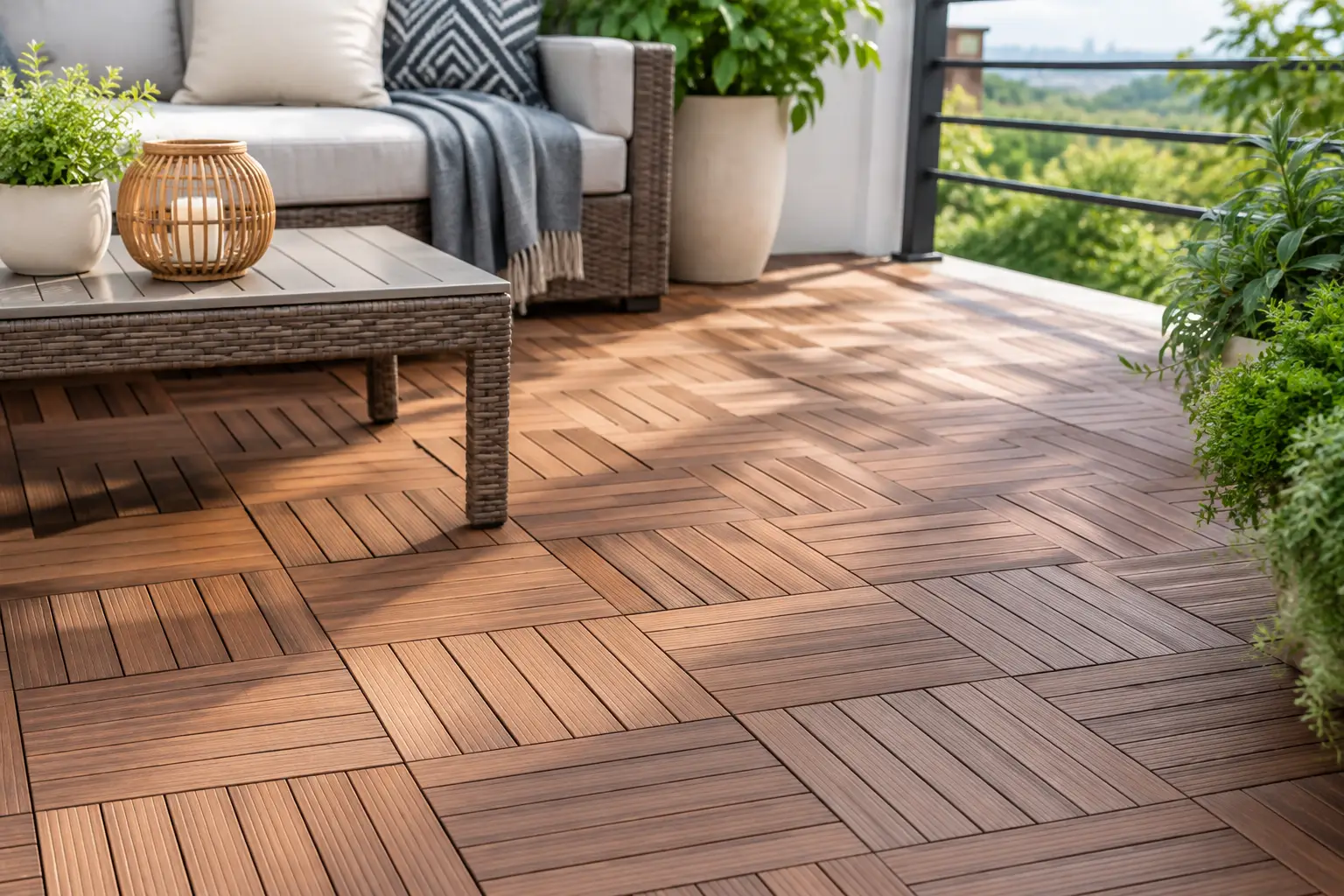
A concrete balcony, weathered deck, or tired apartment patio can make an otherwise lovely outdoor area feel unfinished. Deck tiles offer a practical way to add warmth, texture, and a more intentional look without committing to a major renovation. Set beneath a bistro table, lounge chairs, or an outdoor rug, they can help turn overlooked square footage into a place you actually want to use for morning coffee, family dinners, and relaxed evenings outside.
Why Deck Tiles Make a Smart Outdoor Refresh
Deck tiles are modular squares that connect or sit together over an existing hard surface. Many styles use an interlocking base, allowing homeowners and renters to cover a floor without adhesives, nails, or specialized installation tools. That makes them especially appealing for patios, balconies, porches, rooftop spaces, and older decks that need a visual lift.
Their biggest advantage is flexibility. You can cover an entire patio, define a compact conversation area, or create a polished landing spot just outside a back door. If you move, redesign the space, or need access to the surface below, many tile systems can be lifted and rearranged.
That convenience does not mean every outdoor floor is a fit. Deck tiles work best on a firm, relatively level surface that drains well. A badly cracked slab, loose pavers, severely uneven decking, or a surface that regularly holds standing water should be repaired before tiles go down. The goal is to create a more comfortable outdoor retreat, not cover up a problem that will continue underneath.
Choose Deck Tiles for How You Live Outdoors
The right material depends on the look you want, the weather in your area, and how much maintenance you are comfortable doing. Think beyond the initial color. Consider bare feet on a sunny afternoon, wet shoes after a summer storm, furniture legs, grilling splatters, and how often the space hosts friends and family.
Wood and Acacia Tiles
Wood deck tiles bring natural character to a patio or balcony. Acacia is a popular choice because its warm grain pairs easily with neutral cushions, woven rugs, planters, and both modern and traditional outdoor furniture. It can make a plain concrete surface feel more like an extension of the home.
Wood does need care. Direct sun, rain, and seasonal temperature shifts can fade or dry the surface over time. A periodic cleaning and protective treatment can help preserve its color and finish. Wood is a beautiful choice for covered porches and patios, or for shoppers who enjoy maintaining a natural outdoor material.
Composite Tiles
Composite deck tiles generally blend wood fibers with durable synthetic materials. They offer a wood-inspired appearance with less routine maintenance than natural wood. For busy households, they are often a sensible middle ground: polished enough for entertaining, yet forgiving of everyday use.
Color selection matters here. Darker composite tiles can look sophisticated beside light cushions and greenery, but they may feel hotter in full sun. Lighter shades tend to be more comfortable underfoot in bright, exposed spaces, though they can show dust and leaves more readily.
Plastic and Outdoor-Resistant Tiles
Plastic tiles are typically lightweight, easy to rinse, and well suited to areas that see frequent moisture. They can be a practical choice around a covered outdoor kitchen, near a pool-adjacent seating area, or on a balcony where easy seasonal cleanup is a priority. Some styles mimic wood slats or stone textures, helping you gain a finished look without the upkeep of natural materials.
The trade-off is feel. Plastic may not offer the same richness as wood, and quality varies significantly from one option to another. Look for tiles designed specifically for outdoor use, with drainage channels and a stable backing that will not shift under chairs and tables.
Measure First, Then Plan a Layout That Feels Intentional
Before choosing a tile style, measure the usable area from wall to railing, door threshold to edge, or one seating boundary to another. Multiply length by width to find the square footage, then compare that number with the coverage listed for each box. Add a small amount for cuts, unusual edges, and layout adjustments.
It is worth mapping the space before ordering. A simple sketch can show where a grill, storage box, dining set, or sectional will sit. On a small balcony, you may prefer to tile only the center zone and leave a border around the perimeter. That border can make the arrangement feel deliberate while leaving access to drainage points and building edges.
Pay close attention to doors. Deck tiles add height, and even a low-profile system can interfere with a swinging patio door, screen door, or gate. Open every door fully in your plan, not just in your imagination. Also locate drains, utility access panels, and outlets before installation so they remain reachable.
For apartments, condos, and townhomes, review lease rules and association guidelines. Some properties have specific requirements for balcony flooring, water drainage, weight limits, or fire safety. A quick check before you buy can prevent a frustrating return later.
How to Install Deck Tiles With Less Guesswork
Most interlocking tile systems are designed for straightforward installation, but preparation makes the difference between a floor that looks crisp and one that feels improvised. Start with a clean, dry surface. Sweep away grit, rinse off pollen or mud, and allow the area to dry completely. Debris trapped underneath can affect drainage and create uneven spots.
Begin in the most visible corner, often nearest the door or the edge of the seating area. Connect tiles one row at a time, checking every few rows to ensure the pattern stays straight. If your tile design has directional slats or grain, keep the direction consistent unless you intentionally want a checkerboard effect.
Most patios require a few edge cuts. Measure carefully, mark the underside where possible, and use the cutting method recommended for the material. If you are not comfortable cutting tiles, design around the space with full tiles or place trimmed sections along a less noticeable wall. A clean border near the main sightline has more visual impact than a perfect fit hidden behind a planter.
Once the floor is in place, set furniture down gently rather than dragging it. Add furniture pads or glides under heavy table legs and seating. This protects both the tiles and the underlying surface, especially if you like to rearrange the patio for gatherings.
Build a Coordinated Outdoor Room Around the Floor
A refreshed floor gives your outdoor space a foundation, but a few well-chosen layers make it feel welcoming. On a compact balcony, pair warm-toned deck tiles with two comfortable chairs, a small side table, and a weather-ready lantern or solar light. The result can feel like a private escape rather than a storage area with a view.
For a larger deck or patio, use deck tiles to create zones. Place a dining table over one section and a deep-seating set over another, leaving a clear path between them. An outdoor rug can soften the lounge area, while planters and a freestanding trellis add height and visual separation without closing in the space.
Think about evenings, not only daytime photos. Soft solar lighting, a fire pit suited to your space, or a patio heater can extend the season and make the area more inviting after sunset. Storage benches and deck boxes help keep cushions, grilling tools, and outdoor games close by without adding clutter.
Keep Your Tile Floor Looking Ready for Company
Routine care is simple and goes a long way. Sweep leaves, dirt, and food crumbs regularly so moisture and debris do not collect in the joints. Rinse the surface as needed, using a mild cleaner appropriate for the tile material. Avoid harsh chemicals or aggressive pressure washing unless the manufacturer specifically allows it.
A few times each season, lift a corner or inspect the edges for trapped debris, shifting tiles, or blocked drainage. This is especially useful after heavy rain, windy weather, or a long stretch of falling leaves. Natural wood tiles may need occasional refinishing, while composite and plastic options usually need only basic cleaning.
Deck tiles are not a substitute for structural repairs, but they are an approachable way to make a sound outdoor surface feel more finished and enjoyable. Choose a material that fits your climate and routine, plan around doors and drainage, and let the floor set the stage for the comfortable seating, shade, and personal touches that make outdoor time worth lingering over. A thoughtfully finished patio can make an ordinary weeknight meal outside feel like a small occasion.