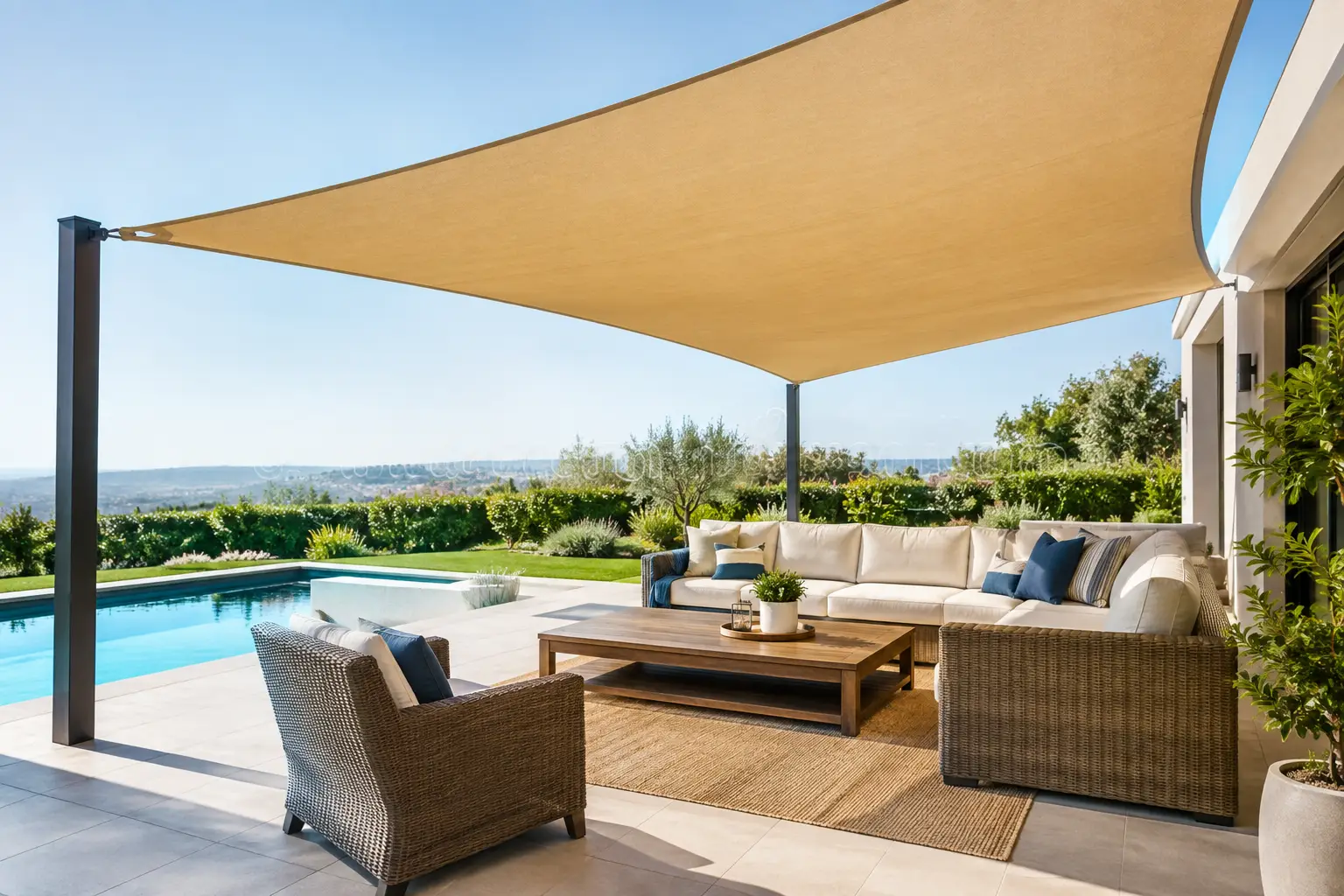
A patio that is too hot at lunch can feel like wasted square footage, no matter how beautiful the furniture is. Shade sails offer a lighter, more architectural alternative to a traditional covered porch, creating welcome relief over a dining table, lounge area, grill-side seating, or sunny balcony. With the right placement, they make it easier to relax and entertain outdoors through more of the day.
Unlike a standard umbrella, a shade sail can cover a broader area without taking up floor space in the middle of your setup. Its angled lines add visual interest overhead while leaving room below for comfortable seating, outdoor rugs, planters, and the details that make a backyard feel finished.
Why Shade Sails Work So Well for Patios and Decks
The appeal starts with flexibility. A triangular, square, or rectangular sail can be stretched between posts, a fence structure, or a sturdy exterior wall to fit the shape of your outdoor area. This makes shade sails especially useful when a conventional pergola feels too permanent, too large, or outside the scope of a seasonal refresh.
They also help define an outdoor room. A sail over a dining set creates a natural destination for family meals. One placed over a pair of deep-seating chairs can turn an exposed corner of the deck into a quiet spot for coffee or reading. On a larger patio, overlapping sails can give separate zones their own sense of purpose without closing off the view.
There is a style advantage, too. Clean neutral shades such as sand, charcoal, and soft gray work easily with most furniture and exterior finishes. A warm terracotta, coastal blue, or leafy green can bring more personality to a simple backyard. The fabric becomes part of the overall design, much like an outdoor rug or a set of accent pillows.
Start With the Area You Want to Enjoy Most
It is tempting to measure the entire patio and look for the biggest sail possible. Usually, the better question is: where do people actually sit? Focus coverage on the table where everyone gathers, the chaise lounges that catch afternoon sun, or the small conversation area you want to use more often.
Measure the intended shaded zone, then allow for the space needed to tension the sail at each corner. Shade sails should not be installed loose and flat like a tarp. They need firm tension to keep their shape, reduce flapping, and direct rainwater away from the center. Because of that, the sail itself should be smaller than the distance between its mounting points.
Think about the sun's path before choosing the location. A sail that looks perfect at noon may not help much when the late-day sun shines directly under it from the west. For many backyards, a slightly angled placement provides better practical coverage than a perfectly centered one. Watching where the sun lands for a day can save a great deal of guesswork.
On a small balcony or compact deck, one well-positioned triangle may be enough. Larger entertaining areas often benefit from two sails at different heights. The layered look feels intentional and can provide broader shade without the heavy appearance of one oversized canopy.
Choose a Shape That Fits the Layout
Triangle sails are a natural choice for corners, smaller patios, and spaces where three secure mounting points are available. Their open shape feels airy and works especially well over bistro sets or lounge chairs.
Square and rectangular sails offer more consistent coverage for dining tables and wider seating groups. They are often the right choice when the goal is to shade a clearly defined area, such as a long dining table or a row of outdoor chairs. A rectangle can also complement the straight lines of a deck or modern patio.
Do not select a shape on appearance alone. The locations of secure attachment points matter just as much. A sail that fits the architecture and can be tensioned correctly will look better and perform better season after season.
Fabric, Sun Protection, and Rain: Know the Trade-Offs
Most shade sails are made from either breathable shade fabric or waterproof material. Both have a place, but they solve slightly different problems.
Breathable fabric is often the comfortable choice for hot, sunny climates. It lets hot air move through while filtering harsh sunlight, helping the space underneath feel cooler. It is also less likely to collect water after a brief shower. The trade-off is that it is designed for shade rather than full rain protection, so water can pass through the weave.
Waterproof sails provide more protection during light rain, which can be useful over a dining area or outdoor kitchen. They must be installed with a noticeable slope, however. Without enough pitch, rainwater can pool in the middle, strain the fabric, and create a messy spillover when it finally drains. If rain coverage is your priority, make drainage part of the design from the beginning.
Look for durable, outdoor-rated fabric with UV protection and reinforced edges. Color matters beyond style: lighter sails can brighten a small patio and reflect more light, while darker colors may create a cozier, more grounded look. Either can work beautifully when paired with weather-friendly cushions, lanterns, and planters.
Installation Is Where Good Design Becomes Lasting Shade
A shade sail is only as dependable as its mounting points. Strong posts set properly in the ground, structural beams, and sound exterior walls are appropriate choices. Avoid attaching a sail to weak fence panels, gutters, small tree branches, or anything not designed to handle sustained pulling force.
Each corner should be secured with suitable outdoor hardware and adjusted until the fabric is taut. A gentle curve along the sail edges is normal and attractive. Sagging in the middle is not. Proper tension keeps the installation looking crisp, limits wind movement, and helps the fabric last longer.
Wind deserves special attention. In breezy regions or exposed yards, choose a location with thoughtful anchoring and follow the product's guidance for severe weather. Many homeowners remove seasonal sails before major storms or during winter, particularly where snow and ice are common. That extra step protects both the fabric and the mounting hardware.
If you are uncertain whether an existing wall or post can safely carry the load, consult a qualified installer. It is a practical investment in a feature that should make outdoor living easier, not create a maintenance concern.
Make the Space Underneath Feel Inviting
Once the shade is in place, the fun part is building a setting that invites people to linger. Start with furniture scaled to the covered area. A compact conversation set keeps a small patio open, while a generous sectional can anchor a larger sail-covered zone for weekend hosting.
Layer in elements that make the space useful after sunset. Solar path lights, tabletop lanterns, and string lighting can soften the edges of the patio without competing with the sail overhead. An outdoor rug adds warmth under a seating group, while a storage box keeps extra pillows, throws, and grilling accessories close at hand.
A shade sail can also make a hot grilling area more pleasant, but give grills and fire features the clearance required by their manufacturers. Keep open flames and high heat away from the fabric. For dining nearby, position the sail to shade guests while leaving the cooking zone safely ventilated.
At Patio Treasures, coordinating shade, seating, lighting, and decor helps turn a collection of outdoor pieces into a space that feels considered. You do not need a major renovation to create that effect. A sail, comfortable chairs, and a few well-chosen finishing touches can change how often you use the backyard.
Care That Keeps a Shade Sail Looking Fresh
Routine care is simple. Brush away leaves and debris before they can hold moisture against the fabric. For ordinary dirt, use mild soap, water, and a soft brush, then allow the sail to dry completely. Harsh cleaners and abrasive tools can damage the finish or weaken the material.
Check the tension and hardware periodically, especially after heavy wind or a strong rainstorm. Small adjustments are easier than waiting for visible sagging or wear. If you take the sail down for the off-season, store it clean and dry in a protected spot.
The best shade sail is not necessarily the largest or the boldest. It is the one that gives your favorite outdoor moments a more comfortable place to happen - from an unhurried morning outside to a table full of friends at sunset.