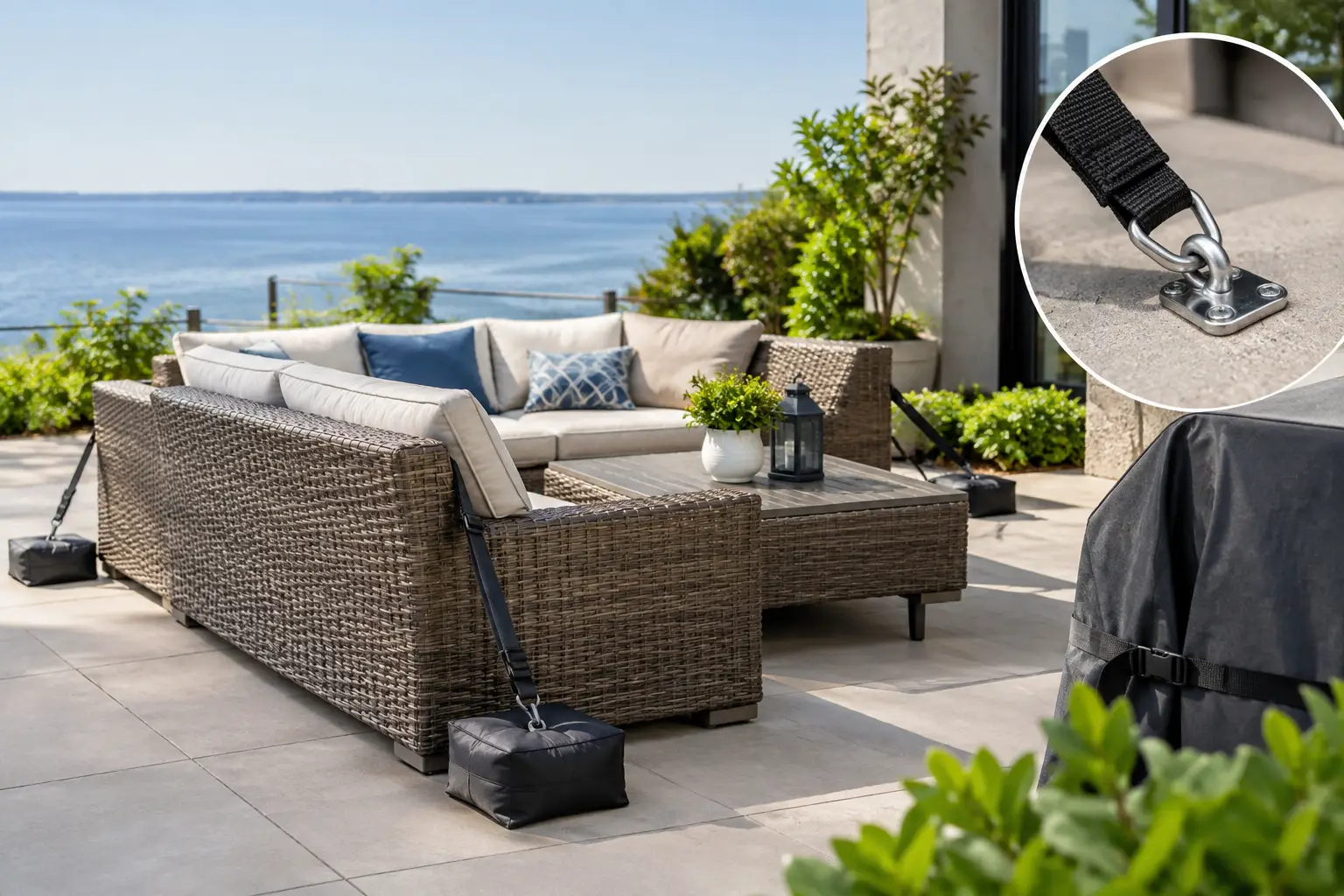
A breezy afternoon should not end with a tipped-over chair, a broken umbrella, or a favorite outdoor cushion halfway across the yard. Learning how to secure patio furniture helps protect the pieces that make your deck, balcony, or backyard feel like a welcoming retreat - and it makes outdoor entertaining far less stressful when the forecast changes.
The right approach depends on where you live, how exposed your outdoor space is, and whether your main concern is high winds, theft, or both. A few thoughtful upgrades can keep furniture in place while preserving the comfortable, polished look you want for family meals, weekend grilling, and quiet evenings outdoors.
Start With a Stable Patio Layout
Before buying anchors or locks, look at the way your furniture is arranged. A secure patio begins with a layout that naturally resists wind and makes lightweight items less tempting to grab and go.
Place larger, heavier pieces such as dining tables, sectionals, and storage benches in the most exposed areas. These items can act as visual and physical anchors for the space. Keep lightweight chairs, side tables, and decorative accents closer to walls, railings, planters, or the center of a covered patio when possible.
Avoid placing furniture directly beneath a large tree limb or beside a loose fence panel. Windblown branches and shifting structures can damage even well-secured pieces. If your patio is especially open, creating a little shelter with a gazebo, pergola, privacy screen, or tall planters can improve comfort while reducing direct gusts.
How to Secure Patio Furniture for Wind
Wind is not limited to hurricane-prone areas. A sudden thunderstorm, a strong cold front, or a seasonal gust can lift umbrellas, slide chairs, and send cushions flying. Focus first on the items that are easiest to move.
Use furniture weights and anchors
Weights are a simple solution for chairs, tables, and loungers that need to stay put but may need to be rearranged for guests. Purpose-made furniture weights, sandbags with weather-resistant covers, and weighted bases can add stability without changing the look of your seating area.
For furniture that stays in one spot, consider anchor straps. These typically connect furniture legs or frames to a deck, patio surface, railing, or another stable point. They work particularly well for outdoor sofas, dining sets, and benches in windy locations. Choose straps made for exterior use, and make sure the attachment point is strong enough to handle the load.
Permanent anchors can be a smart choice for homeowners with a concrete patio or a wood deck. They provide dependable security, but they do require drilling and should be planned carefully. Renters may prefer removable weights or straps that attach to railings instead of altering the property.
Treat umbrellas as a separate project
An umbrella can turn a sunny patio into a cool, comfortable gathering spot, but it is also one of the first items to become dangerous in a gust. A base should be matched to the umbrella's size and style, not simply chosen because it fits the pole.
Freestanding umbrellas need a substantial base, and cantilever umbrellas often require even more weight than center-pole styles. Follow the manufacturer's recommended base weight, then add compatible weights if the umbrella is used in an exposed area. Always close and secure the canopy when you are not outside, even if the day looks calm.
If severe weather is expected, remove the umbrella from its stand or move it indoors. No base is a substitute for bringing a large canopy in before a major storm.
Secure cushions, rugs, and small accents
Cushions make outdoor seating inviting, yet they are often the first things the wind carries away. Cushion ties are useful for everyday security, while clips or hook-and-loop fasteners can provide a firmer hold on particularly breezy patios. Store cushions in a weather-resistant deck box when storms are forecast or when the space will not be used for several days.
An outdoor rug can define a dining or conversation area, but corners that curl or lift can create a tripping hazard. Use an outdoor-rated rug pad or corner grips to help hold it flat. For smaller decor, choose heavier lanterns and planters, or keep delicate pieces on a tray that can be moved inside quickly.
Protect Furniture From Theft Without Making It Feel Locked Down
Most patio furniture theft is opportunistic. A loose stack of chairs, a portable fire pit, or an expensive outdoor rug left in a visible front area can be easy to carry away. The goal is not to make your backyard feel like a storage facility. It is to add enough friction that your pieces are not an easy target.
Lock high-value, portable pieces together
A weather-resistant cable lock can connect several chairs, a grill, or a freestanding fire pit to a secure object. For example, run a cable through chair frames and around a deck post or heavy table base. This is especially helpful for vacation homes, shared courtyards, ground-floor patios, and homes where furniture is visible from the street.
Use a lock only where it will not create a safety issue or damage the furniture finish. Look for protected contact points on the frame rather than wrapping a cable across woven material, cushions, or delicate finishes.
Make storage part of your patio plan
A lockable outdoor storage box is one of the easiest ways to protect smaller items while keeping the patio tidy. It can hold cushions, throw blankets, tabletop accessories, games, grilling tools, and seasonal decor. Many styles also double as an extra surface or bench, which helps maximize limited outdoor square footage.
If you have a shed, garage, or covered storage area, use it for the most portable items during long trips or the off-season. Folding chairs, compact side tables, umbrellas, and decorative pieces are usually worth bringing in. This also reduces sun exposure and helps them look better season after season.
Use lighting and visibility wisely
A well-lit patio feels more inviting at night and can discourage unwanted attention. Solar path lights, wall-mounted fixtures, and soft string lighting make walkways and gathering areas easier to enjoy after dark. Motion-activated lighting near gates, side yards, and storage areas adds another practical layer.
Visibility is a balance. A front porch may benefit from open sightlines, while a backyard may feel more private and protected with a fence, trellis, or tall planters. Choose the option that suits your home and neighborhood without blocking the airflow your patio needs.
Choose Furniture Built for Your Conditions
Security is easier when furniture is suited to the setting. Lightweight aluminum pieces are easy to move and rearrange, making them a great fit for flexible entertaining spaces. They may need weights or anchoring in windy regions. Heavier materials such as wrought iron, steel, concrete, and substantial wood naturally resist movement, though they can be harder to shift when you want to refresh the layout.
For a balcony, weight limits matter. Do not add heavy bases, planters, or concrete weights without checking what your building allows. A lower-profile table, stackable chairs, and a closed umbrella stored indoors may be safer than trying to weigh down every piece.
If you live near the coast, choose corrosion-resistant materials and hardware. If freezing winters are common, prioritize covers and storage that make seasonal protection easy. Furniture covers are useful for rain, dust, and sun, but they should be secured with straps or drawcords so they do not become sails in the wind.
Build a Simple Storm Routine
The easiest way to protect your patio is to decide what happens when bad weather is on the way. Keep it simple enough that you will actually follow it.
Close and secure umbrellas first. Then bring in cushions and lightweight decor, lock or strap down portable furniture, and check that covers are fastened snugly. Move grills, fire pits, and storage boxes away from areas where water collects. If a severe storm is expected, move what you can into a garage, shed, or covered area rather than relying on anchors alone.
A quick check at the start of each season also goes a long way. Tighten loose bolts, inspect straps for wear, replace cracked clips, and make sure umbrella bases still provide the right amount of support. Small maintenance habits protect both your investment and the easygoing atmosphere of your outdoor space.
Create a Patio You Can Leave With Confidence
A secure patio does not have to look heavily fortified. The best solutions blend into your design: a handsome storage bench, a properly weighted umbrella base, a few discreet anchor straps, and lighting that makes evenings feel warm and welcoming. At Patio Treasures, coordinated outdoor essentials can help you create a space that is ready for relaxed mornings, lively dinners, and the changing seasons.
Set up the protections that fit your home, then enjoy the reassuring feeling of stepping inside after a gathering knowing your outdoor retreat is ready for whatever comes next.