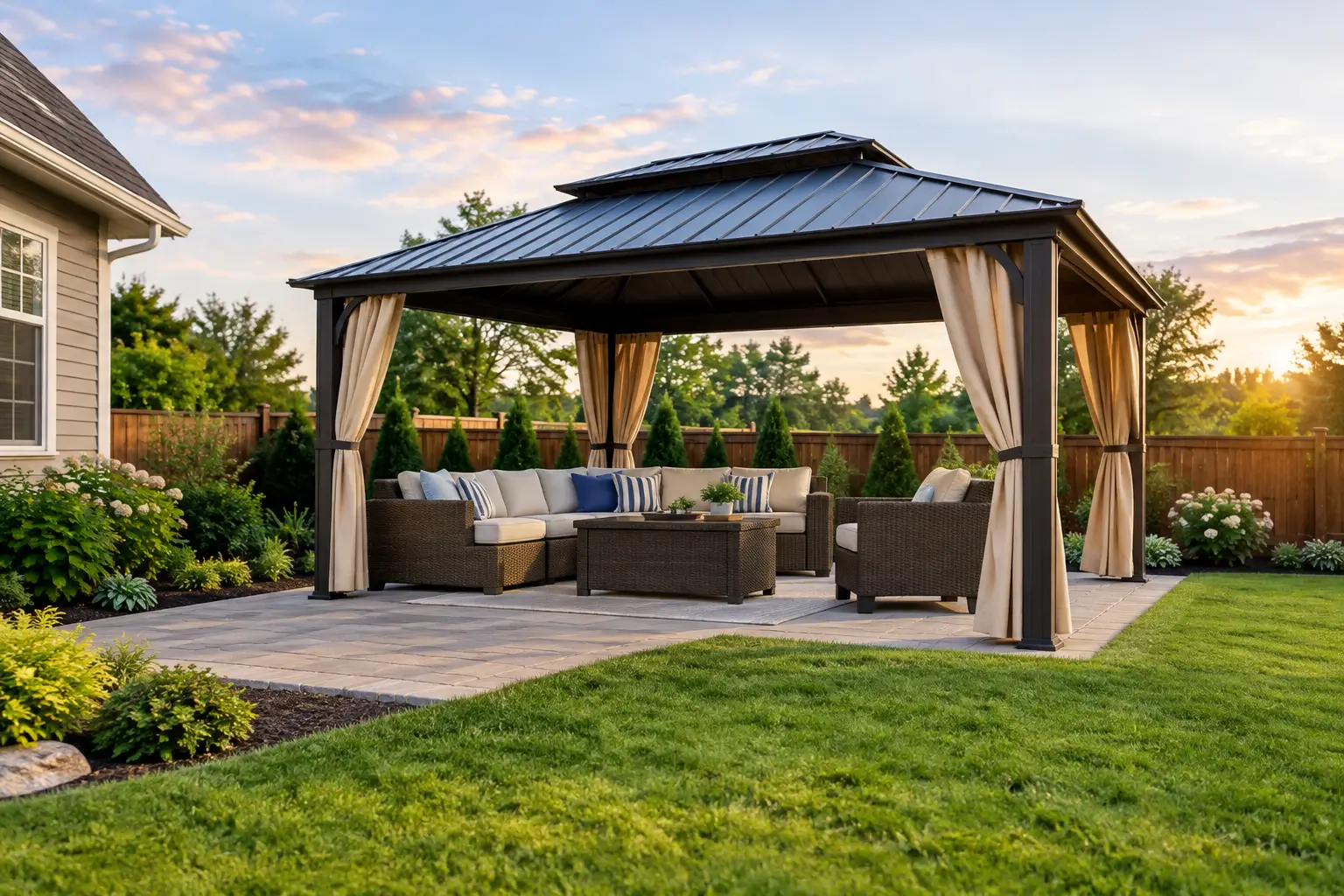
A gazebo can turn an open patio or patch of lawn into the place everyone naturally gathers. But choosing too small can leave chairs pressed against the posts, while choosing too large can make a cozy backyard feel crowded. If you are asking what size gazebo needed for your space, start with how you want to use it, then leave room for people to move comfortably around it.
The right gazebo should feel like an outdoor room, not an obstacle course. Measure your available area, picture your furniture in place, and think ahead to the relaxed dinners, weekend grilling, and quiet coffee breaks you want to enjoy there.
What Size Gazebo Is Needed? Start With the Activity
Gazebo dimensions are usually listed by the size of the roof or frame footprint, such as 8 x 8 feet, 10 x 10 feet, or 12 x 14 feet. That measurement tells you the structure's basic coverage, but the usable space depends on the shape of the posts, the furniture beneath it, and whether people need to pass through the area.
For a simple pair of lounge chairs and a small side table, an 8 x 8-foot gazebo can be a charming fit. It creates a defined shaded nook without taking over a compact patio, deck, or garden corner. It is best for two people rather than a full conversation group.
A 10 x 10-foot gazebo is a versatile choice for many households. It can comfortably cover a small bistro table with two to four chairs, or a compact seating arrangement with a loveseat, chairs, and a coffee table. If your outdoor space serves several purposes, this size often gives you welcome shade while preserving room for a grill, planters, or open walkways.
For family meals and casual entertaining, consider 10 x 12, 12 x 12, or 12 x 14 feet. These sizes make it easier to place a dining table and pull chairs back without interrupting the flow of the patio. A larger footprint also gives guests a little breathing room, which matters more than most people expect when everyone is carrying plates, drinks, or a serving dish.
A 12 x 16-foot gazebo or larger is better suited to a true outdoor living room. It can accommodate a sectional, accent chairs, a coffee table, and occasional tables, or a larger dining setup for six to eight people. In a spacious backyard, this scale creates a welcoming destination for celebrations, game nights, and long summer evenings.
Match the Gazebo to Your Furniture Layout
The fastest way to narrow your options is to measure the furniture you already own or plan to add. Do not measure only the table or sofa itself. Include chairs when they are pulled out, open cabinet or storage-box lids, and the space needed to walk around the arrangement.
For dining, allow about 24 inches behind each chair for someone to sit down, and closer to 36 inches where people will regularly pass behind seated guests. A 48-inch round table may look as though it belongs under an 8 x 8 gazebo, for example, but four dining chairs and clearance quickly make that size feel tight. A 10 x 10 or 10 x 12 option will usually create a more comfortable setting.
For lounge seating, map the full arrangement with painter's tape, cardboard, or a few garden hoses before you order. A standard outdoor loveseat may be around 55 to 65 inches wide, while a sofa or sectional can take up much more space than its photo suggests. Add a coffee table, allow room to sit down and stand up, and keep a clear path from the house to the yard.
If your plan includes a fire pit, keep its manufacturer-required clearances in mind and verify whether it is appropriate for use beneath your particular gazebo. A fire feature can bring warmth and atmosphere outdoors, but heat, smoke, roofing material, and ventilation all deserve careful attention. In many cases, a nearby open-air fire pit area is the more comfortable and safer companion to a covered seating space.
Leave Space Around the Gazebo, Too
A gazebo is not just the square footage under its canopy. You also need room around the outside for installation, access, landscaping, and everyday movement. As a general planning approach, try to leave at least 3 feet of open space on the sides you use most often. More is helpful near gates, steps, grills, storage boxes, and doors.
Check the roof overhang as well. Some structures extend beyond the stated post-to-post measurement, and curtains, netting, or side panels may need additional clearance. On a deck, confirm the deck dimensions and weight capacity before choosing a permanent or heavier structure. On a lawn or gravel area, plan for a level surface and a secure anchoring method suited to local weather conditions.
Before settling on a footprint, look up. Low tree branches, rooflines, overhead wires, and second-story windows can affect both placement and privacy. A gazebo may also change the view from inside your home, which can be a positive when it frames a beautiful seating area or a drawback when it blocks the sightline you love.
Common Gazebo Sizes at a Glance
An 8 x 8-foot gazebo works well for a quiet two-person retreat. A 10 x 10-foot size suits a small dining set or compact lounge grouping. A 10 x 12- or 12 x 12-foot gazebo provides better flexibility for a family table, four to six chairs, or a seating set with room to circulate. For larger gatherings, a 12 x 14- or 12 x 16-foot structure creates the kind of covered zone that can anchor an entire patio.
Shape matters alongside size. Square gazebos are easy to position on square patios and decks. Rectangular models often work better with long dining tables, sectionals, and narrow side yards. Octagonal or hardtop gazebos can add classic garden character, but be sure to compare their usable interior dimensions with a rectangular footprint before deciding.
Think About How the Space Changes Through the Year
The best gazebo size supports more than one occasion. Your patio may be a peaceful reading spot on a Tuesday afternoon, then become a buffet area for a birthday party on Saturday. If entertaining is part of the plan, choosing one size up can be worthwhile. The extra room gives you flexibility for additional chairs, a drink station, decorative lanterns, outdoor rugs, or seasonal planters.
That said, bigger is not automatically better. On a smaller deck, an oversized gazebo can limit access, hide natural light indoors, and leave little room for the practical pieces that make outdoor living easier. You may get more enjoyment from a well-proportioned 10 x 10 gazebo paired with coordinated seating, solar lighting, and a storage solution than from a larger structure that consumes every available inch.
Renters should also consider portability and installation rules. A pop-up or freestanding soft-top gazebo can offer welcome shade for a private patio without the commitment of a permanent installation. Homeowners planning to stay for years may prefer a substantial hardtop or anchored gazebo that becomes a lasting part of the landscape. Local HOA guidelines, setback rules, and permits can affect what is allowed, especially for permanent structures.
Plan for Comfort, Not Just Coverage
Once you have your measurements, stand in the proposed location at different times of day. Notice where the sun falls, where breezes move through the yard, and whether the view invites you to stay awhile. A gazebo placed a few feet differently can provide better afternoon shade, more privacy, or a more convenient connection to the kitchen and grill.
Choose the size that lets your favorite outdoor moments happen comfortably, then bring it to life with furniture and finishing touches that feel like home. At Patio Treasures, a thoughtfully sized gazebo can become the starting point for a welcoming retreat where family meals, easy conversations, and everyday downtime all have room to grow.