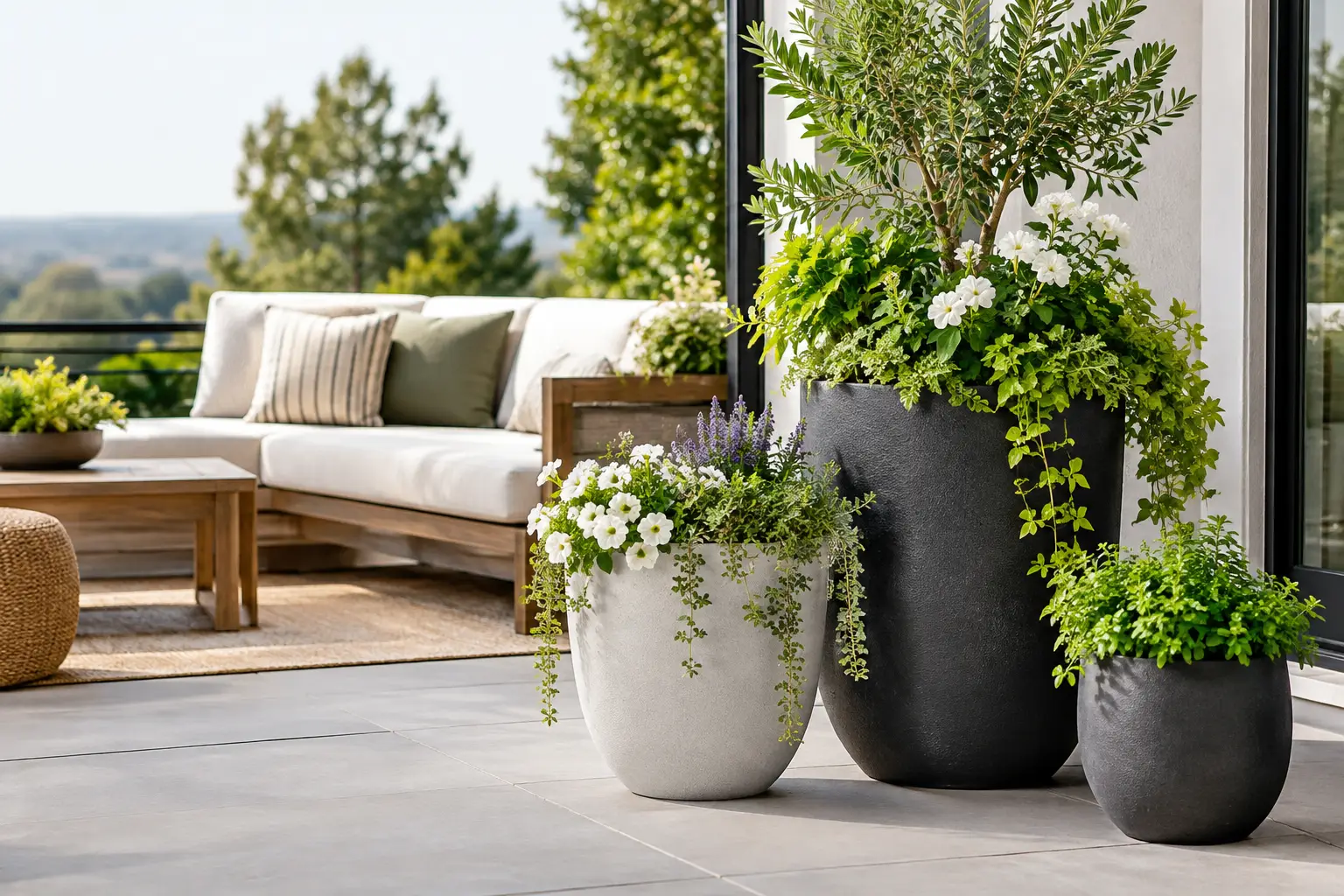
A patio can have comfortable seating, a favorite outdoor rug, and plenty of room for a weekend cookout, yet still feel a little unfinished. Patio planters solve that problem with color, shape, and living texture. Placed with intention, they soften hard surfaces, define conversation areas, create privacy, and make an everyday deck, porch, or balcony feel like a welcoming retreat.
The best choice is not always the biggest pot or the brightest bloom. A planter should suit the space, support the plant, and hold up through the weather in your area. Once those practical details are covered, it becomes one of the easiest ways to bring charm, comfort, and personality outdoors.
Start With the Job Your Planters Need to Do
Before choosing a finish or filling a cart, look at what your patio needs most. A pair of tall planters at an entry can make the approach to your home feel more inviting. Low, wide planters near a lounge set can add color without blocking sightlines. On a balcony, a slim trough or railing planter may offer far more usable growing space than a large floor container.
Planters can also help organize an open layout. Use them to create a gentle boundary between a dining area and a seating area, frame the corners of a pergola, or draw attention toward a fire pit. Unlike built-in landscaping, containers are flexible. You can move them for a party, shift plants to follow the sun, or refresh the arrangement when a new season arrives.
Privacy is another smart use. Tall containers with ornamental grasses, evergreen shrubs, or climbing plants on a trellis can make neighboring windows and railings feel less exposed. For this job, choose broad, stable bases and materials that will not tip easily in wind. A lightweight planter may be easy to move when empty, but it may need a weighted bottom or a sheltered placement once planted.
Choose Patio Planters by Size and Material
Scale has a bigger effect than most people expect. A small pot can disappear next to a deep outdoor sofa, while an oversized vessel can crowd a narrow walkway. As a general visual rule, larger furniture calls for larger containers. Two substantial planters often look more polished than six tiny ones scattered around the perimeter.
Plant needs matter just as much. Bigger pots hold more soil, which gives roots room to grow and keeps moisture more consistent in hot weather. Small containers dry out quickly, especially on sunny concrete, decks, and upper-level balconies where heat reflects from surrounding surfaces.
Each material brings a different balance of style, weight, and upkeep:
- Resin and composite planters are lightweight, durable, and available in many finishes. They are a practical choice for balconies, frequent rearranging, and households that want the look of stone without the heavy lift.
- Ceramic and glazed planters offer rich color and a handcrafted feel. They work beautifully near an entry or dining space, though they can be heavy and may need protection where winter freezes are common.
- Metal planters bring a clean, modern edge or a weathered garden look, depending on the finish. In full sun, darker metal can heat soil quickly, so heat-tolerant plants or a less exposed location are often best.
- Wood planters feel warm and natural beside decks, pergolas, and outdoor dining furniture. Look for weather-resistant construction and remember that wood benefits from occasional care to maintain its finish.
Drainage should never be an afterthought. Most outdoor plants need a way for excess water to escape. If a decorative planter does not have drainage holes, use it as a cachepot with a nursery container inside, or reserve it for a plant that can be lifted out before watering. Standing water can lead to stressed roots, mosquito issues, and messy overflow after a summer storm.
Build a Coordinated Look Without Matching Everything
A collected patio looks more relaxed than one where every container is identical. The goal is coordination, not a perfect match. Pick one connecting element, such as a shared color family, similar shape, or repeated material, then vary the sizes.
For a classic look, try charcoal, cream, terracotta, or deep blue planters with leafy greens and flowering annuals. If your patio furniture has clean lines, square or cylindrical planters in black, gray, or warm white create a tailored backdrop. Natural wood, woven textures, and earth-toned containers pair especially well with relaxed seating and garden-inspired decor.
Grouping creates more visual impact than placing every pot alone. A simple cluster might include one tall planter, one medium planter, and one low bowl, all set close enough to read as a single arrangement. This approach gives even a modest patio a layered, designed feel. It also gives you room to combine height, flowers, and trailing foliage without filling every available inch of floor space.
Symmetry works well where you want a sense of order. Place matching planters on both sides of a doorway, steps, outdoor fireplace, or garden gate. Asymmetrical groupings feel more casual and are often easier to adapt around furniture, but they still need visual balance. A tall planter on one side may be balanced by a grouping of two or three lower containers on the other.
Pick Plants for Your Light, Schedule, and Season
The most beautiful container arrangement is one you can realistically maintain. Notice how much direct light the patio receives before buying plants. Full-sun spaces may suit lantana, petunias, rosemary, lavender, ornamental grasses, and many succulents. Shadier patios can be lovely with ferns, caladiums, coleus, begonias, and impatiens. Regional climate and local growing conditions will always have the final say.
A useful planting formula is height, fullness, and spill. Add a taller centerpiece or upright grass, surround it with mounding foliage or blooms, then let a trailing plant soften the edge. You do not need every container to follow this formula, but it is an easy starting point when you want a full, layered result.
For less daily care, choose plants with similar water needs in the same container. Mixing a thirsty flowering plant with a drought-loving succulent usually creates frustration for both. Self-watering planters can help during busy summer weeks, but they are not a substitute for checking soil moisture, especially during heat waves.
Seasonal swaps keep the space fresh without replacing your planters. Bright annuals and herbs bring energy in spring and summer. In fall, add mums, ornamental cabbage, grasses, or richly colored foliage. Evergreens, branches, and weather-friendly accents can carry containers through winter in many parts of the country. A few intentional changes can make an outdoor space feel newly styled for every gathering.
Place Planters Where They Improve Daily Outdoor Living
Think beyond the edges of the patio. A planter beside a bench makes the seating area feel purposeful. Containers at the base of an umbrella stand can soften the center of a dining setup. A row of herbs near the grill gives you fresh flavor within reach while adding a useful, relaxed garden touch.
Keep safety and circulation in mind. Leave clear routes to doors, stairs, grills, and storage boxes. On decks and balconies, confirm weight limits before arranging very large pots, particularly after soil is watered. Use saucers or planter feet where appropriate to protect surfaces and improve airflow beneath containers. On a wood deck, this small step can help prevent trapped moisture and staining.
If watering feels inconvenient, the design will be harder to enjoy. Keep high-maintenance containers near a hose, outdoor faucet, or a route you naturally walk. Choose larger containers for sunny, exposed areas, and reserve smaller decorative pots for protected spots where they will not dry out in a day.
Give Your Containers a Little Ongoing Care
Container gardens reward small, regular attention. Check soil with a finger before watering rather than following a strict calendar. Water deeply until moisture reaches the root area, then let the soil dry to the level your particular plants prefer. Remove spent blooms when needed, trim trailing plants that become leggy, and rotate containers occasionally so growth stays even.
At the end of the season, empty or protect containers that are not rated for freezing conditions. Cleaning off soil and mineral buildup helps planters look their best year after year. It also makes the next seasonal refresh feel simple rather than like a major project.
Well-chosen patio planters do more than hold plants. They help your outdoor area feel cared for, comfortable, and ready for the moments that matter - a quiet morning coffee, a family dinner, or a long conversation after the grill has cooled.