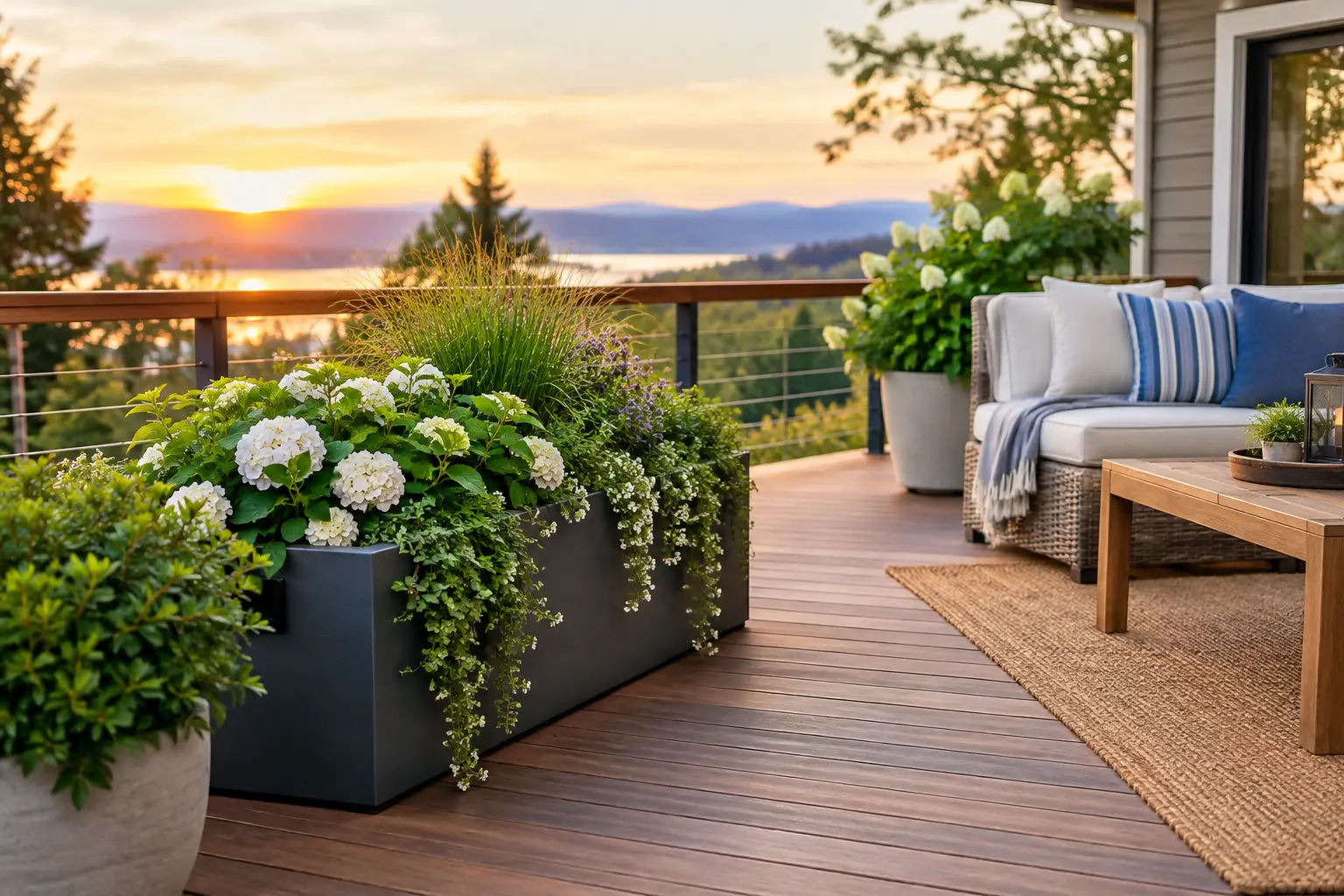
A bare deck can feel more like a hallway than a place to linger. The right deck planter ideas change that quickly, adding softness, color, and a sense of privacy without taking on a major renovation. Whether your deck hosts family dinners, weekend grilling, or quiet coffee before the day begins, planters help turn open square footage into a welcoming retreat.
The best approach is not to fill every available corner. Choose planters that solve a real need - defining a seating area, screening a neighbor’s view, brightening a stair landing, or bringing herbs closer to the grill. A few well-placed containers can make the whole space feel more intentional.
Start With the Way You Use Your Deck
Before choosing flowers or planter finishes, look at the traffic pattern. Leave clear paths from the house to the stairs, grill, and seating area. A generous planter may look beautiful, but it should not force guests to squeeze past it while carrying a tray of food.
Think about sunlight, too. A deck that bakes in afternoon sun needs plants and containers that can handle heat, while a covered corner calls for shade-friendly foliage. Matching the planter to the conditions means less maintenance and a better-looking outdoor space through the season.
12 Deck Planter Ideas That Add Style and Purpose
1. Frame the Deck Entrance
Place a matching pair of tall planters on either side of the door leading to your deck. This simple arrangement creates an inviting arrival point and makes the transition from indoors feel considered. Use upright greenery, colorful annuals, or a small evergreen for structure that lasts beyond one season.
Choose a planter color that connects with your furniture cushions, outdoor rug, or door. Black and charcoal offer a crisp, modern look, while warm terra-cotta, woven textures, and weathered finishes bring a more relaxed garden feel.
2. Build a Living Privacy Screen
If a close neighbor, street view, or shared property line makes your deck feel exposed, a row of substantial rectangular planters can create a softer boundary. Tall ornamental grasses, bamboo suited to containers, arborvitae, or climbing plants on a trellis can provide coverage without the permanence of a fence.
This idea works especially well along one edge of a dining or lounge zone. Leave enough room behind the planters for drainage and cleaning, and avoid choosing a plant that will outgrow its container within a season. Privacy planting is most successful when the scale is right from the start.
3. Soften a Seating Area With Low, Wide Bowls
Low bowl planters are a smart choice beside lounge chairs or at the edge of a conversational seating group. They add a layer of living color without blocking sightlines between guests. Try a mix of trailing vines, compact flowering plants, and silvery foliage for a full, relaxed look.
Keep these planters out of the main walkway. Their lower profile is charming, but it can become a tripping hazard when tucked too close to an active path.
4. Make the Grill Station Feel Finished
A grill area often needs more than cooking tools to feel like part of the deck design. Add one or two durable planters nearby, filled with rosemary, basil, thyme, mint, or parsley. Fresh herbs are practical for meals, and their fragrance makes outdoor cooking feel even more inviting.
Keep containers far enough from open flames and hot surfaces. If your deck gets intense sun, herbs may thrive there, but they will need regular watering in the height of summer.
5. Use Rail Planters for Small Decks
When floor space is limited, rail planters offer color without crowding the deck. They are especially useful for balconies, townhome decks, and compact patios where every chair and side table needs room to work.
Choose secure hardware designed for your railing style, and remember that wet soil adds considerable weight. Trailing petunias, calibrachoa, sweet potato vine, and compact herbs all work nicely here. For a cleaner look, repeat the same planter style and plant palette along the rail rather than mixing too many colors.
6. Create Height With Layered Containers
A cluster of planters looks more polished when it includes different heights. Pair a tall tapered planter with a medium round pot and a lower bowl, then repeat a foliage color or material to make the grouping feel connected. This gives a plain deck corner more visual depth than several identical pots lined up in a row.
For the plants themselves, use a simple formula: one taller focal plant, fuller plants around it, and something that trails over the edge. You do not need dozens of varieties for a lush result.
7. Define a Dining Zone
Planters can quietly establish the edges of an outdoor dining area, especially on a large deck with no walls to create structure. Place a pair near the outer corners of the table area or use long, low planters along the perimeter. The goal is to make the table feel anchored without closing it in.
For entertaining, favor plants that stay tidy and do not drop lots of petals onto plates. Green foliage, ornamental grasses, and neatly shaped flowering plants are often easier to live with than heavily shedding varieties.
8. Add a Trellis for Vertical Charm
A planter with an attached trellis brings height to a deck without the footprint of a large shrub. It can screen an unattractive view, add definition beside a bench, or make a quiet reading corner feel more tucked away. Flowering vines can be lovely, while climbing jasmine, clematis, or even compact edible plants bring a personal touch.
The trade-off is upkeep. Trellis plants need training, pruning, and a planter large enough to support healthy roots. For a lower-maintenance look, choose a trellis as a decorative backdrop and let one easy climber do the work.
9. Bring Evening Areas to Life
Deck planters can support the atmosphere after sunset, too. Arrange a few near solar garden lights, lanterns, or a fire pit seating area to make the space feel warmer and more layered. Soft foliage catches the glow beautifully and keeps lighting from looking scattered across an empty surface.
Avoid packing planters too tightly around a fire feature. Leave a clear safety zone and choose stable containers that will not be easily bumped during a gathering.
10. Choose One Bold Statement Planter
One oversized planter can have more impact than several small containers, particularly near deck stairs, a pergola post, or an open corner. A sculptural vessel filled with a small tree, dramatic grass, or leafy tropical plant creates a focal point and gives the deck a finished, designer-minded feel.
Make sure the deck can safely support the combined weight of the container, soil, water, and plant. Lightweight resin or fiberglass styles can offer the look of stone or concrete with much less weight to manage.
11. Refresh With Seasonal Color
Planters make it easy to give your outdoor space a seasonal update without replacing furniture or decor. Bright annuals and fresh green foliage feel cheerful in spring and summer. In fall, switch to mums, ornamental kale, grasses, and small pumpkins. Winter arrangements can feature evergreen cuttings, branches, and weather-safe accents.
A neutral planter collection makes these changes easier. When the containers stay consistent, seasonal plants and accessories can bring in personality without making the deck feel mismatched.
12. Coordinate Planters With the Rest of the Deck
The most appealing deck planter ideas work with the whole space rather than competing for attention. If your furniture is clean-lined and contemporary, try simple square planters in black, gray, or soft white. If your deck has a more traditional or rustic feel, textured finishes, classic urns, and natural materials can add warmth.
Repeat one or two colors across pillows, rugs, umbrellas, and planters. That small bit of coordination creates the comfortable, pulled-together setting guests notice, even if they cannot quite explain why it feels so welcoming.
Choose Materials That Fit Outdoor Life
Looks matter, but durability matters just as much on a deck. Resin planters are lightweight and easy to move, making them a good option for renters or anyone who likes to rearrange their outdoor setup. Fiberglass offers a more elevated look while remaining lighter than concrete. Ceramic can bring beautiful color and detail, though it may be heavy and more vulnerable to freezing temperatures.
Wood planters feel naturally at home on a deck, especially when they echo the tone of nearby furniture or a pergola. Look for weather-resistant materials and use liners when needed to protect the planter. Whatever material you choose, drainage holes are essential. Standing water is hard on roots and can leave marks on decking.
A Few Details That Keep Planters Looking Their Best
Use saucers or planter feet when appropriate to improve drainage and reduce moisture against the deck surface. Group containers where a hose or watering can reaches easily, because thirsty plants are more likely to thrive when care is convenient. On hot decks, check soil often - containers dry out faster than in-ground beds.
It also helps to choose fewer, larger planters rather than many tiny ones. Larger containers hold more soil, stay moist longer, and make a stronger design statement. Patio Treasures makes it easy to pair planters with outdoor rugs, seating, lighting, and decor so the entire deck feels ready for relaxing and entertaining outdoors.
Your deck does not need a full makeover to feel more personal. Start with the corner you see first, the view you want to soften, or the table where people naturally gather, then let a well-chosen planter bring that space to life.