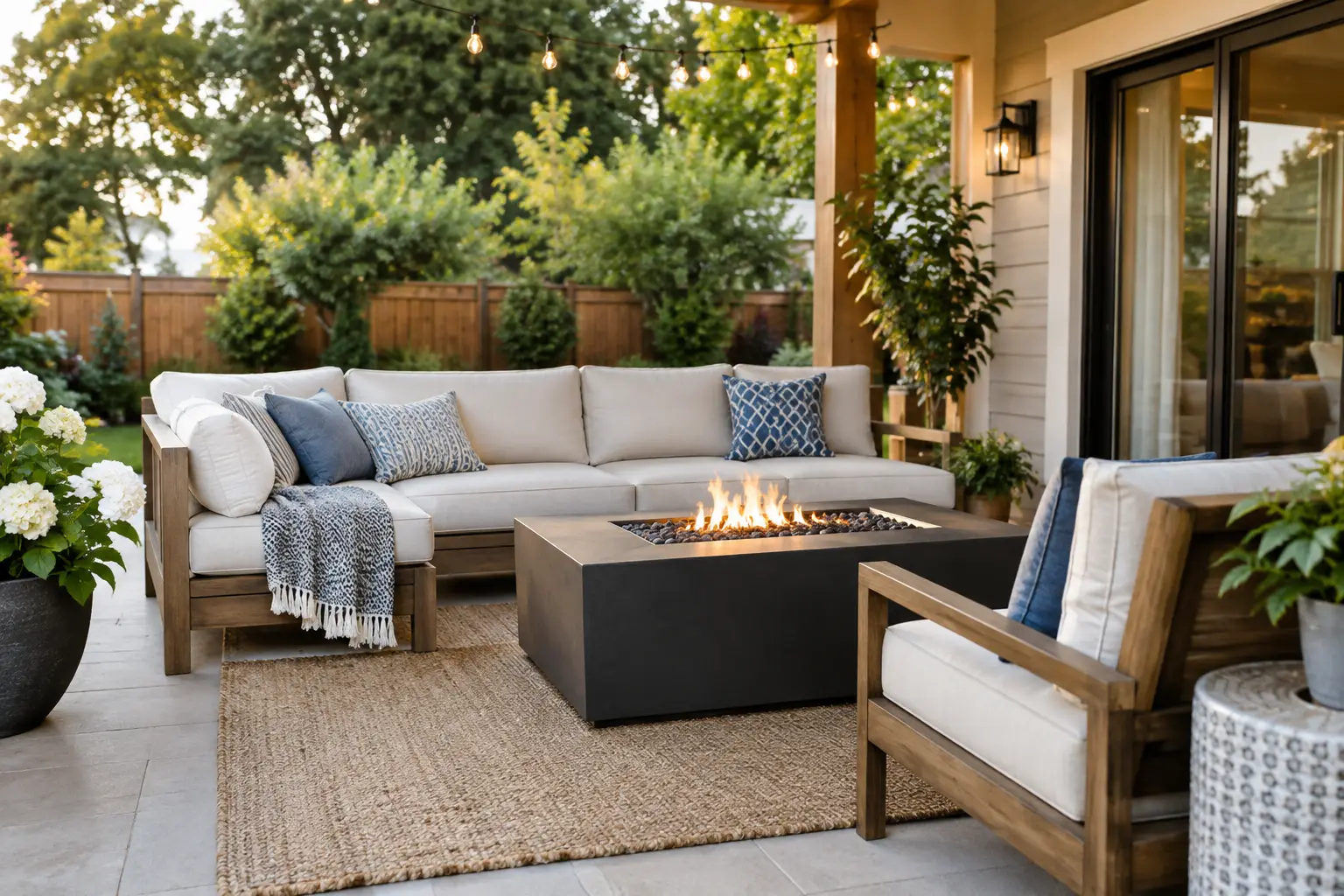
A bare concrete patio can become the most-used square footage at home, but it rarely happens by adding one chair and calling it finished. This patio makeover example starts with a common situation: a medium-size backyard patio with room to sit, but little reason to stay. The goal is not a picture-perfect space that feels off-limits. It is a comfortable, welcoming retreat for morning coffee, family dinners, weekend grilling, and the occasional slow evening outdoors.
The best part is that the transformation does not require a full renovation. It depends on making a few connected decisions: how the space will be used, where shade is needed, what seating feels genuinely comfortable, and which finishing touches bring the whole patio together.
A Patio Makeover Example for Everyday Living
Imagine a 12-by-16-foot concrete patio behind a typical single-family home. Before the makeover, it has a grill against the house, two mismatched folding chairs, and no overhead shade. It is technically usable, yet it is too hot in the afternoon and too sparse to invite guests outside.
The makeover begins by dividing that footprint into two simple zones. The larger section becomes a conversation and lounging area near the back door. The far end becomes a compact dining and grilling zone. Giving each area a purpose makes the patio feel more organized without making it look crowded.
Rather than filling every open inch, leave a clear path from the door to the yard and grill. That path matters more than homeowners often expect. It helps guests move naturally during a cookout, keeps chair legs from becoming obstacles, and gives the patio a calmer visual rhythm.
Start with a comfortable seating anchor
For the lounge area, choose a weather-ready outdoor sofa or loveseat paired with two coordinating lounge chairs. A sofa is ideal when the patio is used for family time or casual hosting, while a pair of deep chairs may be the better choice for a narrower space. Either way, comfort should come before a matching catalog look. Seats with supportive cushions and enough room to settle in will earn their place far more often than decorative chairs that are stiff or shallow.
Place the seating around a low coffee table or fire pit, depending on how the household spends time outdoors. A coffee table provides a practical surface for drinks, books, and snacks. A fire pit creates a natural focal point and extends patio season on cool nights, but it requires more clear space and careful placement away from structures, low branches, and foot traffic.
An outdoor rug defines this zone immediately. In this example, a generously sized rug sits beneath the front legs of the sofa and chairs, visually connecting the furniture into one intentional arrangement. Choose a pattern that can handle real life. A subtle stripe, woven texture, or earth-toned geometric design adds interest while being more forgiving of pollen, crumbs, and muddy paw prints than a pale solid color.
Add Shade Before the Hottest Part of the Day
Shade is often the difference between a patio that looks good and a patio that gets used. For this makeover, a large offset umbrella covers the lounge seating, providing flexible shade without placing a pole directly in the middle of the arrangement. A market umbrella and sturdy dining table can work beautifully, too, especially when meals are the main outdoor activity.
For patios with intense afternoon sun or a long list of entertaining plans, a gazebo or pergola-style structure may offer a more lasting solution. These options create a stronger sense of an outdoor room and can support string lights, lightweight drapery, or climbing plants. The trade-off is scale: on a small patio, a large structure can feel heavy. Measure the usable area carefully and consider local rules before committing to a permanent installation.
Even a small shade solution changes how people use the space. It protects cushions from direct sun, gives guests a more comfortable place to sit, and makes a midday lunch outdoors far more appealing.
Make the Dining Area Work Harder
At the far end of this patio makeover example, a round dining table seats four. A round shape keeps circulation easy because it has no sharp corners cutting into the walkway. For larger families or frequent hosts, a rectangular table may make more sense, but leave enough space to pull out chairs comfortably.
The grill belongs nearby, with a small outdoor storage cabinet or serving cart close at hand. This is where function quietly improves the entire experience. Instead of running inside for tongs, seasonings, paper towels, or plates, the cook has a convenient home base. Storage also helps the patio stay inviting between gatherings. When tools, cushions, and outdoor accessories have a place to go, clutter is less likely to take over.
If the patio is primarily for two people, skip the larger dining set in favor of a bistro table and two chairs. That choice can free room for more relaxed seating, container gardens, or a compact fire feature. There is no single correct layout. The better layout is the one that supports the way the household actually lives.
Bring Warmth in Layers, Not Clutter
Once the major pieces are in place, the patio needs softer details to feel personal. Start with outdoor cushions in two or three coordinated colors. In this example, warm sand, muted blue, and leafy green echo the backyard without competing with it. Using a restrained palette makes it easier to add seasonal accents later, such as rust-colored pillows for fall or bright citron napkins for summer.
Add planters at different heights near the patio edges. Tall grasses or a small evergreen can create privacy and structure, while flowering plants bring seasonal color closer to eye level. Choose planters with drainage and plants suited to the amount of sun the patio receives. A beautiful container garden that needs constant rescue work can quickly become a source of frustration.
Garden decor works best when it feels collected rather than scattered. One sculpture near a planting bed, a set of lanterns beside the seating area, or a wind chime in a breezy corner can add charm and personality. Give each piece enough space to be noticed. Too many small accents can make a patio feel busy, especially in a limited footprint.
Create an Evening Patio You Want to Use
The makeover becomes especially rewarding after sunset. Layered lighting makes the patio feel welcoming while helping guests move safely around steps, paths, and furniture. String lights overhead provide a relaxed glow. Solar path lights define the patio perimeter, and tabletop lanterns add a softer, more intimate light around the seating area.
Avoid relying on one bright floodlight. It may be practical for grilling or cleanup, but it can flatten the atmosphere once everyone sits down. Instead, use brighter light where tasks happen and warmer, lower light where people relax.
A fire pit, patio heater, or both can stretch the season well beyond summer. The right choice depends on the local climate and the patio layout. Fire pits encourage lingering conversation and a campfire feel, while a patio heater is often more practical for dining because it delivers steady warmth without smoke. Follow manufacturer clearance guidance and never compromise safe placement for style.
A Realistic Order for Making It Happen
A patio makeover does not need to arrive in one oversized delivery or happen in a single weekend. Begin with the pieces that solve the biggest problem. If the patio is unbearably sunny, prioritize shade. If nobody sits outside because the chairs are uncomfortable, invest in seating first. If entertaining means repeated trips indoors, add a serving cart or storage solution.
Then build from the foundation: seating, rug, table, shade, lighting, and finishing accents. This approach helps you make confident choices rather than buying decor first and trying to force it into a layout later. It also lets you spread the budget across a season while still enjoying progress right away.
Patio Treasures makes it easier to coordinate those layers, from furniture and shade to storage, lighting, and the small decorative details that make the space feel yours. Select durable pieces for the conditions they will face, then use color and accessories to bring the look to life.
A great patio is not defined by how much you add. It is defined by the moments it makes easier: a quiet cup of coffee under an umbrella, a table ready for grilled dinner, or a warm place where friends decide to stay just a little longer.