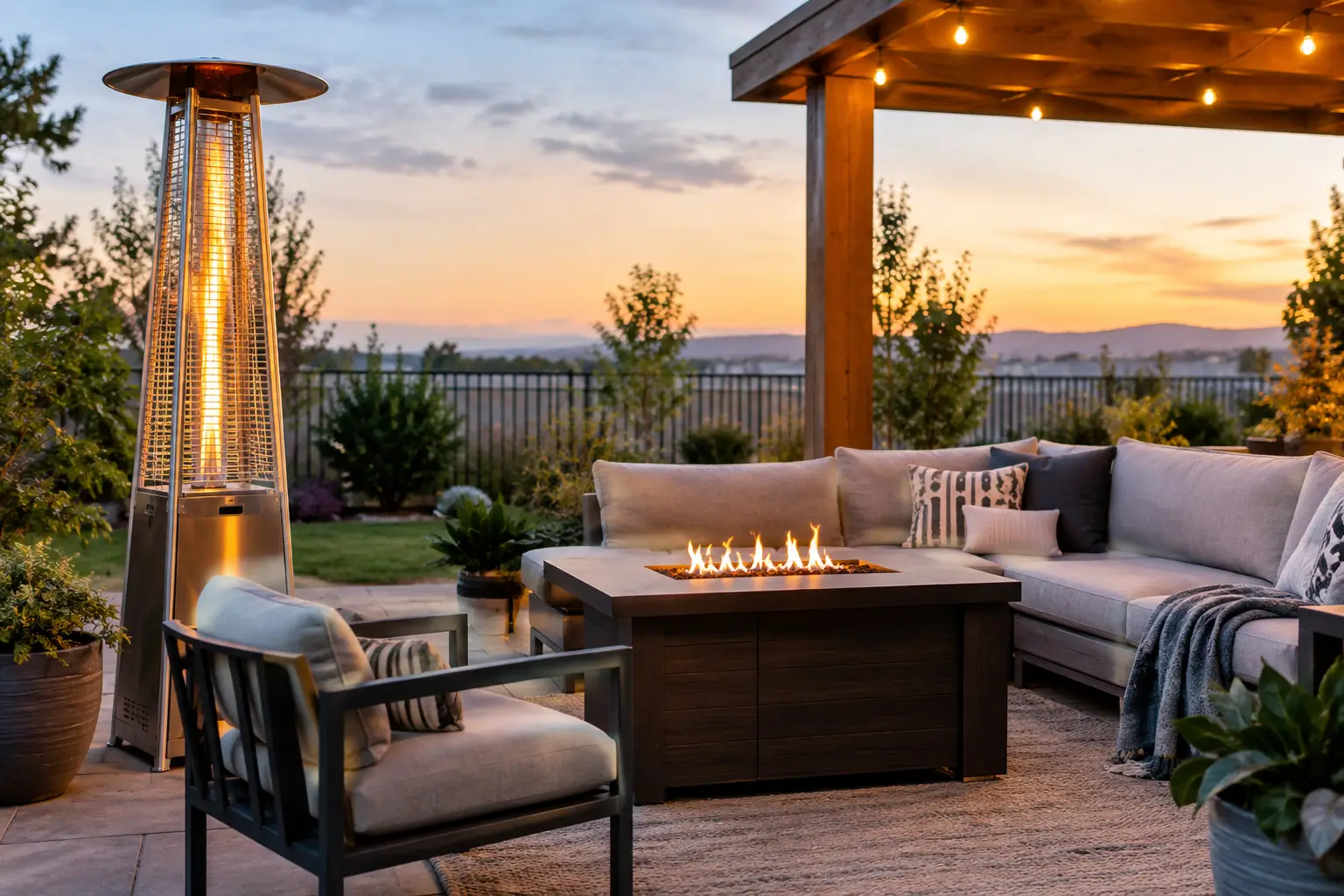
A patio that goes quiet after sunset or sits unused through the first cool weeks of fall is missing an opportunity. The best outdoor heating trends are making it easier to turn that space into a favorite place for weeknight dinners, game-day gatherings, and unhurried time under the stars. The goal is not to heat every inch of the yard. It is to create a comfortable, welcoming zone where people naturally want to stay.
For homeowners and renters alike, the shift is toward heating that looks intentional, fits the way a space is used, and works alongside furniture, lighting, shade, and decor. Whether your style is a sleek modern deck or a garden patio with plenty of charm, a few thoughtful choices can make the outdoor season feel much longer.
Outdoor Heating Trends That Make Patios More Usable
Fire pits as the center of the conversation
Fire pits remain a leading choice because they provide more than warmth. They bring people together. A low fire pit surrounded by deep-seated lounge chairs creates an easy spot for conversation, while a fire table can give a dining or sectional seating area a polished focal point.
Gas fire features continue to appeal to shoppers who want a clean look and quick start-up. With the turn of a knob, the patio is ready for an after-dinner drink or an impromptu visit from neighbors. Wood-burning fire pits still have a devoted following, especially for households that enjoy the sound, scent, and ritual of a real fire. The trade-off is simple: wood options need more tending, more cleanup, and safe storage for firewood.
Style matters here. Dark metal finishes, natural stone looks, woven textures, and streamlined rectangular fire tables can all help a heating feature feel like part of the patio rather than a seasonal add-on. Leave enough room for seating to sit comfortably around the heat without crowding the fire feature.
Electric heaters for flexible comfort
Electric outdoor heaters are gaining ground for covered patios, balconies, and smaller outdoor rooms. They offer targeted warmth without storing propane tanks or managing ashes, and many styles fit neatly on a wall, ceiling, or stand. That makes them especially useful when floor space is limited.
The key is placement. An electric heater is most effective when it is positioned above or near the seating area, not aimed across an open yard. Think of it as a comfort layer for a defined zone: a bistro set, a pair of Adirondack chairs, or a covered dining table. Before choosing one, check that your outlet, mounting location, and covered area are suitable for the heater you have in mind.
Freestanding electric models offer a practical option for renters or anyone who wants to rearrange the patio with the seasons. They can move from a lounge corner in October to a covered dining space for a cool spring brunch.
Propane heaters with a more polished presence
The familiar tall patio heater is still useful for open-air entertaining, but current designs are becoming more design-conscious. Slimmer profiles, matte finishes, tabletop versions, and concealed tank storage help propane heat blend into an attractive setup.
Propane is a smart fit when you need portable, substantial warmth in a larger seating area. It can also be a good answer for patios without convenient electrical access. On the other hand, strong wind can limit how much warmth guests feel, and a spare tank is worth having before hosting a longer evening outdoors.
For the most inviting result, use a propane heater to support a gathering space instead of placing it alone at the edge of a patio. Arrange it near the outer side of a seating group, with chairs angled toward one another and a table within easy reach for drinks and snacks.
Design a Warm Zone, Not Just a Heated Patio
One of the most useful outdoor heating trends is the move away from a single appliance as the whole solution. Warmth feels better when the space itself helps hold it. A pergola, gazebo, privacy screen, outdoor curtains, or a fence line can reduce exposure to breezes and make a patio feel more enclosed. Be sure every heating product has the ventilation and clearances required by its manufacturer.
Start by deciding where people already gather. If everyone ends up near the grill, create a separate place to sit so the cook has company without guests standing in the work zone. If your family loves lingering after meals, center your heating plan around the dining table or a nearby lounge area.
Then build comfort from the ground up. Outdoor rugs visually anchor furniture and make a seating area feel finished. Weather-friendly cushions add softness, while throws stored in a deck box give guests an easy extra layer when the temperature drops. These details do not replace a heater, but they make the whole experience feel more relaxed and considered.
Lighting belongs in the plan, too. A fire feature gives off a natural glow, but soft solar path lights, lanterns, or string lighting help guests move comfortably and see the patio without harsh brightness. Layered light turns a heated corner into a true outdoor room.
Choose Heat Based on How You Entertain
There is no one best patio heater for every backyard. A compact balcony may call for a small electric heater and two comfortable chairs. A large deck used for weekend hosting may benefit from a fire table plus a portable propane heater at the edge of the conversation area. Families who gather around s'mores may get more enjoyment from a wood-burning fire pit, provided local rules and the location allow it.
Consider the layout before falling in love with a style. Open, windy patios usually need more targeted heat than sheltered courtyards. High ceilings in a covered porch can make overhead heat less immediate. A fire pit needs safe clearance from furniture, railings, umbrellas, and low branches. If you are planning a new structure or hardscape, it is often easiest to include the heating plan from the beginning.
Fuel availability is another practical factor. Electric heating can be wonderfully simple when you have the right outlet nearby. Propane provides mobility but requires refills and tank storage. Natural gas can offer ongoing convenience, although installation may require professional help. Choosing the option that fits your home and routine will feel better than choosing the trendiest-looking model alone.
Make Safety Part of the Style Plan
A beautiful patio should also be an easy place to enjoy with confidence. Keep heaters on stable, level surfaces, follow recommended clearances, and never use outdoor fuel-burning products inside enclosed spaces. Check local fire rules before using a wood-burning feature, particularly during dry seasons or in communities with restrictions.
It is also wise to plan for storage and upkeep. A fitted cover can protect a fire table or heater from weather between uses. Store propane cylinders upright in a well-ventilated outdoor location, away from direct heat. Clear ash only after a wood-burning fire pit is completely cool. A little regular care helps preserve both the finish and the performance of your outdoor investment.
For households with children or pets, think through the traffic pattern around the heat source. Leave a clear path from the house to the seating area, avoid placing cords where people walk, and choose furniture arrangements that keep curious hands and tails from brushing too close to hot surfaces.
Bring the Look Together for Every Season
The most appealing outdoor spaces do not look like they were assembled for one chilly evening. They have a clear sense of purpose all year long. Pair a fire pit with durable seating that invites people to settle in. Add a storage bench for throws and cushions. Use planters, outdoor rugs, and lanterns to carry your colors and textures across the patio.
At Patio Treasures, you can coordinate heating, furniture, lighting, and finishing touches around the way you actually relax and entertain outdoors. Begin with the area you use most, then add pieces that make it easier to enjoy that space a little earlier in spring and a little later into fall.
A warm patio does not need to be elaborate. Give your favorite outdoor corner a reliable source of heat, a comfortable place to sit, and a soft glow after dark. Soon, the question will not be whether it is too cool to go outside, but who is bringing the blankets and staying for one more hour.