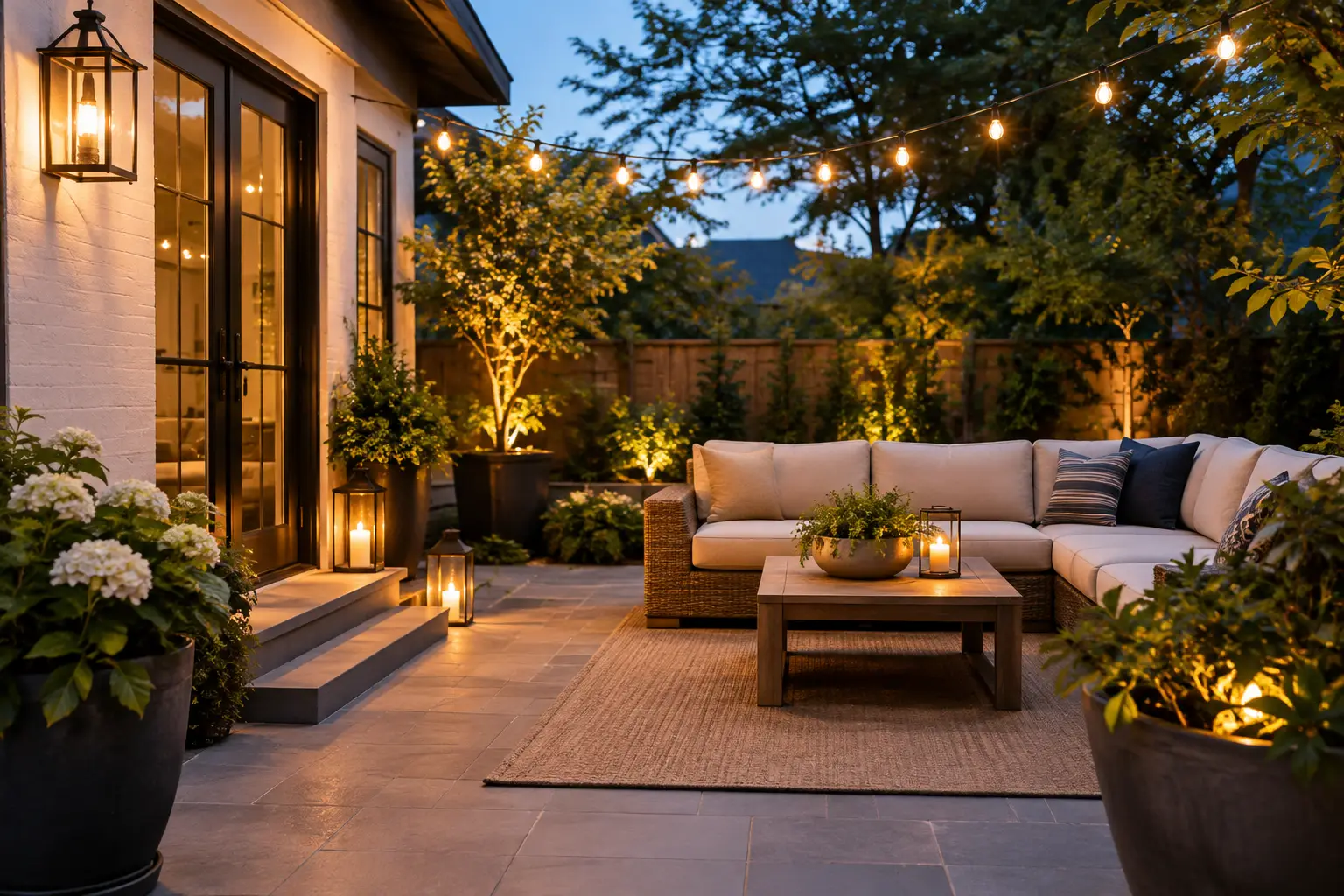
A courtyard can look polished in daylight and still disappear the moment the sun goes down. A thoughtful courtyard lighting makeover changes that. It gives you a clear route to the door, a softer setting for dinner, and an inviting reason to linger outside after a long day.
The goal is not to make every corner equally bright. The most comfortable courtyards use light with purpose: enough visibility to move safely, enough warmth to create atmosphere, and enough flexibility to suit a quiet evening or a table full of guests.
Start With How You Use the Courtyard
Before choosing lanterns, string lights, or solar path lights, picture a typical evening in the space. Do you step through the courtyard to reach a side gate? Do you grill and eat there on weekends? Is it a compact apartment patio where one seating area has to do everything?
Your answers should set the priorities. A courtyard used mainly as a passage needs dependable path and entry lighting first. A dining courtyard benefits from flattering overhead or nearby light that lets guests see their plates without feeling like they are under a spotlight. If the space is your personal retreat, soft layers around seating and planters may matter more than broad illumination.
It also helps to consider what you already have. Light-colored pavers and walls reflect more light, so a few fixtures can go a long way. Dark fencing, dense plantings, or deep overhangs absorb it, making carefully placed layers more useful. Small spaces often need fewer lights than homeowners expect.
Build a Courtyard Lighting Makeover in Layers
The easiest way to create a finished look is to treat lighting as a combination of jobs rather than one big purchase. Each layer supports the next.
Light the route first
Paths, steps, gates, and changes in level deserve the clearest illumination. Low solar path lights are an approachable choice for garden borders and walkways, especially when running electrical wiring is not practical. Space them far enough apart that they create a gentle rhythm instead of a runway effect.
For steps, use down-facing fixtures or lights positioned beside the stair edge. Avoid placing a bright light directly at eye level near a doorway, where glare can make the surrounding area feel darker. The practical test is simple: Can you comfortably carry a drink, take out the trash, or welcome a guest without watching every step?
Solar lighting is wonderfully simple, but it depends on the amount of direct sun the panel receives. A deeply shaded courtyard may need plug-in, low-voltage, or battery-powered options for more reliable performance. This is one of the biggest trade-offs in outdoor lighting: easy installation versus consistency on cloudy days and during shorter winter daylight hours.
Create a warm center for gathering
Once the route is covered, light the place where people naturally sit, dine, and talk. String lights can make an open courtyard feel more intimate, particularly when draped above a dining table, suspended between posts, or attached to a pergola. Choose warm white bulbs for a relaxed, welcoming feel. Cool-toned light can read harshly against outdoor furniture, brick, and wood.
The hanging pattern matters. A neat crisscross canopy feels festive and works well for larger patios. A single line along a wall or pergola beam is quieter and better suited to a narrow courtyard. Make sure attachment points are secure and rated for outdoor use, and keep cords out of traffic areas.
If overhead installation is not an option, bring the glow down to table height. Outdoor lanterns on a dining table, side table, or low wall add character without requiring a major project. A pair of lanterns can frame a seating area beautifully, while several small pieces can feel cluttered. In a compact space, fewer, larger accents usually look more intentional.
Add depth around plants and details
The final layer gives the courtyard its evening personality. Place a small spotlight at the base of a sculptural tree, tall ornamental grass, or garden statue to create shadows and dimension. Set solar stake lights near a planter group to define an edge. Add a lantern beside an outdoor rug to make a lounge area feel grounded after dark.
Aim lights toward a wall, foliage, or architectural feature rather than directly toward chairs. Indirect light is easier on the eyes and makes the courtyard feel larger. A textured brick wall, a trellis, or a fountain can become a focal point with surprisingly little illumination.
Choose Fixtures That Work With Your Outdoor Style
A lighting plan should feel connected to the furniture and decor already in your courtyard. Black metal lanterns and simple globe string lights suit modern patios. Woven textures, amber glass, and natural wood details complement a more relaxed, garden-inspired retreat. Traditional homes often look especially inviting with classic wall lanterns and warm bulbs.
Matching every fixture exactly is not necessary. What matters is a shared finish, shape, or light color. For example, a dark bronze lantern can work with black string-light hardware when both have clean, simple lines. Mixing too many finishes in a small courtyard can make the space feel busy once evening falls.
Think about daylight, too. Lanterns, stakes, and wall fixtures remain visible when they are switched off. Pick pieces that add charm during the day instead of looking like equipment waiting for night.
Keep Brightness Comfortable, Not Blinding
More light does not always make a courtyard more usable. Excessively bright bulbs flatten the mood, wash out garden details, and can spill into neighboring windows. Warm white lighting generally feels most at home in lounging and dining areas, while a slightly brighter light can be useful at an entry or grill station.
Put task lighting where you need it. The grill, serving cart, and outdoor kitchen deserve clear visibility, especially when cooking after sunset. Keep it focused downward so it supports the cook without taking over the entire yard.
Dimmers, timers, and remote-controlled outdoor lights add everyday convenience. A timer is particularly helpful for entry and path lights, while a remote lets you soften the setting once dinner is served. If your household comes and goes at different times, motion-sensor lighting at a gate or side entrance can add reassurance without keeping the whole courtyard brightly lit.
Make It Feel Intentional on Any Budget
A full redesign is not required for a dramatic improvement. Start with the area that gets the most use, then build outward over time. A small courtyard may need only a set of path lights, one overhead strand, and two lanterns to feel complete.
For a larger space, establish zones. Light the dining area, then the lounge area, then the walkways connecting them. This approach keeps the project manageable and prevents the scattered look that happens when fixtures are added one at a time without a plan.
A simple shopping approach can help you coordinate the finishing touches:
- Begin with dependable lighting for steps, doors, and paths.
- Choose one gathering-area feature, such as string lights or tabletop lanterns.
- Add accents for planters, trellises, garden art, or a water feature.
- Bring in comfort pieces, including an outdoor rug, side table, or fire pit, that make the newly lit area worth using.
At Patio Treasures, it is easy to pair lighting with the furniture, decor, and outdoor essentials that help a courtyard feel like an extension of home rather than an overlooked patch of pavement.
Plan for Weather and Everyday Care
Outdoor lighting has to stand up to rain, heat, wind, and seasonal temperature swings. Check that fixtures, bulbs, connectors, and extension cords are rated for outdoor use. If you use plug-in lighting, protect connections from standing water and follow the product instructions for placement.
Solar panels need occasional cleaning to keep charging efficiently. Wipe away dust, pollen, and leaf debris, and trim plants that begin to block the sun. For lanterns, clean glass panels periodically so the light remains warm and clear rather than dull.
If your area has harsh winters, portable lanterns and delicate string lights may last longer when stored indoors during the off-season. Fixed fixtures can stay in place, but inspect them each spring for loose hardware, cracked covers, or exposed wiring.
A courtyard earns its place in your routine when it feels good to step into at night. Start with one warm pool of light near the place you most want to sit, then let the rest of the space grow around it.