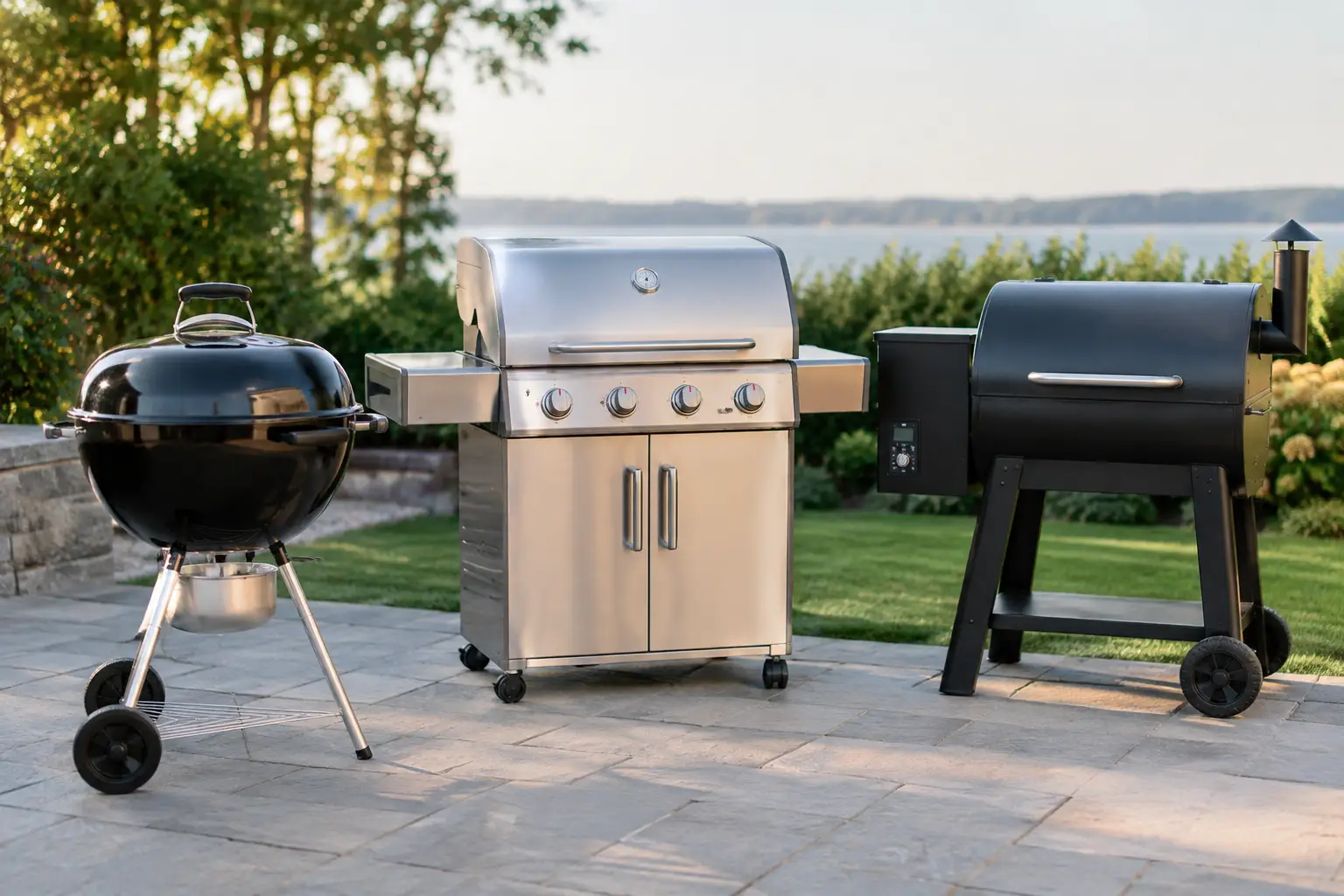
A grill can be the center of a summer cookout, a quick weeknight dinner, or a relaxed evening on the patio. So, how long do grills last before they need more than a new brush or replacement grate? For most households, a quality grill lasts anywhere from five to 15 years, but that broad range comes down to its materials, fuel type, weather exposure, and how it is cared for between gatherings.
A longer-lasting grill is not always the most expensive one. It is the one that fits the way you cook, has parts you can maintain or replace, and is protected from the outdoor elements. Knowing what to expect helps you choose a grill that supports years of easy outdoor meals instead of becoming a frustrating project after a few seasons.
How Long Do Grills Last by Type?
Fuel type affects a grill’s construction, the parts most likely to wear out, and the amount of maintenance it needs. These averages are useful starting points, not guarantees. A grill kept uncovered through snowy winters or salty coastal air will age more quickly than the same model stored under cover on a sheltered patio.
Gas grills: 5 to 15 years
Gas grills are a popular choice for families who want dependable heat without a long setup. Entry-level gas grills often last about five to eight years. Better-built models with stainless steel burners, solid fireboxes, and replaceable internal parts can serve a household for 10 to 15 years or longer.
The burners, heat plates, igniter, hoses, and grease system usually show their age before the grill body does. The good news is that many of these components can be replaced. If the frame and firebox are still solid, a new set of burners or grates may give your grill several more useful seasons.
Charcoal grills: 8 to 15 years
Charcoal grills have fewer moving parts, which can make them especially durable. A porcelain-coated bowl or heavy steel charcoal grill can last a decade or more with ordinary care. Simple kettle-style grills are often easy to refresh because grates, ash catchers, handles, and vents are commonly the first items to need attention.
Rust is the main concern. Ash also holds moisture, so leaving it in the bottom of the grill after cooking can shorten its life. Once the grill is cool, clearing ash and keeping the lid protected make a noticeable difference.
Pellet grills: 6 to 10 years
Pellet grills bring slow-smoking convenience and temperature control to the backyard, but their electronic and mechanical parts add maintenance needs. A well-cared-for pellet grill often lasts six to 10 years. The cooking chamber may remain in good shape while the auger, fan, controller, igniter, or wiring eventually needs repair.
Keep pellets dry, clean out ash regularly, and protect the control panel from rain. For owners who enjoy smoked ribs, chicken, and weekend entertaining, that routine is usually a small trade-off for consistent low-and-slow cooking.
Electric grills: 5 to 10 years
Electric grills are practical for balconies, compact patios, and spaces where open-flame cooking is restricted. Their lifespan often falls between five and 10 years, depending largely on the heating element, thermostat, cord, and weather protection. Store an electric grill indoors or in a dry covered area when possible, especially during the off-season.
What Determines How Long a Grill Lasts?
The number on the price tag tells only part of the story. A grill’s materials, construction, placement, and upkeep matter just as much.
Stainless steel is often a smart choice, particularly for burners and exterior panels, but not all stainless steel performs the same way. Thicker, higher-quality stainless steel resists corrosion better than thin metal with a shiny finish. Cast aluminum fireboxes can also hold up very well because they do not rust like ordinary steel. Porcelain-coated cast iron grates retain heat beautifully, though chipped coating can lead to rust if the grate is not cleaned and dried.
Location matters, too. Direct rain, irrigation spray, wet leaves, and humid air create a much tougher environment for any grill. Coastal homeowners have an added challenge: salt air accelerates corrosion. Place the grill on a stable, well-drained surface, with enough clearance for safe cooking and air circulation. A covered patio, gazebo designed for grilling clearance, or a protected corner can help preserve equipment while making the cooking area more comfortable to use.
Frequency plays a role, but heavy use is not necessarily harmful. A grill used twice a week and cleaned regularly can outlast one used only a few times each summer and left dirty afterward. Grease, food residue, ash, and standing water are harder on a grill than regular cooking.
Signs It Is Time to Repair or Replace Your Grill
A worn grate or stubborn igniter does not automatically mean the grill is finished. Start by looking at the grill’s structure and safety-critical parts. Surface discoloration, fading, and small spots of rust can be cosmetic. Deep rust, cracked metal, loose legs, and a deteriorating firebox are more serious concerns.
For gas grills, replace the grill rather than continuing repairs if you notice cracked hoses, damaged gas connections, major burner corrosion, or flames coming from places they should not. Uneven heating can sometimes be solved with clean burners or new heat plates, but repeated flare-ups and severe hot spots may point to larger internal damage. If you ever smell gas when the grill is off, stop using it until the source has been identified and corrected.
Consider the cost of repairs as well. Replacing a few components makes sense when the grill body is sturdy and compatible parts are readily available. When you need several expensive parts at once, or replacement pieces are no longer available, putting that money toward a new grill is usually the better value.
Simple Care That Helps a Grill Last Longer
A small routine after each cookout protects your investment and keeps your outdoor kitchen ready for spontaneous meals. Once the grill has cooled enough to handle safely, brush the grates and remove food debris. Empty the grease tray or cup before it overflows, and clear charcoal ash after it is completely cold.
Every few months during grilling season, take a little more time to clean beneath the grates and heat plates. Grease buildup encourages flare-ups and can trap moisture against metal. On a gas grill, inspect burners for blocked ports and check hoses for wear. On a pellet grill, vacuum ash from the fire pot and cooking chamber according to the manufacturer’s guidance.
A fitted grill cover is one of the easiest ways to extend grill life. Choose one that fits well without trapping moisture, and let the grill cool fully before covering it. Covers are helpful, but they are not a substitute for cleaning. A dirty grill sealed under a cover can still corrode over time.
If winter weather is harsh where you live, disconnect and store removable components as recommended by the manufacturer. Propane cylinders should be handled and stored according to local safety guidance. For compact electric grills, dry indoor storage is ideal. These simple habits leave you with less spring cleanup and more time to enjoy your first cookout of the season.
Choosing a Grill Built for Your Outdoor Routine
When comparing grills, look beyond cooking area and finish color. Check whether the burners, grates, heat plates, igniters, and grease trays can be replaced. Consider how the grill will live in your space: exposed beside the deck, tucked under a covered patio, or rolled out for occasional gatherings. A heavy-duty grill may be worthwhile for frequent hosts, while a simpler model may be the right fit for a small patio and casual weekend cooking.
It also helps to think of the grill as part of the whole outdoor setting. Comfortable seating, shade, storage for grilling tools, and warm lighting can turn a meal outside into the kind of gathering people want to linger over. Patio Treasures makes it easier to bring those pieces together while creating a backyard retreat that feels polished and personal.
A grill that is cleaned, covered, and repaired when it makes sense can be a reliable part of your home for many seasons. Choose one that suits your cooking style, give it a protected place to live, and it will be ready when the next sunny afternoon calls everyone outdoors.