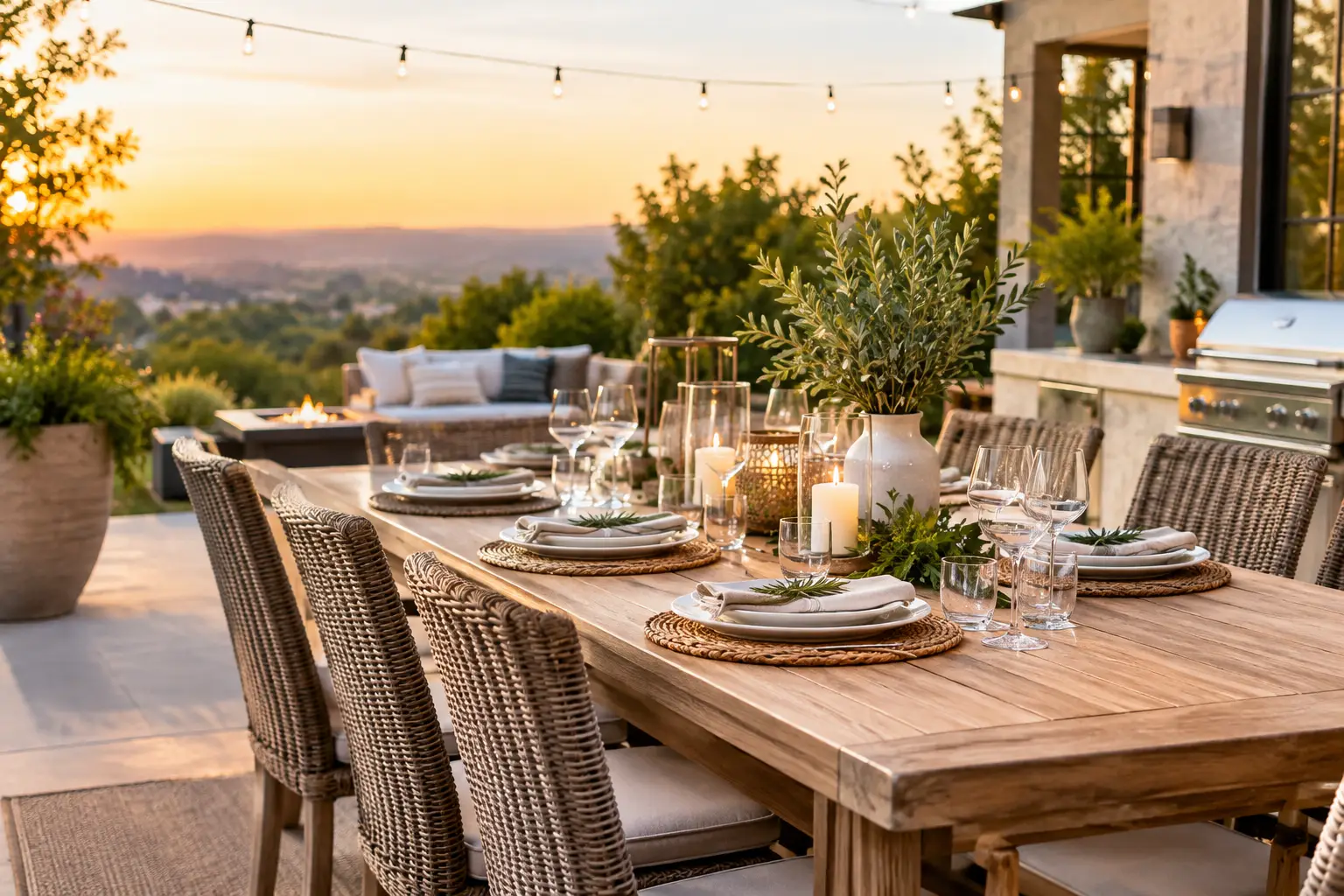
A patio meal feels special when guests can settle in without searching for a chair, squinting into the sun, or balancing a drink in their lap. Knowing how to stage outdoor dining is less about creating a picture-perfect tablescape and more about giving your family and friends an easy, comfortable reason to stay outside a little longer.
Whether you are setting up a roomy backyard deck, a compact apartment balcony, or a patio beside the grill, start with the way you actually gather. A well-staged outdoor dining area should feel welcoming before the first plate is served and remain practical when the weather, menu, and guest count change.
Start With the Meal You Want to Host
Before choosing furniture or decor, picture the most common occasion your space will support. A family that enjoys weeknight dinners needs a different setup than someone who hosts long weekend cookouts. If you usually serve a casual meal from the grill, keep the dining table within a comfortable walk of the cooking area, but not so close that heat and smoke take over the conversation.
Give every guest enough room to sit, pull out a chair, and pass food comfortably. For a small patio, a round table often makes circulation easier because there are no sharp corners to navigate. A rectangular table can be the better choice for larger gatherings or a narrow deck, especially when paired with benches that tuck neatly underneath.
Leave clear paths from the house to the table, the grill, and any storage. The goal is to avoid turning the person carrying a platter into an obstacle-course contestant. If your patio has limited square footage, choose flexible pieces such as stackable chairs, folding side tables, or a serving cart that can move wherever it is needed.
How to Stage Outdoor Dining Around Comfort
A dining set is the anchor, but comfort is what gives the space staying power. Choose chairs with supportive backs and consider cushions designed for outdoor use. Cushions add color and softness, though they do need a dry storage spot when rain is expected. If you prefer less upkeep, look for chairs with contoured seats and durable, easy-clean materials.
Shade deserves equal attention. Direct sun can make even the nicest table feel unusable at lunchtime. A patio umbrella is a flexible answer for many spaces, particularly if you want to adjust coverage throughout the day. For a more defined destination, a gazebo, pergola, or canopy can frame the dining area and provide a stronger sense of enclosure.
Think about the seasons, too. An umbrella may be all you need for summer breakfasts, while an outdoor heater or fire pit placed safely away from the table can make fall dinners more appealing. It depends on your climate and how often you entertain after sunset. The best setup is one you will use repeatedly, not one that only works during a narrow window of perfect weather.
Build the Table in Simple Layers
Outdoor tables look their best when they feel considered but not overly precious. Begin with a clean surface, then add a tablecloth, runner, or placemats to establish color and protect the tabletop. Outdoor-friendly fabrics and wipeable materials are especially helpful for meals with kids, sauces, and cold drinks.
Next, add dinnerware and glasses that suit the gathering. Melamine, acrylic, and other shatter-resistant options can be smart choices around pools, stone patios, and energetic guests. You do not need matching place settings for every meal. A coordinated mix of colors, patterns, and textures can feel relaxed and collected, as long as one or two elements tie everything together.
Keep the centerpiece low enough for people to see one another. A simple bowl of citrus, potted herbs, lanterns, or a small vase of garden clippings brings life to the table without blocking conversation. Candles add warmth, but use stable holders and keep open flames away from breezy edges, napkins, and playful hands.
For a gathering of four or more, a few serving essentials will make hosting easier:
- A tray or serving cart for drinks, condiments, and extra napkins
- Covered food dishes or mesh screens to protect the meal from insects
- A water pitcher or beverage dispenser guests can reach on their own
- A small basket for utensils, towels, and cleanup supplies
These practical details reduce trips indoors and let the host spend more time at the table.
Create Atmosphere After the Sun Goes Down
One overhead porch light rarely creates the relaxed mood people want for outdoor dining. Layered lighting makes the patio safer and more inviting while giving the space depth. Start with functional light along walkways, steps, and doorways. Then add softer light around the dining zone with string lights, lanterns, solar stake lights, or tabletop lamps made for outdoor use.
Warm white lighting usually feels more flattering and relaxed than bright, cool-toned bulbs. Position lights so guests can see their food and faces without feeling as if they are sitting under a spotlight. If your dining area sits under a pergola or umbrella, a small string of lights overhead can make the table feel like a true outdoor room.
Sound and movement can also shape the atmosphere. A gentle garden chime, a tabletop fountain placed away from the meal, or breezy planters can add personality. Use these accents lightly. You want the setting to support conversation, not compete with it.
Use Rugs, Greenery, and Decor to Define the Zone
An outdoor rug is one of the simplest ways to make a dining set look intentional, especially on a large deck or open concrete patio. Choose a size that allows chairs to remain on the rug when pulled out. If the rug is too small, it can make the dining area feel cramped and make chairs harder to move.
Planters can soften hard surfaces and help define the edges of your dining area. Tall planters create a little privacy between a table and a fence, while lower pots keep a compact balcony open. Herbs such as basil, rosemary, and mint are a natural fit near an outdoor table because they add fragrance and can be used in meals and drinks.
Decor should reflect how you want the space to feel. A few lanterns, a colorful outdoor pillow on a nearby lounge chair, or a garden sculpture in view of the table can bring charm and personality outdoors. Avoid filling every surface. Empty space is useful for serving, setting down a bag, or simply letting the eye rest.
Plan for Weather and Fast Cleanup
Beautiful staging has to work in real life. Keep outdoor dinnerware, cushions, and linens in a weather-resistant storage box or nearby cabinet so you can set up quickly and put things away just as easily. Furniture covers are worthwhile if your dining set is exposed to heavy sun, rain, or seasonal debris, but allow furniture to dry before covering it.
Wind is another consideration. Use weighted umbrella bases, sturdy table decor, and clips for lightweight linens. If bugs are a concern, place citronella products away from the dining surface and use food covers rather than heavily scented items near the meal.
Patio Treasures makes it easier to coordinate the pieces that turn an underused outdoor area into a place for relaxed meals, from dining furniture and shade to rugs, lighting, storage, and finishing touches. Start with the essentials, then add as your routines reveal what would make the space more useful.
The most inviting outdoor dining area is not the one that looks untouched. It is the one with a chair ready for a neighbor, a little shade for a lingering lunch, and enough comfort to make an ordinary dinner feel like time well spent.