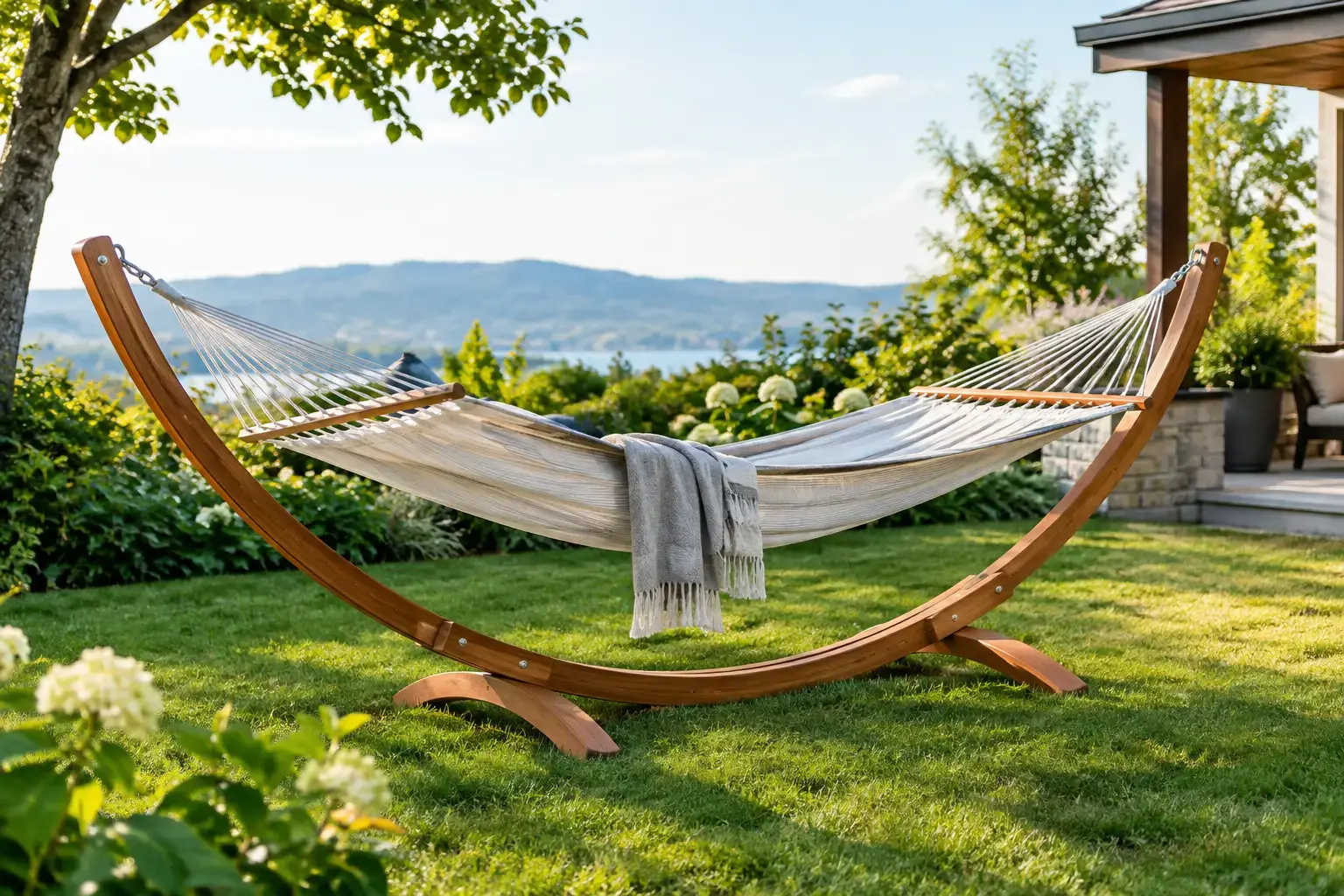
A hammock is one of the simplest ways to make an overlooked corner feel like your favorite place to be. With hammock stands, you do not need mature trees, permanent posts, or a complicated installation to bring that laid-back comfort to a patio, deck, garden, or backyard. Set one up near the grill for quiet moments before guests arrive, beside the pool for sunny afternoons, or in a shaded garden nook that deserves more than a folding chair.
The right stand gives you freedom to place your hammock where the view, breeze, and lifestyle make sense. It also turns a hammock into a flexible piece of outdoor furniture - one you can move, store, or refresh with the seasons as your space changes.
Why Hammock Stands Are Worth the Space
Tree-mounted hammocks have a familiar charm, but they depend on having two healthy trees at the right distance apart. Even then, the available spot may not be where you want to relax. A freestanding stand puts comfort on your terms. It can create a destination on an open lawn, fill an unused edge of the patio, or add a welcoming place to unwind near your outdoor seating area.
For renters, a stand is especially practical because it requires no drilling into a deck, siding, or masonry. Homeowners appreciate the same flexibility when rearranging for a party, adding seasonal décor, or changing the layout around a fire pit, dining set, or umbrella. Instead of designing the whole backyard around a pair of trees, you can let the hammock fit naturally into the outdoor space you already enjoy.
A stand also makes hosting easier. It adds a comfortable retreat that feels separate from the main conversation area without feeling disconnected from it. One person can read in the shade while everyone else gathers nearby for lunch, lawn games, or a relaxed evening outside.
Choosing Hammock Stands That Fit Your Hammock
The most common mistake is choosing a stand because it looks good, then realizing it does not match the hammock's length or weight capacity. Start with the hammock you plan to use. Measure its full hanging length from loop to loop, not just the fabric bed where you lie down. The stand needs enough length to support the hammock at a comfortable curve without stretching it tight.
Many stands are labeled for single, double, or extra-large hammocks, but those labels are only a starting point. A double hammock may refer to a wider fabric bed rather than a longer overall length. Check the product dimensions and recommended hammock size before deciding. An adjustable stand can be a smart choice if you like swapping between a traditional rope hammock, quilted hammock, or spreader-bar style during the year.
Weight capacity matters just as much. Choose a capacity that comfortably exceeds the expected load, especially if the hammock may be shared by two adults, a parent and child, or an enthusiastic family dog. A little extra capacity offers more peace of mind than selecting the minimum rating.
Pay attention to the hanging hardware, too. The hooks or chains should allow enough adjustment to achieve a gentle sag. A hammock that hangs too tight can feel stiff and uncomfortable. A relaxed curve supports the body better and invites the kind of lingering that makes an outdoor retreat feel worthwhile.
Consider the Hammock Style
Spreader-bar hammocks use wooden bars at each end to hold the fabric open. They look polished and inviting, making them a natural match for a resort-inspired patio or poolside setup. They do require a longer stand and can feel less stable when getting in and out, so they are often best for adults who want an open, sunbathing-friendly design.
Traditional gathered-end hammocks have no spreader bars. The fabric gathers at both ends, creating a cozy, cocoon-like shape that many people find more supportive for reading or napping. These styles tend to work well in compact relaxation zones and can be especially comfortable when you lie slightly on the diagonal.
Pick a Material for Your Climate and Style
A hammock stand should look at home in your space, but it also needs to hold up through changing weather. The best material depends on your local climate, how often you plan to move the stand, and the overall look you want for your patio or backyard.
Steel stands are popular because they offer dependable strength and a clean, classic shape. Powder-coated steel helps resist rust, making it a practical option for many outdoor settings. If you live in a humid, rainy, or coastal area, look for a durable weather-resistant finish and plan to cover or store the stand during long periods of wet weather.
Wood stands bring a warm, furniture-like look to decks, gardens, and covered patios. Their curved frames can make a hammock feel like a statement piece rather than an accessory. Wood does require more care than metal, particularly where moisture, intense sun, or snow are common. A covered location and occasional protective treatment help preserve its finish and prevent the material from drying or weathering too quickly.
Aluminum stands are lighter and easier to reposition, which is useful for smaller patios or homeowners who like to follow the shade throughout the day. They may not have the visual weight of steel or wood, but their portability can be a real advantage. For any material, use the stand on stable, level ground and follow its care instructions rather than leaving it exposed all year without attention.
Plan the Right Location Before You Set It Up
A hammock can make a large backyard feel more inviting, but it can also make a modest patio feel crowded if it is squeezed into the wrong spot. Before assembling your stand, use its listed dimensions to mark out the footprint with a tape measure. Remember to leave room around both ends so people can walk by safely and get in or out without bumping into planters, railings, or furniture.
Level ground is essential. Grass, pavers, concrete, and a sturdy deck can all work well, provided the surface is stable. Avoid sloped areas, soft soil after heavy rain, or spots where one end of the stand might sink or shift. On a deck or balcony, confirm the available floor space and keep traffic paths clear, especially near doors and stairs.
Think about how the location feels at different times of day. A sunny spot may be ideal for a morning coffee, while a tree-shaded corner or umbrella-covered patio can be better for afternoon reading. If your backyard gets strong sun, pairing the hammock with a cantilever umbrella, pergola, or gazebo can make the area more comfortable through the warmest hours.
Do not place a hammock stand too close to a fire pit, outdoor heater, grill, or cooking station. These areas need open clearance for safety, and hammock fabric should stay away from sparks, smoke, and high heat. A little separation also lets the hammock feel like its own peaceful zone.
Make the Hammock Area Feel Intentional
A stand and hammock can be the beginning of a complete outdoor retreat. The goal is not to crowd the area with accessories. It is to give the space a few thoughtful layers that make it comfortable enough to use often.
Start with a small outdoor side table within easy reach for a drink, book, sunscreen, or phone. Add an outdoor rug beneath or beside the stand if the surface allows it, creating a visual anchor that makes the relaxation area feel connected to the rest of the patio. A weather-friendly throw pillow can add color and support, while a lightweight blanket extends the season when evenings turn cool.
Lighting changes the mood after sunset. Solar path lights can define a route from the house to the hammock, while lanterns or string lighting nearby create a soft, welcoming glow. Choose lighting that illuminates the area without shining directly into the hammock. The effect should feel calm rather than bright.
For a cohesive look, repeat colors already found in your dining cushions, umbrella canopy, or outdoor rug. A neutral hammock paired with deep blue pillows, terracotta planters, or leafy green garden accents can feel pulled together without becoming overly matched. Patio Treasures makes it easy to coordinate the functional pieces and finishing touches that turn an open-air corner into a place you will actually use.
Keep Your Hammock Stand Ready for Relaxing
A few simple habits help protect your investment. Check bolts, hooks, chains, and connection points at the beginning of the season and occasionally throughout the year. Tighten hardware when needed, and stop using the stand if you notice bending, cracking, heavy rust, loose welds, or other damage.
Remove the hammock during severe weather, high winds, or long stretches of rain when practical. Fabric hammocks generally last longer when they are brought indoors or stored in a dry container during winter. This also gives you a chance to wash or spot-clean the fabric before the next warm day calls you back outside.
If you want a low-effort setup, choose a hammock and stand that are easy to assemble and disassemble. That convenience matters when you are preparing the patio for a gathering, making room for seasonal furniture, or simply moving the hammock toward the best afternoon shade.
Your outdoor space does not need a major renovation to feel more restorative. A well-chosen hammock stand can turn a quiet patch of lawn or an unused patio edge into the spot where slow mornings, post-barbecue naps, and easy summer evenings naturally happen.