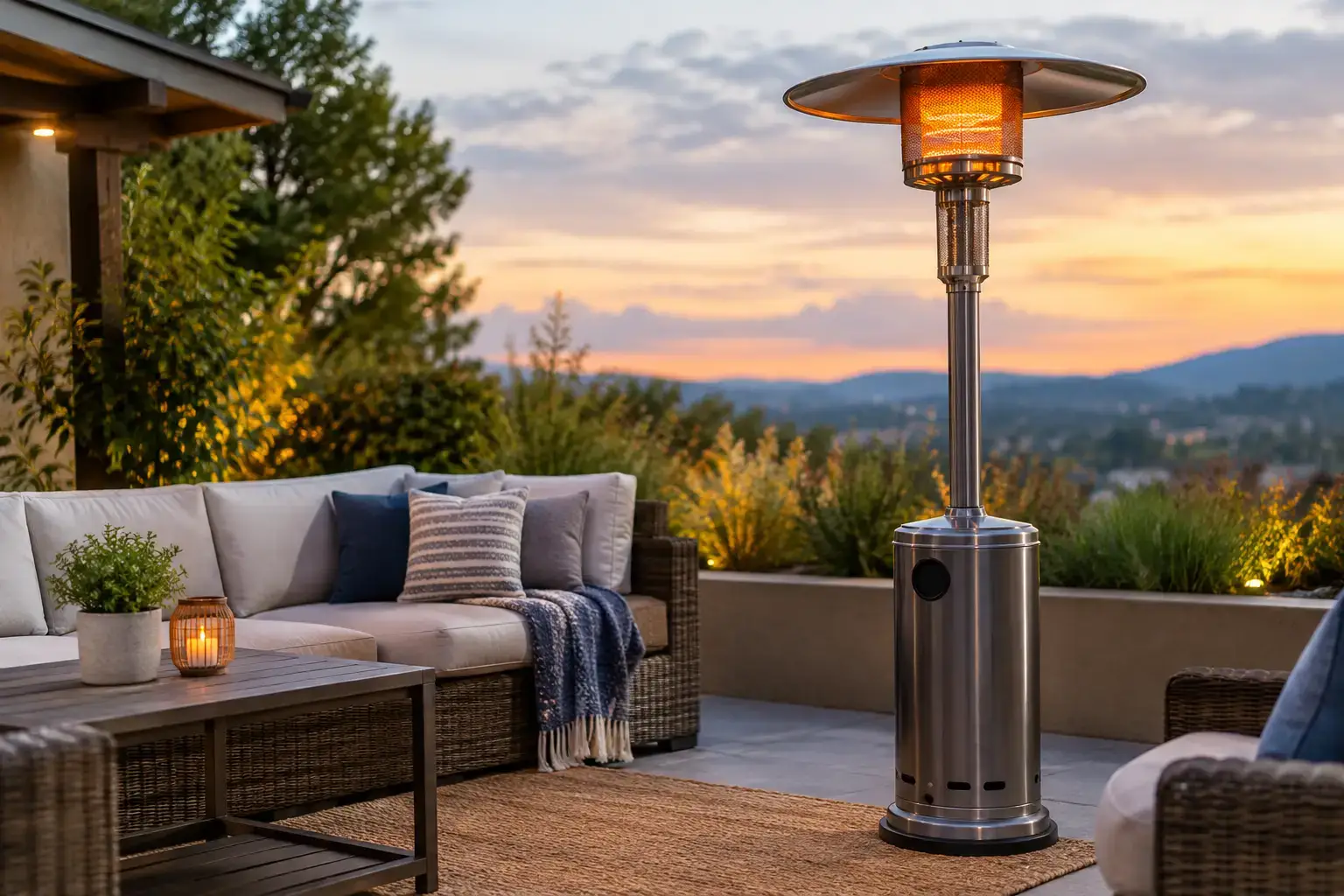
The first crisp evening of the season can make a beautifully furnished patio feel suddenly unfinished. A well-chosen heater helps you keep dinner, conversation, and quiet time outdoors going longer, but warmth should never come at the expense of peace of mind. This outdoor heater safety guide covers the practical decisions that help turn your patio, deck, or backyard into a comfortable retreat while protecting the people and spaces you love.
Start With the Right Heater for Your Space
Safety begins before the heater is switched on. The right model depends on where you plan to use it, how much space you want to warm, and whether you need portable or permanent heat.
Propane patio heaters are popular for open patios and entertaining areas because they are powerful, portable, and do not require an electrical outlet. They also create an open flame and produce combustion gases, so they need generous ventilation and clearance. They are best for truly open-air settings, not enclosed sunrooms, garages, tents, or screened spaces with limited airflow.
Electric heaters are often a smart choice for covered patios, balconies, and smaller seating areas, provided the product is rated for outdoor use and the electrical connection is protected from weather. They offer focused radiant heat without a flame or propane tank. The trade-off is that their warmth may feel more localized, and you will need a properly rated outlet within reach.
Natural gas heaters can be convenient for homeowners who want a fixed heating solution and already have a suitable gas connection. Because installation involves fuel lines and local regulations, it is typically a job for a qualified professional. Never try to adapt a propane appliance for natural gas, or the other way around, unless the manufacturer specifically provides an approved conversion method.
Before buying or moving any heater, read its manual from cover to cover. Manufacturer requirements always take priority, particularly for clearance distances, fuel type, weather exposure, and permitted locations.
Outdoor Heater Safety Guide: Choose a Safe Location
A patio heater needs more than an empty corner. Heat rises, flames need oxygen, and nearby materials can become dangerous when exposed to sustained heat. Place the unit on a level, stable, noncombustible surface whenever possible. A paved patio is generally better suited than grass, loose gravel, or an uneven deck.
Keep the heater well away from furniture cushions, outdoor rugs, umbrellas, curtains, table linens, plants, storage boxes, and decor. The exact clearance varies by model, so do not rely on a one-size-fits-all measurement. Check the manual for the required distance above, beside, and behind the heater, then give it extra room if children, pets, or active guests will be nearby.
Overhead clearance deserves special attention. A tall propane heater may look comfortably positioned beneath a pergola or gazebo, yet the canopy, beams, fabric, or roof may be far too close. Even a structure marketed for outdoor living is not automatically compatible with a heater. Use only heaters approved for that type of setting, and follow both the heater and structure instructions.
Wind changes the equation. Strong gusts can destabilize a freestanding heater, push heat toward nearby materials, or make the flame behave unpredictably. Avoid using a propane heater on notably windy days. If the unit has a weighted base or tank housing, use it as designed, but do not improvise with bricks, bags, or other objects that could interfere with ventilation or create a tipping hazard.
Keep Fuel and Power Connections in Good Condition
With propane, inspect the cylinder, hose, regulator, and connections before each use. Look for cracking, corrosion, frayed material, worn seals, or a hose that has been pinched under furniture. If you smell gas, hear a hissing sound, or suspect a leak, turn off the gas supply if it is safe to do so. Do not light the heater, operate switches, or use a nearby flame. Move people away from the area and follow the manufacturer’s leak-response instructions.
A simple soapy-water leak test can help identify a problem at the connection. With the propane valve opened according to the appliance instructions and the heater unlit, apply a soap-and-water solution to the connection points. Bubbles that grow or multiply can indicate escaping gas. Shut off the tank and have the issue corrected before using the heater.
Store spare propane cylinders outdoors in an upright position, away from direct heat, flames, and building openings. Never store cylinders inside the house, garage, basement, shed, or vehicle. Do not leave a propane tank in a hot enclosed car, even for a short stop.
For electric heaters, avoid extension cords unless the manufacturer clearly permits them and specifies the proper type. An undersized or damaged cord can overheat. Plug the heater directly into a grounded outlet with ground-fault circuit interrupter protection where required. Keep plugs and outlets dry, and never run cords under rugs, through standing water, or across walkways where they can be damaged or become a trip hazard.
Use the Heater With Guests in Mind
A patio heater is easy to forget once conversation gets going, which is why a few simple habits make such a difference. Assign one adult to light and shut down a propane heater during a gathering. Keep children and pets at a safe distance, and explain that the heater, base, and surrounding air can remain hot even when no flame is visible.
Do not use a heater as a drying rack for towels, blankets, gloves, or clothing. Do not hang string lights, decorations, or party banners from it either. These shortcuts can turn a welcoming setup into a fire risk.
Never leave an operating heater unattended. If everyone moves indoors, heads to another part of the yard, or calls it a night, turn it off first. For propane models, shut down the heater and close the cylinder valve as directed in the manual. Give the appliance time to cool completely before moving it, covering it, or placing furniture close by.
Carbon monoxide is another reason outdoor means outdoor. Fuel-burning heaters should never be used in a home, garage, enclosed porch, basement, camper, or other confined area. Even partially enclosed spaces can trap dangerous gases. If your patio has walls, drop-down shades, heavy curtains, or a low roof, treat ventilation as a nonnegotiable requirement and choose equipment designed for the conditions.
Maintain Your Heater Between Seasons
A little care helps your heater remain dependable when the weather turns cool again. Once the unit is fully cooled and disconnected according to its instructions, wipe away dust, pollen, grease, and debris. Clear spider webs or insect nests from burner openings because blocked ports can affect ignition and flame quality.
Check that bolts, wheels, reflectors, guards, and ignition components remain secure. A yellow, uneven, or sputtering flame can signal a maintenance issue. Stop using the heater until you can consult the manual or arrange service. Do not try to repair gas controls, regulators, or electrical components with makeshift parts.
A weather-resistant cover can protect an outdoor heater from dirt and moisture, but only after it has cooled completely. During long periods of storage, disconnect propane cylinders and store them outside in the approved upright position. For electric units, protect plugs and cords from moisture and inspect them before the next use.
Let Comfort Follow Good Judgment
The most inviting outdoor spaces feel effortless because the practical details have already been handled. Give your heater the space, fuel care, weather awareness, and attention it needs, then arrange your seating so guests can enjoy gentle warmth without crowding the unit. With safe habits in place, your patio can stay a welcoming place for late-season meals, weekend visits, and a little more time under the open sky.